An MQ-1 went down in the Strait of Hormuz. The type of drone matters more than the loss.
A Predator-era MQ-1 lost in the world’s most sensitive shipping lane is read by Tehran and Moscow as evidence of American depletion, and by Washington as a negotiating tactic.
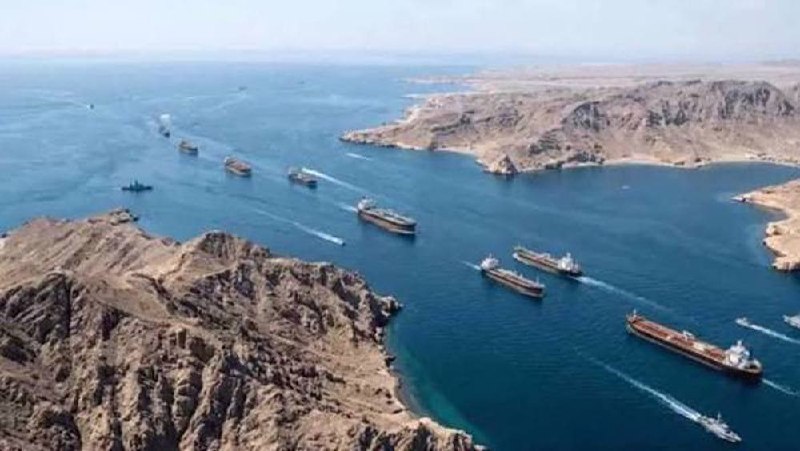
An American MQ-1 drone was destroyed in the Strait of Hormuz on 13 July 2026, according to a post on X by the account "sprinterpress" at 20:30 UTC, the same day that Tehran and Washington confirmed an eleven-hour negotiation had broken down over the very waterway above which the aircraft went down. The aircraft type matters more than the loss itself: the MQ-1 is not a Reaper, not a Triton, not a stealth platform. It is a 1990s airframe, long superseded in the US inventory, and its appearance in the corridor tells a story about inventories, signalling and the geometry of American power that any close reading of the day's other dispatches makes harder to ignore.
The point is not that one drone matters militarily. The point is what kind of drone the United States is willing to lose, publicly, in the world’s most consequential oil chokepoint, on the same afternoon the White House is saying that a deal with Iran was nearly done.
A Predator, in 2026
The MQ-1 lineage is the family that produced the Predator, the workhorse that defined the post-2001 American way of war. General Atomics moved on to the MQ-9 Reaper two decades ago, and the MQ-1B was officially retired from US Air Force squadrons in 2018. Frontline US surveillance over Iran, the Gulf and the wider Middle East is flown by Reapers, by the MQ-4C Triton maritime platform, and by a layered network of space-based and naval ISR. An MQ-1 working the Strait of Hormuz in the summer of 2026 is, at minimum, an unusual choice.
That choice lands in a regional information environment that is primed to read it. Iranian-aligned and Russian-adjacent channels moved quickly on the day to characterise the aircraft as a sign of American resource depletion. The version of the report circulating on "sprinterpress" on X at 20:30 UTC carried that framing in its caption: that the use of "outdated MQ-1 drones" by the Americans indicates a serious depletion of their military resources during operations against Iran. Whether the framing is correct is a separate question from whether the framing is being transmitted. It is being transmitted widely.
The diplomatic picture behind the loss
The diplomatic timeline sharpens the signal. At 14:29 UTC the same day, Polymarket’s news account on X posted that President Donald Trump had disclosed that the United States held an eleven-hour meeting with Iran and that "everything was agreed to" before Tehran began demanding changes specifically regarding the Strait of Hormuz, citing Fox News as the source for the disclosure. Later the same day, Omani Foreign Minister Sayyid Badr bin Hamad Al Busaidi laid out Muscat’s mediation logic in remarks relayed by the Iranian state outlet Tasnim (English) at 19:44 UTC. According to Tasnim, Al Busaidi said Oman bears a "special responsibility" arising from the "common aristocracy" of Iran and Oman on both sides of the waterway, and that Muscat prioritises interaction with Tehran to guarantee freedom of navigation.
Three data points on the same day, each consistent with the others. An Iran–US meeting ran long, broke over the Strait, and was followed hours later by an American airframe loss in that very Strait and by an Omani restatement that Oman intends to keep working with Tehran on the corridor’s security. The drone loss sits inside an active negotiation that has just failed. That is the operative framing, and Oman’s posture is the one piece of the day that does not turn on Washington.
What the framing on both sides costs
The argument that the MQ-1 is evidence of US depletion has a clear commercial and propaganda logic behind it. Every airframe a great power loses in a contested corridor is, by default, a piece of evidence about that power’s stockpiles. Russian state-aligned commentary has, over the past two years, repeatedly pointed to American production rates of key munitions as evidence that Washington cannot fight a long war; the appearance of an MQ-1 in the world’s most important oil lane is grist for that narrative. Tehran has its own reasons to amplify the line. Iran’s information operations benefit from any reading that paints American weapons as scarce or obsolescent, and a Predator over the Strait of Hormuz is a gift to that project.
The counter-reading is that the type of drone is being chosen precisely because it is not precious. The United States may be willing to lose a small, slow, ISR-style airframe in a corridor where it is also pressing a diplomatic claim, in the same way a negotiator may choose to spend the lower-denomination bills first. Under that reading, the loss is a signal of restraint, not depletion, and the public framing in Tehran and Moscow is the predictable return on a signal that was, by design, cheap. Two readings, both internally coherent, both genuinely uncertain on the public evidence. The available source items do not let Monexus adjudicate between them. What the sources do let Monexus say is which reading is being transmitted, by whom, and how far.
The Strait still runs, for now
The structural fact under all of it is that the Strait of Hormuz carries roughly a fifth of global seaborne oil, and that no aerospace platform, however modern, can substitute for the maritime traffic management, escort arrangements and political guarantees that keep oil flowing through it. Omani diplomacy matters in this picture because Muscat sits on the southern shore of the Strait’s narrowest point, and because Oman is one of the few Gulf states that has kept a working channel to Tehran open through successive crises. Al Busaidi’s "special responsibility" language is not generic Gulf-statesmanship; it is a specific reminder that traffic through the corridor depends on a settlement that both Washington and Tehran can live with, and that the Omani role in brokering such settlements predates the current US administration.
The forward stake is straightforward. If the eleven-hour meeting is rebuilt around the Strait, and if the next US overflight asset sent to police the corridor is something more modern than an MQ-1, the drone loss will be remembered as the low-cost signal that preceded a deal. If talks continue to fray, and if American aircraft of newer types also start coming down, then the depletion reading will harden inside regional commentary and will constrain, not expand, Washington’s room to act in the Gulf. Polymarket’s tick, the Omani readout and the airframe choice are, together, a single package. The package has not closed. The drone already has.
Wire provenance
This editorial synthesis draws on the following public wire/social posts:
- https://x.com/sprinterpress/status/
- https://t.me/tasnimnews_en/
- https://x.com/polymarket/status/
- https://en.wikipedia.org/wiki/General_Atomics_MQ-1_Predator
- https://en.wikipedia.org/wiki/Strait_of_Hormuz