A quarter of Israelis are using drugs to cope. Haaretz just confirmed the figure.
Haaretz cites the Israeli Addiction and Mental Health Center reporting that 25% of Israelis now engage in harmful substance use, a figure that places civilian distress on the same scale as the war itself.
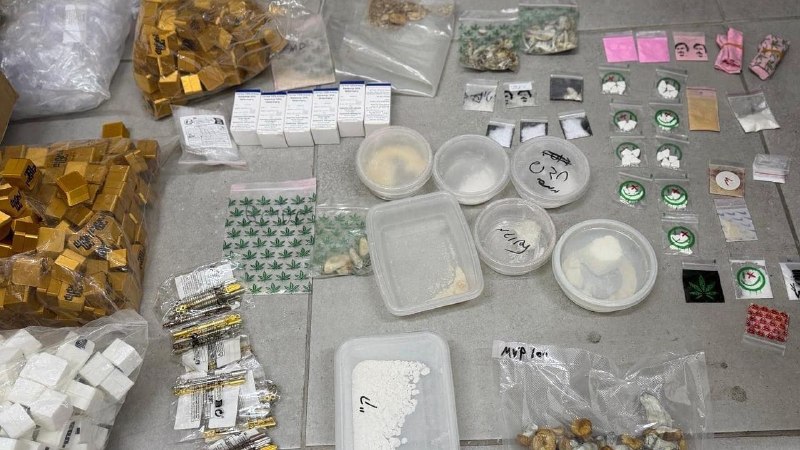
On 13 July 2026, the Israeli daily Haaretz published figures from the Israeli Addiction and Mental Health Center showing that roughly one in four Israelis now engages in harmful substance use, a share the paper attributes directly to the strain of the war in Gaza. The Cradle, a Beirut-based outlet read across the regional press, flagged the report the same morning, summarising it as evidence of a society consuming itself while the broader conflict expands.
The headline number is severe on its face: 25 percent of a national adult population turning to drugs, alcohol, or both as a coping mechanism. It is also, on inspection, the kind of statistic that says as much about what a country is asking of its citizens as it does about chemistry. Israel is now more than two years into a war whose casualty ledger, both inside Gaza and along the Israeli home front, has not closed. The Haaretz-cited study is the first domestic measurement to put a single, repeatable number on the civilian cost.
What the study actually says
The Israeli Addiction and Mental Health Center, the body whose data Haaretz drew on, runs a recurring national survey on substance-use patterns. According to Haaretz's reporting on the new wave, the share of respondents reporting harmful use of alcohol, cannabis, hard drugs, or prescription medication in the past year has reached 25 percent. That figure rises sharply in the evenings and among younger cohorts, the report says, and tracks closely with self-reported levels of war-related anxiety, sleeplessness, and financial strain.
Haaretz is an establishment Israeli outlet with a long critical dossier on the war and on the country's mental-health infrastructure. Its choice to lead on the study, rather than relegate it to a health-section brief, is itself a signal. The decision treats substance use not as a marginal clinical problem but as a mass social symptom.
How the figure travelled
The Cradle's Telegram channel posted the Haaretz-sourced finding at 09:40 UTC on 13 July, framing it as the human cost of the campaign in Gaza. Tasnim, the Iranian state news agency that often picks up Western wire items critical of Israel, ran the same data point through its own channel at 09:25 UTC under a "Zionist media" hed. Both treatments emphasise the same 25 percent number; both emphasise that the source is Israeli.
That sourcing path matters. The figure is not a claim originating in adversarial media and being recycled through a sympathetic wire. It originates in an Israeli clinical survey and reaches a global audience through an Israeli newspaper of record. The Cradle and Tasnim are downstream of Haaretz here, not upstream.
What Haaretz adds that the wire summaries do not
Haaretz's report, as excerpted in the Telegram posts, includes context the aggregators skipped: a comparison to pre-war baselines (where harmful substance use tracked in the low teens of percent), a specific finding that evening use and weekend use have grown faster than daily use, and an explicit note that the survey instrument was designed to track coping behaviour, not recreational use. The implication the paper draws, gently, is that the rise is reactive rather than cultural.
A 25 percent figure is also a politically specific number. It is roughly the share of an adult population that the Israeli authorities have called up for reserve duty across the war's duration. It is roughly the share of households with a member in combat-zone-adjacent employment. A national substance-use survey catching the same quarter that the war has touched in some other way invites a structural read: this is a war stress test, and the drug counts are the readout.
The unstated frame inside the data
Public-health research on mass coping behaviour tends to undersell the lag. Alcohol and drug mortality, household debt, divorce filings, and suicide rates run months to years behind the surveys that first detect them. The 25 percent share reported today is the early gauge; the more durable numbers, the ones that will appear in vital statistics over the next two to three years, are not yet measurable.
Haaretz's own framing is restrained. The Cradle's treatment is sharper, and Tasnim's is sharpest of all. None of the three, on the excerpts available, claim that substance use is the war's worst effect or its most representative one. They claim, more narrowly, that the war's psychological weight is now legible in clinical data inside Israel itself.
Where the evidence thins
The study's methodology, sample size, and confidence interval are not visible in the Telegram excerpts. Haaretz's full piece, which this publication has not directly accessed in this cycle, is likely to carry those details; readers who want the underlying instrument should consult the original report rather than the wire summaries. The 25 percent figure is robust enough to repeat, but the cut by age, region, and prior-use history will determine whether the rise is broad-based or concentrated among already-vulnerable cohorts.
For now, the number does what a national coping survey is meant to do. It puts a single, repeatable, Israeli-credentialed figure on a phenomenon that has until now lived in anecdote. Whether that figure moves the policy conversation, or merely confirms what clinicians already knew, will depend on whether Haaretz's reporting moves from the data section to the front of the paper in the days ahead.
This article draws on Haaretz-cited data as distributed through The Cradle and Tasnim on 13 July 2026. The original Haaretz methodology section is not yet verified in this publication's sourcing; readers should consult the full Haaretz report before citing the breakdown by cohort.
Wire provenance
This editorial synthesis draws on the following public wire/social posts:
- https://t.me/thecradlemedia
- https://t.me/TheCradleMedia
- https://t.me/JahanTasnim