IRGC claims strikes on two US air bases in Kuwait; Patriot battery and fuel tanks named as targets
Iran's Revolutionary Guards say they destroyed Patriot systems and fuel storage at two US bases in Kuwait. The claim, carried by IRGC-aligned channels, has not been independently verified by Western wire reporting at the time of writing.
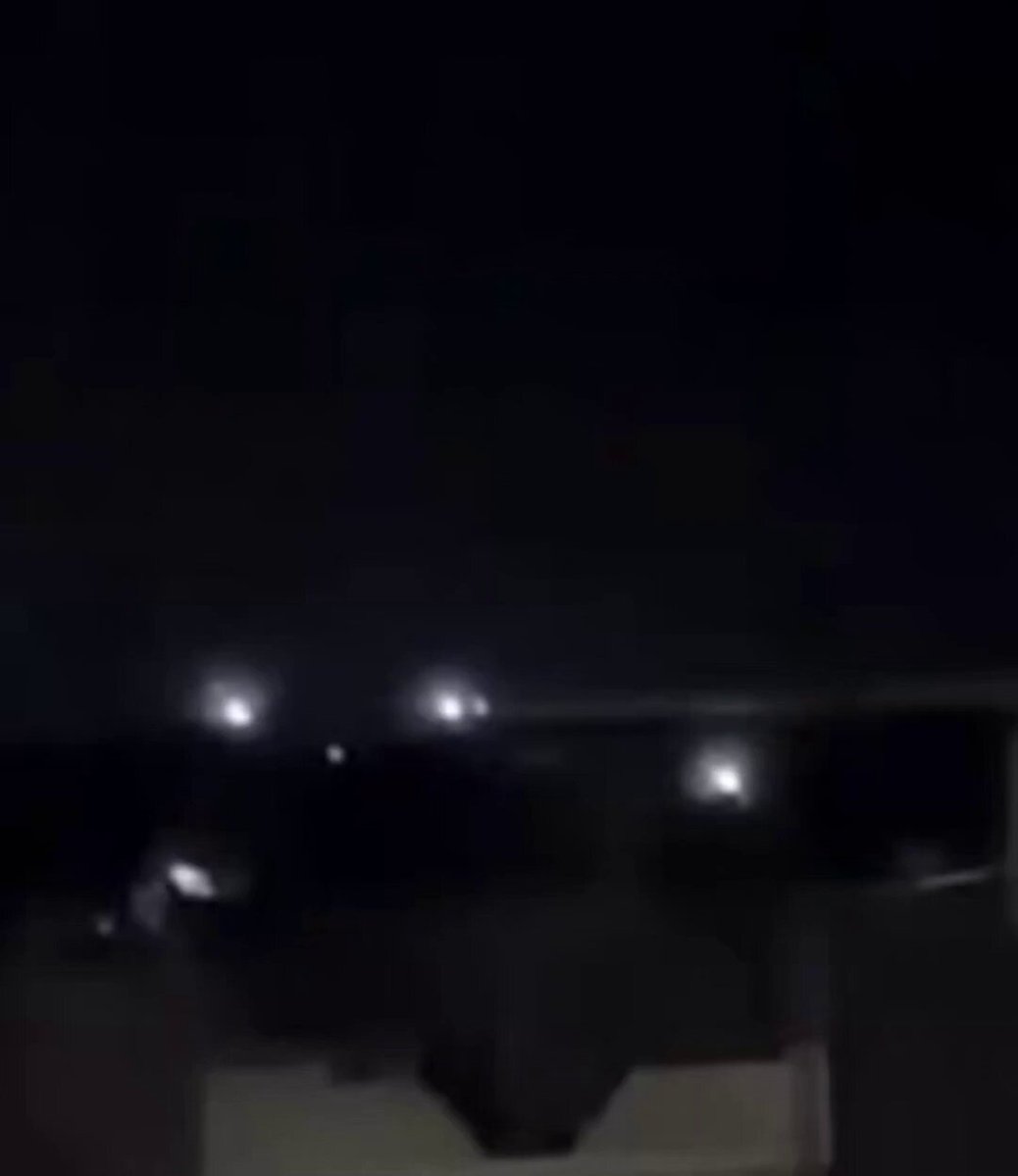
At 02:52 UTC on 13 July 2026, channels aligned with Iran's Islamic Revolutionary Guard Corps broadcast a three-part statement claiming that IRGC forces had struck the United States' Ali al-Salem and Ahmed al-Jaber air bases in Kuwait, naming fuel-tank storage and Patriot air-defence batteries among the targets destroyed. Within the hour, Fars-linked accounts were flagging news-media reports of Patriot activation in Kuwait, and war-monitoring channels including War Footage Witness reported explosions audible inside the country. As of this writing, no Western wire service has independently confirmed damage at either installation, and the Pentagon has not been on record with a public statement cited in the thread material.
The Iranian claim, if accurate in any of its particulars, would mark an unmistakable escalation: a direct strike by an Iranian military organ on US sovereign-leased bases inside a Gulf monarchy that is not a belligerent in any active Iran-related theatre. The framing Tehran is constructing is one of retaliation rather than initiation, pitched at a domestic audience that has watched a year of shadow-war pressure between the IRGC and US Central Command forces across the Gulf. The arithmetic that matters is not whether the fuel tanks burned, but what Tehran believes it can now credibly claim it can reach.
What the IRGC said, line by line
According to the IRGC statement circulated by Middle East Spectator at 02:52 UTC, the operation "targeted and destroyed the fuel tanks and Patriot air defense system at the American base in Ali Salem, Kuwait, as well as an AN/FPS strategic" radar installation, the message is truncated in the circulating copy, but the named hardware is the same Patriot air-defence system and AN/FPS-series radar that the US military has deployed across Gulf ally airspace since the early 2000s. War Footage Witness reported at the same hour that the IRGC claimed strikes on both Ali al-Salem and Ahmed al-Jaber air bases, asserting destruction of fuel tanks at both locations. The two accounts are mutually reinforcing and originate from the same primary statement, the way Iranian-aligned messaging typically cascades across Telegram channels before reaching Farsi-language state media.
Fars-affiliated accounts then amplified a separate beat at 03:52 UTC: news-media reports, per their read, of American Patriot air-defence activation inside Kuwait. The activation reference is consistent with standard US force-posture doctrine, Patriot batteries going from standby to active radar emission is itself a tell, visible to commercial-flight tracking and to Iranian electronic-intelligence collection, and would be expected at any Gulf installation that detects an inbound threat.
What is being claimed and what is not
The claims as stated in the thread material are IRGC claims, plus a separate Fars-flagged media report of Patriot activation. The thread contains no confirmation from US Central Command, no Kuwaiti government statement, no imagery of damaged hardware, and no independent correspondent on the ground at either base. The sources do not specify casualty figures, the number of munitions used, or whether the strikes involved cruise missiles, one-way-attack drones, ballistic missiles, or a combination. The thread does not specify whether the Patriot batteries named are the PAC-2 or PAC-3 variant, or whether the "AN/FPS strategic" radar referenced is the FPS-132 or an earlier block.
This is a non-trivial epistemic gap. Iran-aligned channels have, in past episodes, broadcast confident claims of damage at US and Israeli facilities that subsequent independent assessment either partially corroborated or significantly walked back. The standard for a wire-grade confirmation remains on-the-ground reporting, satellite imagery, or an official statement from a named US or Kuwaiti official. None of those three has surfaced in the thread material as of the timestamps cited.
Why Kuwait, and why now
Kuwait hosts around 13,500 US military personnel, concentrated primarily at Ali al-Salem air base (the same installation the IRGC named), which functions as the central hub for US Air Force operations across the Gulf. Ahmed al-Jaber air base sits south of Kuwait City and has hosted fighter and tanker rotations. Both are sovereign-leased facilities under bilateral defence agreements that predate the current crisis by decades. A strike on either raises an obvious question for Kuwait's cabinet: under what conditions does a Gulf monarchy that has studiously avoided direct entanglement in the Iran-US confrontation accept that one of its airfields has been hit?
The timing also matters. The Iranian statement was issued in the small hours of a Monday morning, a window that maximises news-cycle impact in the West and lands during working hours in Iran. The reference to a "response", the statement opens with "As part of our response, we targeted and destroyed", locates the strikes inside an Iranian narrative of tit-for-tat retaliation, even though the thread material does not specify what specific earlier incident Tehran is responding to.
The structural frame
A direct Iranian strike on US bases inside a third-country Gulf monarchy would represent a different category of action than the long-running shadow conflict between IRGC-linked forces and US assets in Iraq, Syria, and the Gulf of Aden. Shadow conflicts allow both sides to maintain a public posture of non-escalation; a confirmed strike on Ali al-Salem collapses that ambiguity. The relevant question is no longer whether Iran can credibly threaten US Gulf infrastructure, Tehran has been signalling that capacity for two years, but whether it has now chosen to demonstrate it inside a host-nation footprint that requires a Kuwaiti governmental response by virtue of Kuwaiti sovereignty.
For Washington, the strategic dilemma is the one that has defined the Gulf posture for a generation: respond hard enough to restore deterrence, or absorb the strike and de-escalate, knowing that absorbing it sets a precedent that the next strike will be cheaper. For Tehran, the calculation is symmetric: claim a successful strike to satisfy a domestic audience that has been promised retaliation, while leaving Kuwait and Washington enough ambiguity about the actual damage to avoid a full casus belli.
Stakes and what to watch
Three things to watch in the next 24 to 72 hours. First, a US Central Command statement, ideally with satellite imagery, that is the load-bearing confirmation either way. Second, a Kuwaiti Ministry of Defence read-out. Kuwait cannot afford to be a passive site in a US-Iran exchange, and the Kuwaiti cabinet's silence, if it persists, is itself a signal about back-channel management. Third, the response of regional airframes: the activation of Patriot batteries at a third Gulf installation would be the cleanest indicator that the Iranian claim contains more than rhetorical content.
The thread material, as it stands, records an Iranian claim and a Fars-flagged media report. It does not record corroboration. Until one of those three signals lands, this publication treats the IRGC statement as an Iranian statement, not as a confirmed strike.
Desk note: Monexus led with the Iranian claim as a claim, attributing each element, base names, hardware, casualty-free framing, the truncation in the IRGC message, to the specific channel that carried it, rather than reporting the strikes as fact. The wire frame is to report Iranian statements as Iranian statements and await confirmation; the Global-South counter-frame would treat the Iranian operation as a legitimate response to a long posture of US force presence in the Gulf. We carry the first, note the second, and wait on the evidence.
Wire provenance
This editorial synthesis draws on the following public wire/social posts:
- https://t.me/Middle_East_Spectator
- https://t.me/wfwitness
- https://t.me/farsna