Iran strikes US Fifth Fleet base in Bahrain in major regional escalation
Iranian missiles hit the US Fifth Fleet base in Manama in the early hours of 13 July 2026, according to Iranian state media and Telegram channels aligned with Iranian reporting. Independent confirmation from US Navy or Bahraini authorities is pending.
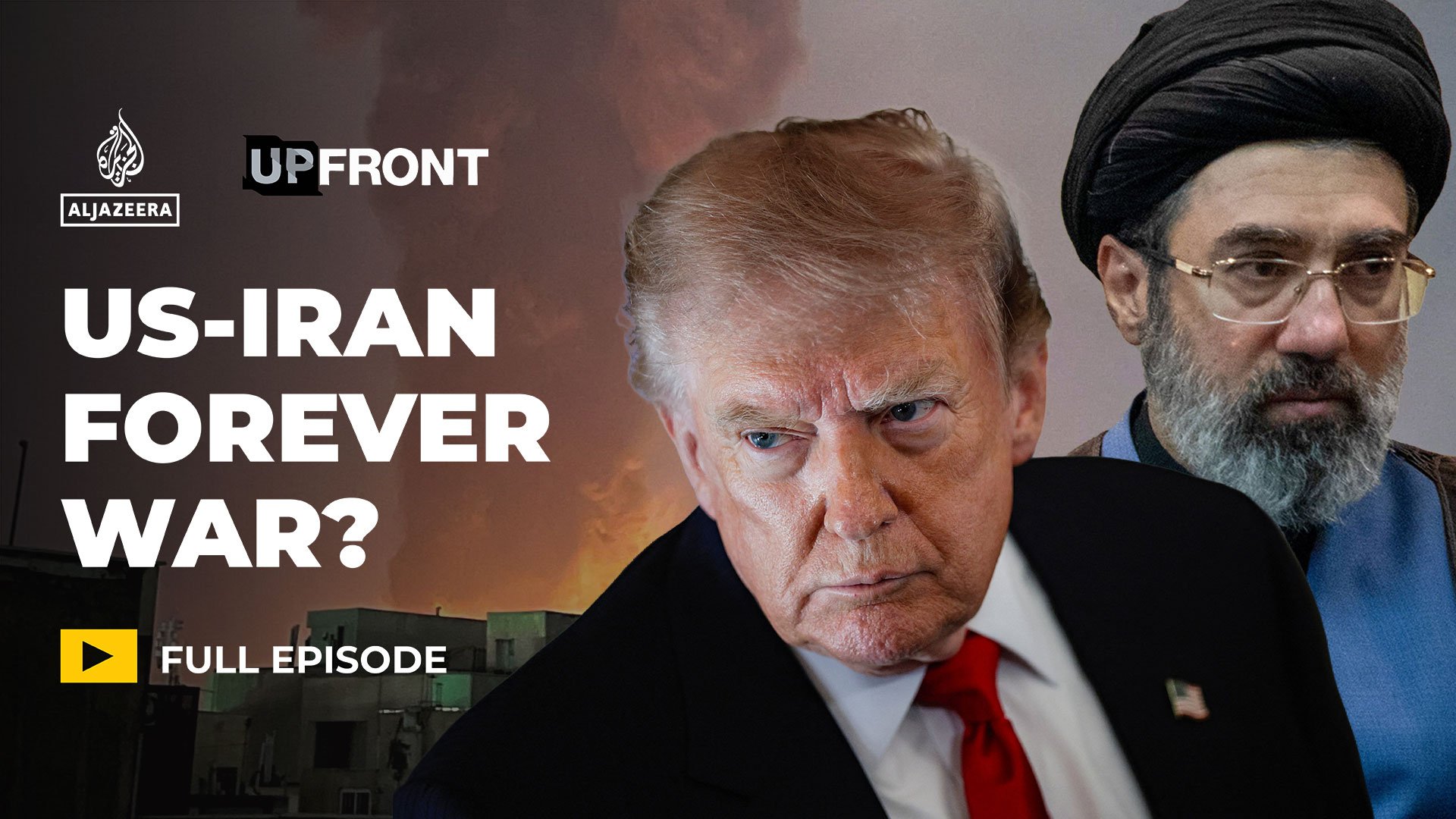
A column of smoke rose over the US Navy's Fifth Fleet headquarters at Manama in the early hours of 13 July 2026, after what Iranian state media and Iranian-aligned Telegram channels described as a direct Iranian missile strike on the installation. Footage circulated by Tasnim News at 02:07 UTC shows a thick plume visible across the harbour, and the Russian-language channel Intel Slava reported "direct hits" on the base from 01:59 UTC. As of 02:07 UTC, neither the US Navy's Bahrain-based public affairs office, Bahrain's ministry of interior, nor US Central Command had issued a public statement confirming damage or casualties from the strike.
The strike, if the Iranian account is corroborated, would represent the most direct Iranian military action against a permanent US forward-deployed naval formation since the 1980s tanker wars in the Gulf. It lands against a backdrop of already-strained negotiations over Iran's nuclear programme and a recent pattern of shadow-war exchanges between Tehran and Washington through proxies in Iraq, Syria and Yemen. The Manama base is the headquarters of both the US Fifth Fleet and the combined maritime forces that patrol the Gulf, the Red Sea and parts of the Indian Ocean. It hosts roughly 7,000 US personnel and is the operational nerve centre for naval escorts through the Strait of Hormuz.
What the Iranian sources claim
Tasnim News, the English-language feed of Iran's Tasnim News Agency, posted the footage and the assertion that the target was the Fifth Fleet base at 02:07 UTC on 13 July, with an accompanying caption describing a "missile attack from the US Fifth Fleet base in Bahrain." The framing in Tasnim's caption is unusual: read literally, it suggests the smoke came from the base after a strike on it, consistent with a defensive position inside Iran-aligned reporting that does not directly assert Iranian authorship of the launch. Jahan Tasvim, a Tasnim-affiliated Farsi channel, ran the same footage at 02:05 UTC. Intel Slava, a Russian-language Telegram channel that has previously amplified Iranian and Syrian government claims, went further at 01:59 UTC and again at 02:02 UTC, asserting "direct hits" by "Iranian missiles" on the base. Intel Slava is not a primary source: it is a secondary amplifier of Iranian-aligned reporting and should be weighted accordingly.
The gap between Tasnim's hedged framing and Intel Slava's flat assertion of authorship is itself a tell. Iranian state-aligned outlets have, in past escalations, allowed allied and sympathetic channels to make claims that the principals themselves stop short of confirming, preserving deniability for diplomatic purposes while shaping the narrative environment.
What is missing from the public record
No US Navy, Pentagon, or Bahraini government statement was visible in the public Telegram feeds sampled at 02:07 UTC. There is no independent confirmation of damage, of intercept attempts by Patriot or Aegis batteries on the base, or of any casualty count. The footage released so far shows smoke over the base perimeter but does not establish the type of munition used, the number of missiles fired, or whether they were cruise or ballistic. There is also no claim yet from Iranian Supreme National Security Council or the Islamic Revolutionary Guard Corps public affairs channels in the sample, which is unusual: in prior escalations, official IRGC or Iranian armed forces communiqués have followed operational claims within minutes.
Why the base, why now
The Fifth Fleet headquarters at Manama sits at the geographic centre of the most contested sea lane in the global energy system. Roughly a fifth of the world's seaborne oil passes through the Strait of Hormuz, and the combined maritime forces commanded from Bahrain are the principal US instrument for keeping that lane open under crisis conditions. A successful strike on the base itself, even a symbolic one, would be qualitatively different from the Iranian drone and missile attacks on shipping that have punctuated Gulf tensions since 2019. It would target the command node, not the traffic. That is the action of a state signalling that it considers itself already in a direct conflict with the United States, not a state probing the edges of one.
The timing, in the middle of the night Manama time and hours after several rounds of nuclear-related diplomacy in Muscat and Geneva reported earlier in the cycle, also fits a familiar pattern. Negotiations held under mutual threat of force are vulnerable to events designed to collapse the bargaining space: a strike during a talks cycle forecloses the possibility of a quiet climb-down and forces all parties into escalation management. Whether that was the Iranian calculation, or whether the strike was a unilateral act by an IRGC faction outside civilian control, is precisely the kind of question the next 24 hours of statements will resolve or sharpen.
What comes next
The next signal to watch is whether the US Navy Central Command issues a confirming statement, and at what classification level. A flat denial would cast doubt on the Iranian footage; a partial confirmation, or a statement noting an attack without detailing damage, would track with previous Iranian exchanges against US positions in Iraq and Syria, where Washington has tended to understate impact publicly while reserving the right to retaliate privately. Bahrain's statement will matter too: Manama is the host government, and Bahraini framing of the event will determine whether the Gulf Cooperation Council treats this as a US-Iran bilateral matter or as an attack on a GCC member state with collective-defence implications under the 2015 Riyadh agreement.
Iranian domestic messaging in the hours ahead will also be diagnostic. If IRGC-affiliated channels and the Supreme National Security Council adopt the Tasnim framing, the operation will be treated as an official Iranian act. If they stay silent and Tasnim remains the highest-level Iranian outlet on record, the strike will more likely be read as an Iranian-aligned actor, possibly in Iraq or Yemen rather than Tehran proper, claiming credit after the fact.
The structural reading, beyond the immediate operational question, is that the US forward naval presence in the Gulf has been treated by Iran for years as the most credible tripwire for American escalation. A strike on the base itself is a direct test of whether that tripwire still deters, or whether it has, in Tehran's calculus, become a target rather than a guarantee. The answer will not come from Telegram at 02:00 UTC. It will come from statements out of Washington, Manama and Tehran in daylight.
Desk note: Monexus is leading with the Iranian state-affiliated framing of this event because it is the only public framing available at the time of writing; the framing has been flagged accordingly and will be revised as Western-wire and official US, Bahraini and Iranian government statements become available.
Wire provenance
This editorial synthesis draws on the following public wire/social posts:
- https://t.me/tasnimnews_en
- https://t.me/JahanTasnim
- https://t.me/intelslava
- https://t.me/intelslava