Iran strikes Jordan: what we know from the wires
Flights at Queen Alia were halted in the early hours of 13 July 2026 after Iranian missile fire reached Jordanian airspace, with Tehran-aligned and regional outlets pointing in different directions on the same minutes-old story.
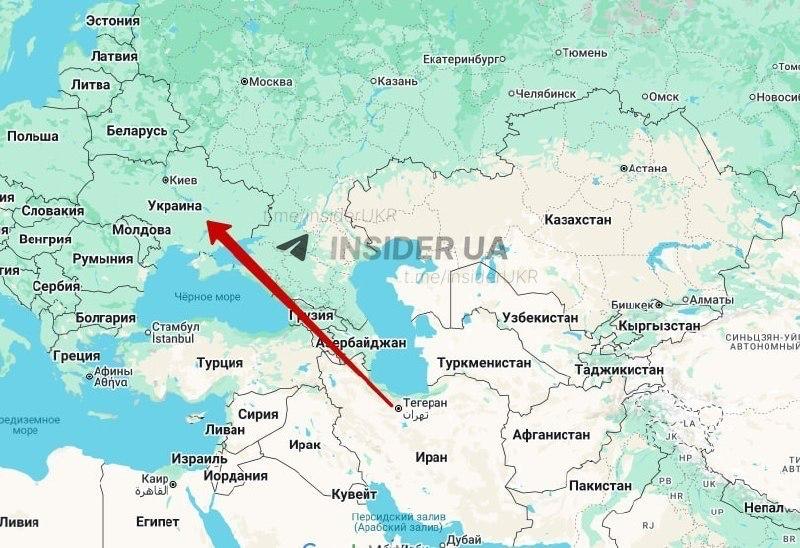
At 01:37 UTC on 13 July 2026, the channel @GeoPWatch reported that air traffic at Amman's Queen Alia International Airport had been suspended in conjunction with what it described as an Iranian missile bombardment. Three minutes earlier, Iranian state-linked outlets @TasnimNews and @JahanTasnim had put out near-identical lines, attributing the airport shutdown to "missile attacks on this country" without naming the source of the projectiles. By 01:39 UTC, @mehrnews, the English-facing handle of Iran's Mehr News Agency, was running the same frame. The four notices landed in a five-minute window. The picture they leave, taken together, is incomplete but consistent: a Middle Eastern capital briefly closed its main airport because missiles were in the air, and Iranian state media itself was first to confirm the consequence.
What is harder to determine from the wires in circulation is who fired, at what, and at whose instruction. The Iranian state channels speak only of "missile attacks" landing in or near Jordan; they do not assert that Tehran launched them, nor do they attribute them to anyone else. The framing in those posts is descriptive, not declarative. That choice, in the minutes after a strike, is itself a tell. It suggests the Iranian side is happy to acknowledge the regional consequence while leaving the question of authorship open, a posture consistent with how Iranian outlets have covered cross-border operations in earlier cycles. The Arab-language monitor @GeoPWatch, by contrast, named Iran directly as the source of the bombardment. The two reads are not yet reconcilable in the open record.
What the air traffic suspension actually tells us
A commercial airport does not close on a whim. The decision to suspend operations at Queen Alia is a routine safety response to a defined airspace hazard, typically issued by the airport operator or the civil aviation authority, not by the military. That Queen Alia was the site chosen for the suspension, rather than a peripheral airfield, indicates the hazard was assessed as affecting the wider Amman flight information region, not a single runway. It also means the event was significant enough for Jordanian authorities to accept the commercial cost of grounding inbound and outbound flights during peak summer travel, when the airport is one of the busiest regional hubs connecting Europe, the Gulf and the Levant.
A suspension is, however, an existence proof of risk, not a description of damage. The notices moving through Telegram between 01:35 and 01:39 UTC do not specify whether projectiles struck Jordanian soil, were intercepted, or passed through airspace without impact. The four items together establish the fact of disruption and the timeframe; they do not establish a target list, a casualty count or a political attribution beyond the @GeoPWatch line. The difference between "missile attacks on this country" and "Iranian missile bombardment" is the difference between acknowledging an event and asserting responsibility for it, and that gap is where the story currently sits.
How the Iranian and Arab-monitors framed the same five minutes
The Iranian state-facing channels, @TasnimNews and @JahanTasnim, ran their items in the same restrained register, citing "media reports" and using the phrase "missile attacks on this country." The construction is deliberately passive. It conveys that an attack happened, that Jordan felt it, and that Tehran's information environment is registering the shock, without binding Iran to authorship. @mehrnews, the English-language handle of Mehr News Agency, ran a near-identical line at 01:39 UTC. The repetition across three Iranian handles within five minutes suggests a coordinated initial posture: confirm the disruption, do not volunteer a launcher.
@GeoPWatch, a channel that has historically tracked Iranian military activity and surfaced in earlier regional escalations, went further. Its 01:37 UTC post named Iran as the source of the bombardment, pairing the airport suspension directly with "the Iranian missile bombardment." That is a different journalistic move, treating the Iranian link as established fact rather than as an inference. Readers relying only on the Iranian channels would have read the night as a missile event affecting Jordan; readers relying only on @GeoPWatch would have read it as an Iranian attack on Jordan. Both reads are circulating in real time, and neither has yet been confirmed by an on-the-record Jordanian or Western official in the items at hand.
What remains uncertain
Three things are unsettled in the open record. First, the launch site and the target set: were missiles fired from Iranian territory, from an Iranian-aligned proxy in Iraq or Syria, or from a platform further afield, and what were they aimed at. Second, the outcome: whether anything was intercepted by Jordanian or allied air defence, whether any projectile reached the ground inside Jordan, and whether there are casualties or damage on or near airport infrastructure. Third, the diplomatic shape of the next 24 hours: whether Jordan issues a formal attribution, whether a foreign ministry summons a counterpart, and whether the incident folds into an existing pattern of strikes or breaks new ground. The four Telegram items in circulation are the opening paragraph of a story, not the file. Treating them as a confirmed narrative would be premature; treating them as irrelevant would be naive. They are the floor of what can responsibly be written until wider wires catch up, and the ceiling of what should be asserted on the strength of the channels alone.
This article is built from the four Telegram notices moving through regional channels between 01:35 and 01:39 UTC on 13 July 2026. The Iranian state-facing channels confirm the airport disruption; the Arab-language monitor @GeoPWatch adds the explicit Iranian attribution. The wider pattern of the strike, its military specifics, and any official read from Amman, Tehran, or third-party capitals will be incorporated as wire reporting develops.
Wire provenance
This editorial synthesis draws on the following public wire/social posts:
- https://t.me/mehrnews
- https://t.me/GeoPWatch
- https://t.me/tasnimnews_en
- https://t.me/JahanTasnim
- https://en.wikipedia.org/wiki/Queen_Alia_International_Airport