Iran's missile display: signaling, not substance, in a morning of synchronized Tehran releases
Two Iranian state-aligned outlets published near-identical imagery of Qadr, Emad, Khybershakan and Zulfiqar missiles within twenty minutes, a coordinated release whose message is as much about Tehran's information space as about its launchers.
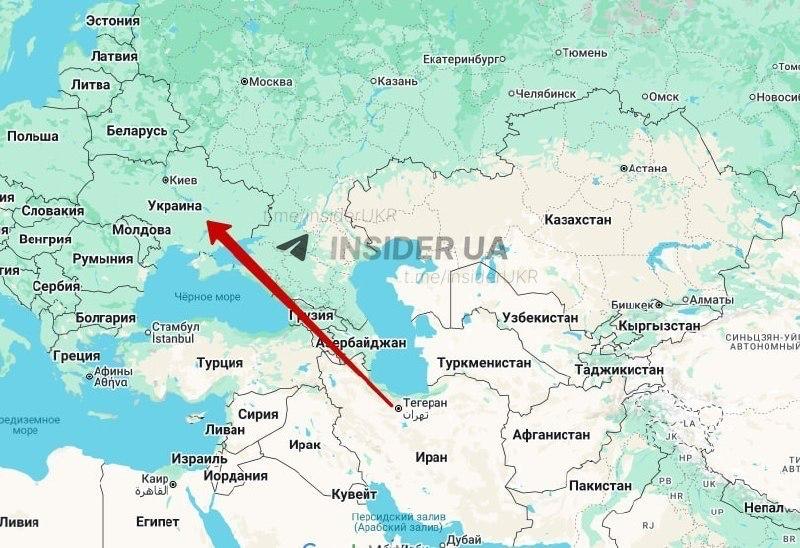
At 10:21 UTC on 13 July 2026, Tasnim's English-language Telegram channel posted images of Qadr, Emad, Khybershakan and Zulfiqar missiles it said had been launched at dawn in response to what it called the "aggression of the American terrorist and child-killing army." Four minutes later, at 10:25 UTC, the Farsna channel carried the same footage with the same framing. By 10:42 UTC, Farsna reposted its version again, this time appending a still the post described as showing the "interesting texture" of one of the launch tubes.
The synchronisation is itself the story. Within a single morning, three near-identical pieces of content from two state-aligned outlets travelled across Telegram to Anglophone audiences. The missile names were spelled the same way both times. The political descriptor of the United States was repeated verbatim. The visuals recycled. This is not a news cycle; it is a release schedule.
A package, not a report
Tasnim and Farsna function less as newsrooms than as publishing arms of Iran's security and political establishment. The Tasnim post on the morning of 13 July named four missile systems in a single sentence, a rhetorical compression that flattens very different weapons into one symbolic volley. Qadr and Emad are liquid-fuelled, longer-range systems associated with the Islamic Revolutionary Guard Corps aerospace branch; Khybershakan is a solid-fuel medium-range ballistic missile first unveiled in 2022; Zulfiqar is a tactical system with shorter range. Lumping them together tells the audience less about capability than about intent: this is a regime demonstrating range across categories.
The framing matters as much as the hardware. Both outlets used the phrase "American terrorist and child-killing army," a formulation that recurs across Iranian state media coverage of US operations in the region. It is the same language used after previous escalations; it is also the same language an external reader, unfamiliar with Iranian press conventions, would register as extreme. That reception effect is part of the point. The phrasing is calibrated for a domestic audience that already accepts it, and for a foreign audience whose reaction to the wording, outrage or dismissal, is itself useful data about how the message is being received.
What the footage does not show
The Telegram posts contain images. They do not contain a confirmed target list, an official US acknowledgement of incoming fire, or independent geolocation of impact points. The post describes the launches as a response to "the aggression of the American terrorist and child-killing army at dawn and this morning," but the operational context of those strikes is not specified in the items themselves. A reader cannot tell from these three posts alone whether the missiles were fired at US positions in Iraq, Syria, the Persian Gulf, or at maritime targets; whether they were salvo-fired or test-launched; or whether the imagery was recorded at the moment of firing or assembled afterwards from separate footage.
This matters because the visual economy of Iranian state media rewards compression. The same four-missile package has appeared in Iranian coverage of earlier confrontations, including the spring 2024 exchange with Israel and the periodic messaging around US Central Command activity in the Gulf. That is not evidence the footage is recycled; it is evidence that the symbolic vocabulary is a stable one. Whether a particular launch is happening on this particular morning, or whether the regime is republishing archival material to fit a current narrative, is a question the posts themselves do not settle.
The information layer
Iran's missile programme is one of the most-photographed military inventories in the Middle East, and that is by design. The country's strategic doctrine treats its missile force as a deterrent to be seen, not hidden. Releases of this kind serve a layered audience: the domestic public, regional adversaries who consume Iranian output through translation, and a wider English-language internet that picks up the imagery through aggregators and Telegram forwards. The same content posted at 10:21 UTC and again at 10:42 UTC is, in information terms, two distinct events. The repost extends the shelf life of the message, lifts it into a new algorithmic window, and doubles the chance that a foreign desk somewhere captures it.
That last point sits inside a larger structural shift. Coverage of Iran's military posture has migrated from wire copy and government briefings toward platform-native content: Telegram channels, X posts, and the inevitable YouTube re-uploads that follow. The editorial distance between a Tasnim release and a reader in London or Johannesburg has collapsed. What a state-aligned outlet posts at 10:25 UTC can be on a cable news panel by the afternoon, presented either as fact, as regime talking point, or as evidence of an escalation that may or may not be occurring. Each framing serves a different policy constituency.
What the next twenty-four hours will tell
The question for the rest of 13 July is corroboration. If US Central Command, the Iraqi government, or a Gulf state acknowledges incoming Iranian fire with impact coordinates, the morning's posts become a confirmed operational salvo, and the framing in them, however inflammatory, will sit on top of a verifiable event. If no such acknowledgement appears, and the footage cannot be independently located to a launch site, the posts will read in retrospect as a messaging operation whose substantive core was the words chosen about the United States rather than any missile that actually flew.
The ambiguity is not incidental. A regime that wants to demonstrate resolve without crossing a threshold benefits from a record that could mean either thing. Foreign ministries in Baghdad, Riyadh, Doha, and Washington will spend the next day establishing which it is. Editors, meanwhile, face the harder call of how to caption material whose provenance is openly political and whose substance is, as of publication, unverified.
Monexus framed this as a media-and-signalling story first, a military story second. The wire services that pick up Tasnim and Farsna imagery will tend to run it as the latter; the structural read is that the release schedule, the recycled wording, and the targeted Telegram audience are the operation, and the missiles are the set-dressing.
Wire provenance
This editorial synthesis draws on the following public wire/social posts:
- https://t.me/tasnimnews_en
- https://t.me/farsna
- https://t.me/farsna