Houthi missile salvo lands inside Saudi Arabia again, and Riyadh's information lid goes on
A fresh wave of missiles and drones from Yemen struck Saudi territory on 13 July 2026. The kingdom's interior ministry moved within an hour to bar filming of impact sites.
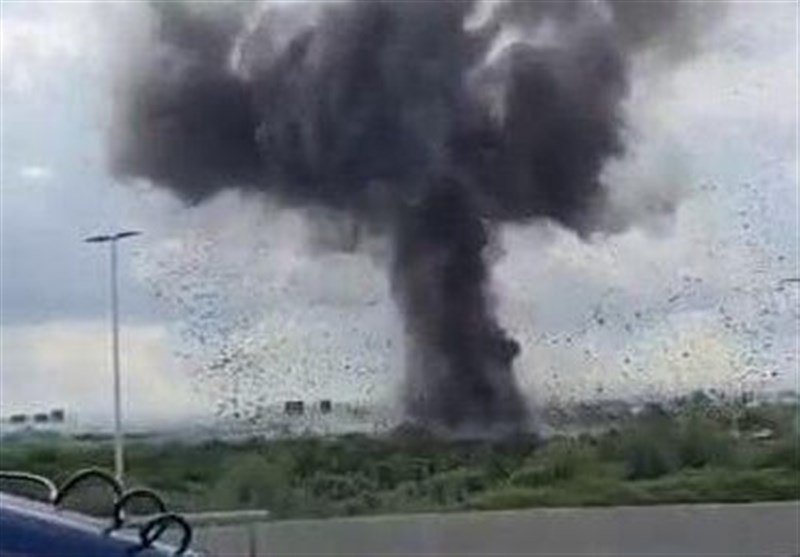
At 16:55 UTC on 13 July 2026, two Telegram channels that track the Yemen file posted the same short bulletin: preliminary reports of fresh missile launches from Yemen towards Saudi Arabia. Forty-five minutes later, the follow-up broke differently. One missile failed. The other was intercepted. Saudi Arabia's air-defence systems had engaged a second wave of projectiles in a single afternoon, and Riyadh's interior ministry moved, within the same hour, to forbid any filming of the impact locations.
The pattern is the story. Yemen-based forces have now landed, or forced the kingdom to engage, repeated salvos across Saudi airspace in a campaign of attrition that has been running for months. Sunday's was the latest instalment in a tempo that pairs a missile test with an information clampdown, and the speed of that pairing tells readers more than any individual radar trace.
What actually fired, and from where
Four outlets aligned within a thirty-minute window. Middle East Spectator and GeoPolitical Watch each carried alerts between 16:55 UTC and 17:44 UTC describing a new round of launches from Yemen towards Saudi Arabia, with projectiles including at least one ballistic missile and accompanying drones. The Cradle Media reported, and then re-reported, what it framed as a preliminary account of a fresh missile salvo from Yemen. Tasnim News, an outlet closely associated with Iran's regional posture, relayed the Saudi coalition's own read: that the kingdom's air-defence systems had faced, and defeated, an incoming threat.
The shape of the engagement is consistent with how the campaign has looked in recent exchanges. Multi-axis launch. One failure inside Yemeni territory, producing a self-contained accident rather than a strike. One interception. Drones that exist to dilute interceptor magazines, paired with ballistic missiles that exist to punish if any of them get through. Tasnim's framing of a "military aggressor coalition led by Saudi Arabia" is the standard Iranian-press verb-form for the kingdom's intervention in Yemen; it does not match Riyadh's self-description, but the underlying event, an engagement against inbound projectiles, is not disputed by any side in the day's reporting.
The information regime closes
The under-appreciated move happened at 17:30 UTC. Saudi Arabia's interior ministry announced a ban on any photography of the targeted locations, citing security concerns after the strike. Tasnim framed the move as Riyadh trying to control the visual record of what was hit. Either reading produces the same operational conclusion: a state actor that has been on the receiving end of a strike has decided that the picture of the strike is more politically costly than the strike itself.
That is a telling inversion. In most missile engagements in the region, governments use video of interceptions as reassurance: urban populations see the bright intercept flame, conclude that the state works, and move on. By banning filming at impact sites, Riyadh is signalling that what hit, or what fell short of what it was meant to hit, is more sensitive than the fact that it was engaged at all. The information regime is now part of the air-defence regime.
Why the tempo has not stopped
The Yemen-based missile programme has shown a stubborn capacity to keep launching, even as the Saudi-led air operation and the broader Western posture around Gulf shipping have tried to degrade it. Drone production appears to have moved deeper into Yemeni territory over the past year, ballistic-missile capacity has been demonstrated repeatedly, and the political will behind the strikes has not visibly thinned despite successive rounds of regional diplomacy.
The structural read is straightforward. A force that fires what it can produce, accepts one-in-three or one-in-four attrition on its own launches, and gets the other two or three into Saudi airspace does not need to land a warhead to register a point. It registers a point on the morning after every volley, when the Gulf's interior ministries publish interception tallies, when insurance markets reprice, and when Western-aligned partners are asked, again, whether they intend to keep underwriting the air-defence bill. That cost is denominated not just in interceptors expended but in the political currency of asking Gulf publics to live with the knowledge that their airspace is being contested.
What to watch this week
Three short-cycle indicators will tell readers whether 13 July was a routine salvo or the opening note of a new round.
The first is what Saudi state media eventually says about impact locations and damage assessment, if the filming ban is selectively lifted. A complete silence, with no follow-up imagery permitted even days later, would suggest an outcome Riyadh does not want surfaced. A piecemeal release of locations and property damage would suggest the engagement ended as most recent engagements have: a strike, a proximity event, or a clean interception, with nothing politically fatal in the dossier.
The second is whether Western defence partners comment on the salvo at all. A public statement from a US Central Command spokesperson, or a coalition briefing carried by Reuters, would indicate Washington is treating 13 July as a single round in an existing tempo. Silence, by contrast, would be a signal that this salvo has crossed some internal threshold and is now being managed as a separate crisis file.
The third is the next Yemen-side launch. The unit of analysis in this war is the salvo, not the single missile. If another launch window opens within forty-eight hours, the day's events look less like a peak and more like a baseline, and the structural question shifts from "what was intercepted" to "how long the current air-defence intercept rate is sustainable."
Desk note: Monexus leads with the missile-tracking and coalition-channel reporting carried in the wire thread, then pairs it with Tasnim's read on the Saudi interior ministry's filming ban. Where the Iranian outlet frames the engagement with the loaded "military aggressor coalition" formulation, we have let that stand as reported speech rather than endorsed framing. The information-regime move is, on this publication's reading, the day's most telling data point, and is treated as such.
Wire provenance
This editorial synthesis draws on the following public wire/social posts:
- https://t.me/Middle_East_Spectator
- https://t.me/GeoPWatch
- https://t.me/thecradlemedia
- https://t.me/tasnimnews_en
- https://t.me/JahanTasnim