Tankers thin in the Strait of Hormuz as Washington and Tehran trade competing declarations
Kpler shipping data shows commercial tanker traffic through the Strait of Hormuz at a two-month low, even as Washington and Tehran issue clashing declarations on who controls transit.
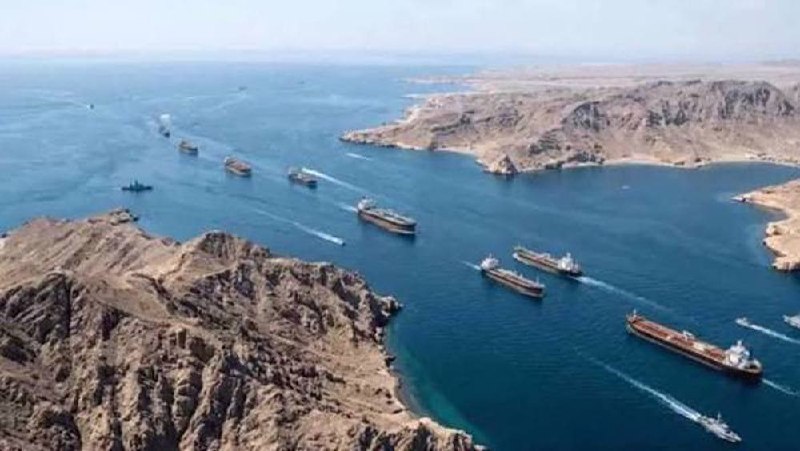
Kpler shipping intelligence compiled by The Cradle and circulating in market channels on 13 July 2026 puts commercial tanker traffic through the Strait of Hormuz at a two-month low. The reading lands in the middle of a week of competing declarations from Washington and Tehran over who, in fact, controls the corridor.
The pattern is the story. A US military announcement carried on 12 July declared the strait "officially open to all vessels seeking lawful transit," reading on the surface as a green light for commercial shipping. Twenty-five hours earlier, Iran's Islamic Revolutionary Guard Corps had declared the corridor closed "until further notice." On the same 13 July reading, President Donald Trump announced the United States would "become the guardian" of the strait and be reimbursed for the protection, per Polymarket wire traffic. Tankers, meanwhile, vote with their hulls: the Kpler tally sits at its lowest point since the spring, even as the public posture from the Iranian side and the American side point in opposite directions.
What the numbers say
The Cradle's reporting on the 13 July Kpler dataset does not itemise vessel classes or flag states, but the signal is unambiguous: aggregate commercial transits are down relative to the trailing sixty days. That move is itself a fact about risk pricing. Shipowners, charterers, and the insurance underwriters who sit between them do not require a formal blockade to reroute or slow-steam; the marginal cost of waiting out a confusing signal is cheaper than the marginal cost of a misread.
For a corridor that handles a substantial share of seaborne crude, even a single week of compressed traffic tightens available prompt supply. Refiners from Mumbai to Rotterdam respond to that signal by drawing on inventory, deferring spot cargoes, and quietly repricing term contracts. None of that requires a single missile, drone, or boarding incident. The declaration, in this case, is the disruption.
The American position, in its strongest form
The 12 July US military statement frames the strait as a global commons the United States has a longstanding interest in keeping open. Trump's 13 July "guardian" statement extends that frame: the United States will secure transit and seek compensation from beneficiaries. Read charitably, that is a coalition-of-the-willing pitch to Gulf monarchies, major Asian importers, and European buyers who rely on the route, an offer of protection backed by the Fifth Fleet's Bahrain base and Carrier Strike Group rotations through the Arabian Sea.
The implicit case is that Iran's IRGC Navy cannot realistically police the corridor against a US Navy that has exercised there for decades, and that the legal status of the waterway as an international strait under customary law places transit on the American side of the ledger rather than the Iranian one. From that vantage, the IRGC's closure notice is declaratory rather than operational, and the right response is to make that clear, keep the oil moving, and bill the neighbours.
The Iranian position, in its strongest form
Tehran does not have to control the corridor to control the conversation about it. The IRGC's closure notice, issued on 11 July, sits inside a long Iranian playbook of coercive signalling: declare control, watch Western naval assets reposition, watch insurance premiums reprice, and harvest diplomatic leverage without firing a shot. Iran's shoreline dominates the northern bank of the strait; its anti-ship missile and fast-boat inventory is the densest in the Gulf; and the legal case for partial Iranian supervision, contested though it is, is not frivolous under the doctrines Tehran has cited in past confrontations.
Read this way, the IRGC notice is not a barrier but a price tag. The "guardian" rhetoric from Washington is, from Tehran's vantage, confirmation that the threat is being taken seriously at the highest level of US domestic politics, which is precisely the audience Iran wants to reach. Counter-claims from Iranian state media in similar episodes have framed US naval guarantees as foreign presence on a corridor Iran considers adjacent to its security perimeter.
Structural frame
What the events of 11–13 July 2026 display is a familiar contest over chokepoint governance playing out in real time, with three distinct audiences being courted simultaneously: commercial shipowners, whose behaviour the Kpler data captures; regional states, who are being asked to choose between underwriting transit guarantees and free-riding on them; and the broader electorate in Washington, where "guardian" rhetoric travels in ways that "maritime interdiction" does not.
The deeper tension is who underwrites the public good of open sea lanes. The United States has, since the 1980s, absorbed most of the operating cost of keeping the strait open and recovered only a fraction through formal alliance contributions. Every administration eventually chafes at that asymmetry. Every administration also eventually discovers that the alternatives, paid escort schemes, Lloyd's-listed war-risk premiums, or Gulf-state coast-guard coalitions, come with their own political overhead. The 13 July statement suggests a US president attempting to convert a public good into a billable service; the IRGC's notice suggests Tehran intends to make that conversion look, to Gulf monarchies, expensive enough to reconsider.
The structural risk for both sides is the same: in a corridor this narrow, signalling mistakes compound quickly. A misread AIS transponder, a strayed bulk carrier, a coast-guard vessel that approaches the wrong hull, and the contest over declarations becomes a kinetic event the Kpler dataset will not capture in real time.
Stakes and what to watch
The immediate stakes sit in three places. First, freight and war-risk insurance pricing through the corridor, which the Kpler dataset indirectly tracks by counting the vessels still willing to transit at posted rates. Second, the political economy of the Gulf monarchies, who are being asked to underwrite a guarantee that the IRGC is simultaneously claiming the right to suspend. Third, the trajectory of Iranian negotiating leverage on the broader nuclear file, which the IRGC's 11 July notice was widely read, in market chatter on the 13 July Polymarket wire, as leverage rather than operational order.
Three forward indicators are worth watching. The first is the next Kpler weekly print, which will say whether the 13 July low is a one-day anomaly or a turn. The second is whether any Gulf state publicly responds to the US reimbursement pitch; silence is itself a signal. The third is the substance of the next IRGC Navy statement: a reiteration of closure, an escalation to specific vessel classes, or a step back into ambiguity will tell observers which way Tehran believes the leverage curve is bending.
What remains uncertain
The Kpler figure is a flow number; the source items do not specify tanker classes, flag states, or cargo types, so the dataset cannot yet distinguish between, say, a slowdown in crude-laden VLCCs and a slowdown in empty-ballast returns. The two have very different implications for tight crude supply. Similarly, the competing declarations are quoted in headline form; the operative legal text behind each, what the US military announcement defines as "lawful transit," what the IRGC's "until further notice" actually suspends, is not in the source set. And the polymarket-relayed statements, while useful as a record of who said what, are not equivalent to on-the-record confirmation from named Pentagon or IRGC spokespersons, a distinction that matters when the corridor itself becomes the headline.
This article was filed from publicly available shipping data and wire statements as of 14:01 UTC on 13 July 2026. Monexus has treated the Kpler print as a market signal rather than a confirmed blockade, and has noted the Iranian and US positions in their strongest form before drawing structural inferences.
Wire provenance
This editorial synthesis draws on the following public wire/social posts:
- https://t.me/s/TheCradleMedia