Four months in, and the analogy is Vietnam
Donald Trump told reporters on 13 July 2026 that the US bombing campaign against Iran would continue tonight and tomorrow, then volunteered a Vietnam-length reference point. The arithmetic, and the cost, deserve a second look.
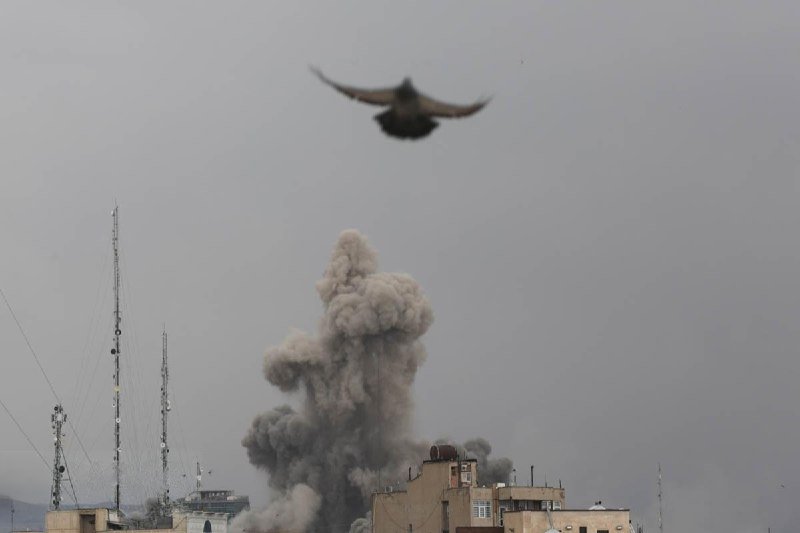
At 22:58 UTC on 13 July 2026, a reporter asked Donald Trump whether the US bombing of Iran had become "the new normal." He had just announced, two and a half hours earlier, that strikes would continue "tonight and tomorrow." His answer, delivered on camera and captured by the pool feed, was historical: "We were in Vietnam for 19 years. We're here for four months."
Four months is not a punchline. It is a frame. And the choice of frame tells you more about the trajectory the administration expects than any policy paper released this week.
The arithmetic of "minimal"
Trump first surfaced the campaign's stakes in a characteristically stark formulation at 20:25 UTC, telling reporters that Iran would use a nuclear weapon "within one day" if it acquired one. That claim anchors the legal and strategic justification for continued strikes. It is the same logic the administration has run for months; the news is that the president is now restating it as a foreseeable, open-ended condition rather than a discrete operation with an end state.
By Trump's own benchmark, four months of bombing in 2026 is minimal against a 19-year American ground war that ended in 1975. But the comparison cuts in uncomfortable directions. The Vietnam war involved ground troops, a conscript draft, and a domestic antiwar movement that eventually forced a withdrawal. The Iran campaign, by every public indication, is being run from the air with no declared footprint on the ground and no conscription debate. The cost is therefore not the same kind of cost, not politically, not economically, and not in lives of the country's own citizens. What the analogy really concedes is duration, not pain.
What "tonight and tomorrow" actually means
The 20:20 UTC announcement, relayed via the sprinterpress account, was framed as imminent action: strikes tonight and tomorrow. Yet the 22:58 UTC exchange made clear that "tonight and tomorrow" sits inside a campaign that has run continuously for months. There is no operational delineation visible in the public record between a discrete escalation and the steady-state tempo that preceded it. The reader is being asked to treat each new 48-hour window as a fresh decision, while the underlying rhythm is unchanged.
That is the rhetorical move worth naming. When a campaign is sold as "tonight and tomorrow," every news cycle produces a fresh permission slip. The strategic question, when does this end, and on what terms, never has to be answered, because the question of the day is always what happens in the next 48 hours.
The nuclear justification, restated
The "within one day" formulation is worth scrutinising on its own terms. It is an inference about an adversary's hypothetical behaviour, used to justify present action. It is also a sentence the same administration has used, in slightly different wording, at multiple points during the campaign. Each restatement extends the period during which the inferential basis goes unchallenged, while the material basis, what nuclear capability Iran currently has, what is being bombed, what intelligence is driving target selection, remains classified.
Critics of US Iran policy, including voices in the Global South and within European foreign ministries that have publicly distanced themselves from unilateral strikes, treat exactly this pattern as the structural problem: a campaign whose necessity is asserted rather than demonstrated, and whose expansion is treated as routine. The administration's Vietnam comparison actually undercuts that criticism, because it concedes duration and normalcy in the same breath it tries to reassure.
What to watch next
The 48-hour cycle now turns twice more before the week's news cycle closes. The honest read of 13 July 2026 is that the administration is not signalling an escalation, an off-ramp, or a negotiation window. It is signalling that the current tempo will continue unless something forces it not to. The Vietnam frame is, in that light, a quiet warning that "something" is going to have to come from outside the bubble of nightly targeting meetings, because inside that bubble, four months does indeed look minimal.
Desk note: this piece leads with the president's own pool-feed quotes rather than the wire framing of the day's escalation, because the news on 13 July 2026 is less the strikes themselves than the analogy the president reached for to defend them.
Wire provenance
This editorial synthesis draws on the following public wire/social posts:
- https://x.com/sprinterpress/status/2036803214846869504
- https://x.com/polymarket/status/2036803214846869505
- https://x.com/shaykhsulaiman/status/2036803214846869506