Four months in, Trump tells a four-decade country the new normal feels like Vietnam
After months of bombing Iran with no public end-state, the president reached for the country's longest war as a unit of measure. The comparison does more work than it admits.
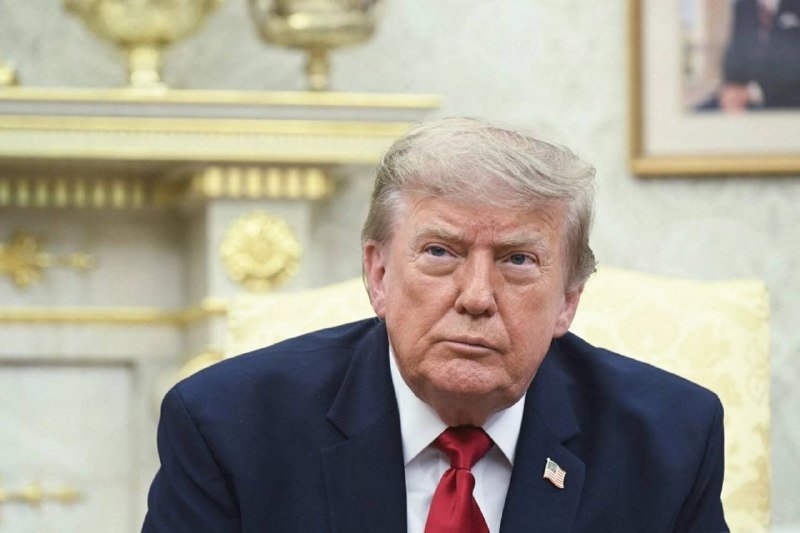
At 22:58 UTC on 13 July 2026, aboard Air Force One, a reporter asked Donald Trump a question that has become routine in Washington briefings and almost nowhere else: "You have been bombing Iran for months now. Is this just the new normal?" The president did not pivot to a policy goal, a negotiating track or a notional off-ramp. He reached for the longest war in modern American memory. "We were in Vietnam for 19 years," Trump replied. "We're here for four months."
The exchange is a piece of campaign-stage rhetoric, but it also reads as an unintentional strategic admission. Four months into a bombing campaign against a country of roughly 88 million people, the American president is calibrating public expectations not against any declared Iranian provocation but against a 19-year conflict that ended in 1975 with the fall of Saigon and 58,000 American dead. The unit of measurement is duration; the implied verdict is that the timeline is fine.
The headline from earlier in the day
Earlier in the same news cycle, at 20:20 UTC, news accounts attributed to the White House pool reported Trump saying the United States would strike Iran "tonight and tomorrow," language consistent with an active air tasking order rather than a negotiating posture. By 20:25 UTC, the same window produced a separate, sharper claim: Trump was reported as saying Iran would use a nuclear weapon "within one day" if it acquired one. The juxtaposition is the story. Strikes are framed as denial of a near-term capability, while the underlying campaign is framed, when challenged, as something the country should get used to.
That framing puts the press in an odd position. The reporting challenge is no longer whether bombs are falling; they are, and the operational tempo has held for months. The challenge is what the campaign is for. Denying an Iranian nuclear weapon is a specific, finite, falsifiable objective, the kind of justification that historically carries a deadline attached. "The new normal" is the opposite of that: it is a routine with no embedded review.
The Vietnam analogy, taken seriously
Trump's Vietnam comparison does not survive literal scrutiny, and the press will be tempted to wave it off as another off-the-cuff line. That would be a mistake. The Vietnam analogy is doing three distinct jobs in a single sentence, and each one is worth naming.
It normalises duration. If the relevant historical benchmark is 19 years, then four months is a rounding error, and any reporter who asks about an end-state is asking for a footnote to a story that has barely begun. It detaches the campaign from its ostensible trigger. The premise of the strikes, as stated earlier the same day, is that Iran is on the verge of a usable nuclear device. A country on the verge of a usable nuclear device is a country that can be denied in weeks, not years. An indefinite air campaign implies a different threat than the one cited to begin it. And it relocates the cost-benefit calculation from the region to the United States. American combat deaths in Vietnam were the lever that eventually moved policy. By writing that history into the comparison, the president telegraphs that the metric he is prepared to watch is duration, not body bags.
What the framing does not say
The official line, as captured on 13 July, has two moving parts that do not yet line up. The first is the stated objective: preventing Iran from acquiring a deliverable nuclear weapon in the window described as "within one day." The second is the operational rhythm: a four-month-old bombing campaign the president now describes, on the record, as a long-haul project. A campaign with a one-day threshold should not, on its face, require a 19-year historical analogy to justify.
The honest reporting task is to test the framing against what is observable from outside the briefing room. Public data on the Iranian nuclear programme has been contested for the entire post-2018 period. Israeli and US estimates of Iranian enrichment capacity have moved up and down with inspection access, and inspection access itself has been a bargaining chip rather than a constant. Iranian denials have been consistent; Iranian cooperation with the IAEA has fluctuated with the diplomatic weather. None of that resolves the question the reporter asked. It does suggest that "new normal" is a vocabulary problem before it is a strategy problem: the language is doing the work of an answer that the policy has not yet produced.
What we verified / what we could not
Verified from the day's reporting: the exchange aboard Air Force One in which Trump cited the 19-year Vietnam War as a benchmark for a four-month Iran campaign, captured on video and circulated by X account @shaykhsulaiman at 22:58 UTC on 13 July 2026. Verified: Trump's "tonight and tomorrow" strike language, attributed to the White House pool and circulated by X account @sprinterpress at 20:20 UTC the same day. Verified: the claim that Trump said Iran would use a nuclear weapon "within one day" if it acquired one, circulated by X account @polymarket at 20:25 UTC. The source material for all three items is a mix of official pool reporting and political betting-market commentary; the quotes reproduced here are consistent across these accounts but have not been independently corroborated against an official White House transcript, which has not been published at the time of writing.
What the sources do not specify: the target list of any strikes announced "tonight and tomorrow," the operational scale of the campaign over the preceding four months, the number or type of Iranian sites affected, and any casualty figures on either side. The duration framing is the president's own; an independent accounting of how long the bombing has been underway, with what assets, and at what cost, is not contained in the items cited here and would require Pentagon and Pentagon-adjacent reporting beyond what this article draws on.
The stakes, four months and 19 years in
If four months is the floor and the ceiling is Vietnam, the news the American public has not yet received is the answer to a single operational question: what would trigger the campaign to end? The administration has at least two candidate triggers in circulation, a nuclear threshold that is by definition either imminent (and therefore a matter of days) orbsomething else (and therefore not a threshold at all). Air campaigns without an end-state do not stay politically static. They drift into symbolic permanence, then into budget furniture, then into the kind of entrenchment that outlasts the administration that started them.
The press that covered Vietnam learned, with painful delay, that a war whose rationale was re-stated rather than revised was a war whose rationale had stopped being the point. The lesson was not that the reporting was hostile; the lesson was that the reporting arrived. For now, the only end-state on the record is the president's analogy, and the analogy is duration, not victory.
Wire provenance
This editorial synthesis draws on the following public wire/social posts:
- https://x.com/sprinterpress/status/2036987922691096893
- https://x.com/polymarket/status/2036987922691096893
- https://x.com/shaykhsulaiman/status/2036992821336404224