Amman in the cross-hairs: how a single Telegram thread set a regional narrative
Within twelve minutes, four Telegram channels had turned unverified blasts into a tidy Iran-strikes-Jordan story. The speed tells you more about the modern information order than the explosions do.
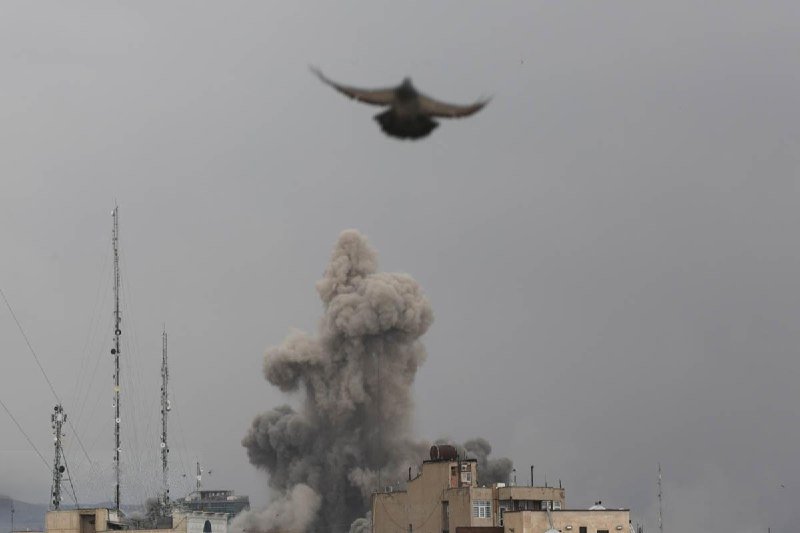
At 01:04 UTC on 13 July 2026, the channel GeoPWatch posted a two-line alert: "Explosions in Jordan." Nine minutes later, the same account had narrowed the geography, tagging the capital, Amman. By 01:16 UTC, a third message followed: another explosion in the city. In the interval, Iran's Tasnim, the Arabic service of al-Alam, and PressTV had each carried a version of the same thread, and the framing was already fixed. This is not a story about what detonated in Amman. It is a story about how a four-channel Telegram cluster, operating in near-real time, told the region what to believe before any major wire service had filed a syllable.
The pattern is worth examining on its own terms. A loud, unverifiable noise becomes a politically legible event inside twelve minutes, and the political reading attached to it is the one most useful to the channel that shouted loudest. The structural lesson is older than social media: a fog of war rewards the actor who supplies vocabulary fastest. Telegram has simply made the speed-of-vocabulary contest a continuous, public event.
The twelve-minute newsroom
Between 01:04 and 01:16 UTC on 13 July 2026, four distinct accounts produced six messages about blasts in Jordan. GeoPWatch fired first, at 01:04, with the bare claim. Three minutes later, Tasnim, al-Alam Arabic, and PressTV all moved within a single minute of each other, all carrying the same "media sources" formulation. By 01:13, GeoPWatch had upgraded the geography to Amman. By 01:16, the same channel was reporting a follow-on blast in the capital. There was no official Jordanian confirmation in the thread, no Israeli readout, no Western wire. The story was, at that point, four Telegram channels citing one another.
The choreography is the point. The "media sources" label in the al-Alam Arabic alert is doing the work a Reuters byline would normally do. It is a credential borrowed, not earned. PressTV's message, distributed at 01:07 UTC, makes the attribution explicit in the other direction: "Explosions heard in Jordan following Iran strikes." The verb is in the past tense; the causation is in the headline. Twelve minutes of social-media relay had turned an unverified acoustic event into a completed Iranian military operation against a third country.
What the sources do not say
The thread is silent on the things a careful reader most needs. It does not name a target in Amman. It does not give a casualty count, a neighbourhood, an official Jordanian statement, or an Israeli, American, or Iranian military comment. The Telegram items attribute nothing to a named source on the record. PressTV's claim of Iranian strikes is unattributed even within its own frame. The al-Alam Arabic and Tasnim messages cite "media sources" in the abstract, a formulation that flatters the reader's sense of being shown the backstage while actually showing nothing.
The reasonable read is that the thread is not reporting. It is sequencing. The first message sets the location. The second and third, both from Iranian state-aligned accounts, set the actor. The fourth and fifth, both back to GeoPWatch, deepen the location and raise the tempo. Each step reduces the cognitive distance between the reader and a particular conclusion: that Iran struck Amman. The factual content of the underlying event, whatever it was, is almost incidental to the sequence.
Counter-reads and what survives them
There are two competing interpretations of what happened on those Telegram channels at 01:04 UTC, and both have to be on the page. The first, friendlier to the channels, is that the operators had on-the-ground contact in Amman and moved faster than any major wire. Telegram is, after all, a legitimate tool of citizen and combat reporting; the Arab Spring and the early war in Ukraine both turned on exactly this kind of speed. The second, less generous read, is that the channels ran the sequence first and let reality catch up. The fact that the Iranian state-aligned accounts (Tasnim, al-Alam Arabic, PressTV) converged on the framing within a single minute is more consistent with coordinated messaging than with four independent reporters happening on the same story. Both readings are consistent with the evidence. Neither is provable from the thread alone.
What survives either reading is the order. By the time a Reuters or AFP stringer files from Amman, the political ground is already prepared. Readers will encounter a sober wire report as confirmation of a Telegram-shaped narrative, not as a fresh fact. The wire has not been beaten. It has been pre-empted.
The structural frame, in plain terms
The modern information order rewards the actor who can deliver a coherent story in a single round of virality. State-aligned and quasi-state Telegram channels have learned to operate as continuous, lightly-sourced newsrooms: fast, narrative-driven, and indifferent to the evidentiary standard that a wire desk would apply. The cost is borne by the reader, who absorbs the framing before the facts, and by the slower outlets, whose careful reporting arrives as footnote to a frame they did not set. The lesson of the 01:04 to 01:16 UTC window is not that Telegram is unreliable. It is that the platform has become a primary site of agenda-setting, and the agenda in this case is the one the loudest channels wanted.
What remains genuinely uncertain, on the source record available here, is what actually detonated in Amman at 01:04 UTC, whether Iranian forces were involved at all, and whether the follow-on blast GeoPWatch reported at 01:16 was a separate strike or the same event echoed through a second channel. Those questions will be settled, if they are settled, by Jordanian, Israeli, and Western-wire reporting, not by the Telegram thread that named the capital first. The naming is now the news. The event will have to fit inside it.
The Monexus desk notes that the wire of record here is four Telegram channels, three of them Iranian state-aligned, working in concert inside a twelve-minute window. We have weighted the framing accordingly: the political reading of the event is treated as the channel operators' claim, not as a confirmed fact.
Wire provenance
This editorial synthesis draws on the following public wire/social posts:
- https://t.me/GeoPWatch
- https://t.me/JahanTasnim
- https://t.me/alalamarabic
- https://t.me/presstv
- https://t.me/GeoPWatch
- https://t.me/GeoPWatch