A Caspian strike, and the question Iran's government couldn't dodge
Iran's government says a Ukrainian strike killed a sailor on a commercial vessel in the Caspian Sea. Kyiv says it hit a Russian warship and ships ferrying arms between Russia and Iran. The dispute lands as Iranian state TV argues with its own negotiating team.
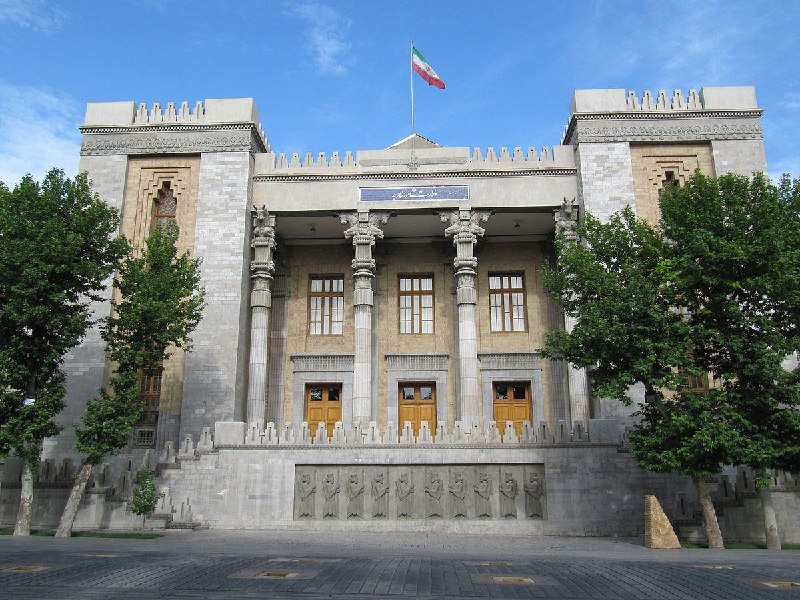
Iran's government said on 25 July 2026 that a Ukrainian attack on a commercial vessel in the Caspian Sea killed one sailor and injured another, calling the strike a criminal act. The accusation, carried by Al Jazeera English and Reuters on the night of 25 July, lands within hours of a separate public argument between Iran's government and Iranian state television over how to handle mediators pushing for talks with the United States.
That pairing is the story. Monexus analysis: the underlying event is no longer a single-source claim, but the political product is the gap between Tehran's framing and Kyiv's framing of the same night on the same sea. The same evening, Iran's negotiating team is publicly fighting with its own state broadcaster over the diplomatic file. Two separate fights, one credibility account.
The two framings, side by side
Tehran's line, as relayed by Al Jazeera English and Reuters on 25 July 2026, is that a Ukrainian attack on a commercial Caspian vessel killed one crew member and wounded another, and that this constitutes a criminal act. The framing is civilian-shipping casualty. The implied readership is the maritime insurers, the Caspian littoral states, and the mediators in the nuclear file. Tehran is moving that audience.
Ukraine's line, as paraphrased from Reuters by the WarMonitor channel on 25 July 2026, is that its forces struck vessels in the Caspian being used to ferry arms between Russia and Iran. The framing is military-logistics interdiction: degrading the infrastructure the two countries have been building to move weapons or sanctioned goods across a closed sea. Monexus assessment: the two framings are not reconcilable. One sailor is dead, by Iran's count, and the targets, by Ukraine's description, were war-related vessels, not merchantmen. That mismatch is the political product both sides are now selling, and it is more durable than any single naval fact.
Why the state-TV argument is the more interesting story
The second thread, running on the same night, is the open disagreement between Iran's government and Iranian state television over how to handle mediators pushing for progress with Washington. Monexus assessment: an unguided public argument between a sitting government and its own state broadcaster, on the eve of a diplomatic round, is itself a signal. It tells the outside world that the Iranian elite does not have a single bargaining position, and that any deal reached will be fought over the moment it is announced.
The Caspian incident sharpens that. The harder the government has to sell talks to a sceptical domestic audience, the more it benefits from a fresh, vivid external incident to anchor the narrative of principled resistance. A dead sailor on a cargo ship is a usable fact in a way that diplomatic language is not. Ukraine's confirmation, paraphrased into the WarMonitor channel from Reuters the same day, sharpens it the other way: once Kyiv owns the strike publicly, the Iranian framing loses its cleanest moral register, and the government has to argue about war materiel instead of widows.
The shipping angle the wires are underplaying
The Caspian is a closed sea with five littoral states: Russia, Iran, Kazakhstan, Turkmenistan, and Azerbaijan. A strike on a commercial vessel, regardless of the perpetrator, raises freight-insurance questions that will be priced before any maritime lawyer is asked. Reuters and Al Jazeera both reported the Iranian government's accusation; neither, in the cited items, addressed the shipping-market implications. Monexus analysis: watch the next 48 to 72 hours for a Caspian-routing notice from a major underwriter. If insurers begin to price the basin as a higher-risk zone, the diplomatic cost of the incident compounds well beyond the single fatality Iran is reporting.
Ukraine's characterisation of the targets as vessels ferrying arms between Russia and Iran does not relax that pressure; if anything it tightens it. Warships and arms-ferry traffic in the Caspian are part of the Russian and Iranian naval order of battle, and any sustained pattern of Ukrainian long-range strikes into the basin changes how Russian-flagged and Iran-linked commercial traffic gets underwritten across the corridor.
What the sources do not yet settle
The open questions are now narrower than they were twelve hours ago, but they are real. The available source items do not specify the vessel Iran's government calls a commercial ship: its flag, owner, cargo, or last port. They do not specify whether Ukraine's identification of vessels ferrying arms between Russia and Iran is drawn from its own operational reporting or from Western-partner intelligence sharing. They do not specify the weapon system used, the time of impact, or any casualty count on the Russian or Ukrainian side. Reuters and Al Jazeera both carried Iran's accusation; neither, in the available items, independently confirmed the casualty beyond Iran's own statement. Read both sides as what they are: each government's framing of the same night on the same sea, relayed by the wire and the channels that wire it.
The stakes, plainly
If the Caspian strike unfolded as Tehran describes, the diplomatic cost lands in the nuclear file and in any UNSC motion, and Russia inherits a fresh security problem on a closed sea. If the strike unfolded as Kyiv describes, the cost lands on Iran's narrative of victimhood at the very moment its negotiating team is trying to close a deal. The same evening's state-TV argument, as relayed by Al Jazeera English, suggests the credibility account is already overdrawn on Tehran's side. The next 72 hours will show which way the balance tips: a Caspian underwriter notice, a Ukrainian general-staff briefing with operational detail, or a concrete exchange in the nuclear track.
Desk note: Monexus framed this as a two-track story, a battlefield accusation and a domestic Iranian argument, rather than as a single incident report. Where the Iranian government's framing and Ukraine's public confirmation diverge, the piece names both. The wire carries Iran's casualty count from the Iranian side; the WarMonitor channel carries the Ukraine line as a paraphrase of Reuters; the article treats both as load-bearing without inflating either into sourcing it does not have.
Wire provenance
This editorial synthesis draws on the following public wire/social posts:
- https://www.aljazeera.com/news/2026/7/25/iran-accuses-ukraine-of-deadly-attack-on-caspian-commercial-vessel?traffic_source=rss
- https://x.com/Reuters/status/2081156323538841806
- https://t.me/aljazeeraglobal/138535
- https://t.me/aljazeeraglobal/138523
- https://t.me/osintlive/559230