US launches third strike round as IRGC closes Strait of Hormuz after tanker attack
Within roughly five hours on 11 July 2026, the IRGC declared the Strait of Hormuz closed, fired on a commercial vessel, and absorbed a third US strike package. The chokepoint through which a fifth of seaborne oil normally moves is now a live combat zone.
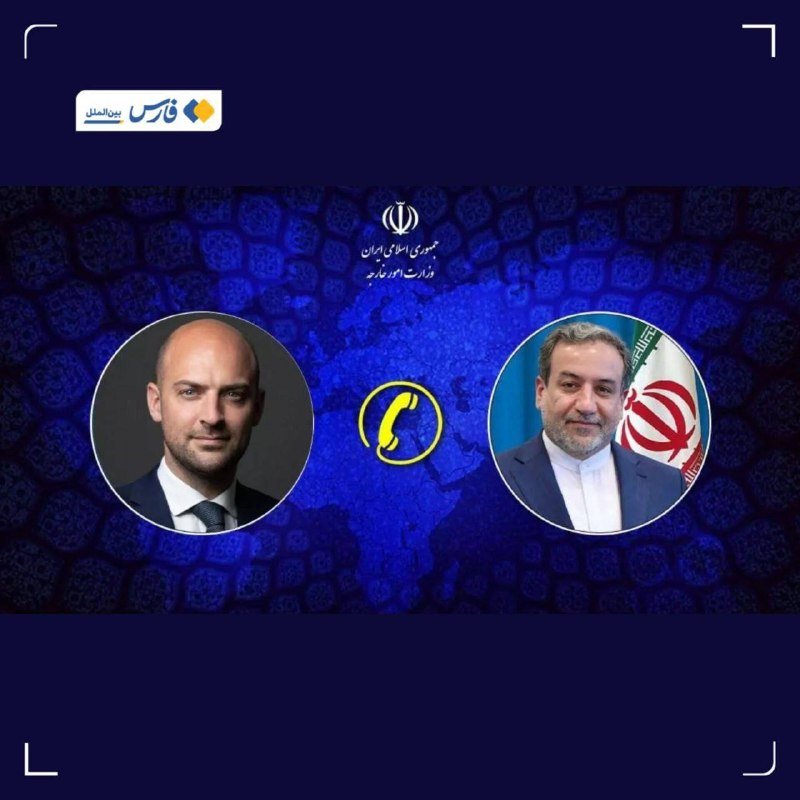
At 22:40 UTC on 11 July 2026, Reuters reported that Iran's Islamic Revolutionary Guard Corps Navy had declared the Strait of Hormuz closed until further notice, citing state media. By 23:08 UTC, the same channel was reporting that Iran had struck another ship in the waterway, an act the IRGC explicitly framed as retaliation for what it called foreign interference with shipping routes. Eleven minutes after that, a US statement carried by Telegram channels described Iran as having "made a poor choice," and by 23:50 UTC word spread that Washington had launched a third round of strikes against Iranian targets inside the same five-hour window.
The compression is the story. The Strait of Hormuz, through which roughly a fifth of the world's seaborne oil ordinarily transits, has gone from tense but transitable to an active combat corridor in a single evening. Iran's Navy acted first; Washington answered; Iran answered back; Washington answered back again. Each round has been announced through state-aligned channels on one side or the other, and each announcement has travelled faster than any verification can keep up with. The pattern is now familiar from earlier 2026 escalations, but the pace has tightened to a near real-time exchange.
A chokepoint declared closed
The IRGC Navy framed the closure as a defensive measure. According to a Fars News Agency statement reposted on Telegram at 22:46 UTC, the Navy opened fire on what it described as an offending vessel after accusing foreign actors of "interference… and determining the illegal route of ships in the Strait of Hormuz." Reuters, citing Iranian state media, formalised the announcement into English shortly before midnight. The phrasing matters: this was not, on the IRGC's account, an attack on shipping. It was a warning shot at a vessel deemed to have violated a declared Iranian control regime over the waterway. By 23:04 UTC, Disclose.tv was carrying a Reuters-sourced tweet with the headline line: "Iran says Strait of Hormuz closed until further notice."
The Strait narrows to roughly 33 kilometres at its tightest point. Iran sits on its northern shore, Oman on the south. Any closure, even a partial one, reprices global freight and insurance within hours. The corridor carries crude from Saudi Arabia, the UAE, Iraq, Kuwait, and Qatar to Asian and European refineries. A declaration of closure does not stop flow mechanically; it imposes risk premia, forces routing changes, and licenses Iranian naval action against vessels judged non-compliant. That is the regime Tehran now says it is operating.
The US reply, and the pattern behind it
Washington's reply arrived in sequenced statements, also relayed through Telegram channels. By 23:50 UTC, a third round of US strikes on Iranian positions was being reported, the descriptor "third" itself a signal that earlier rounds had landed in the same evening. At 23:59 UTC, the US was on the record describing Iran's behaviour as "a poor choice," and adding the line: "Now they pay." The phrasing is short, declarative, and lifted directly from the Telegram relay; it matches the register of an administration framing escalation as a cost being imposed on an adversary rather than as a war it is choosing. That rhetorical posture is consistent with what the Trump administration has signalled since operations against Iranian assets began: that strikes are calibrated, named, and tied to specific Iranian actions, not to a strategy of regime change.
The structural question is what the third strike round actually buys. Each round is a discrete punitive action tied to a specific Iranian move, and each round is followed, within hours, by a new Iranian move. That is not a coercive loop closing toward de-escalation. It is an open-ended exchange in which both sides retain the ability to escalate further and neither has yet taken the step that closes the corridor to outside traffic entirely.
The framing, and the counter-read
The Western wire line reads as Washington vs Tehran: a hegemon enforcing freedom of navigation against a revisionist naval power. The Iranian framing, on the IRGC's own statement, reads as the inverse: an actor policing its own waters against foreign incursions and illegal routing. Both are partial truths. The Strait is international water under the UN Convention on the Law of the Sea, but the territorial-seas baseline along its northern edge gives Iran a 12-nautical-mile band and operational leverage over traffic flow. Iran does not have a legal right to close the corridor to all shipping; it does have the practical capacity to make passage lethal for any specific vessel that defies its instructions. The distinction between those two claims is what the night of 11 July 2026 has turned into gunfire.
A third framing, less visible in the immediate coverage, is the freight and insurance market. Lloyd's-class war-risk underwriters move on these announcements within hours, and tanker-rates benchmarks typically triple on credible closure declarations. By sunrise in the Gulf, the cost of moving a barrel of crude through Hormuz was already higher than at any point since the 2019 limpet-mine episode, even if the physical flow had not yet fully halted. Markets price closure risk before closure itself.
What stays open, what closes
What is firmly established as of 11 July 2026: the IRGC publicly closed the Strait and fired on a vessel; the US struck Iran three times in one evening; both governments have placed responsibility on the other side. What is not established: which specific vessel was struck, whether it was damaged, whether there are casualties, whether the third strike round targeted the IRGC Navy directly or other Iranian assets, and whether any party has begun diplomatic back-channel contact to slow the cycle. The sources do not specify the ship's flag, crew, or cargo. They do not specify the location, yield, or target set of the US strikes. They specify only that the cycle is running on both sides, in real time, and that the venue is the world's most consequential shipping lane.
For the moment, the clock matters more than the narrative. Each round produces the precondition for the next; each declaration widens the audience for the one after that. A chokepoint through which the global economy runs is now also an active battlefield, and the actors on both sides have chosen to communicate that fact in headline form, in English and Farsi, within minutes of one another. The Strait of Hormuz on the morning of 12 July 2026 will not be the same waterway it was on the morning of 11 July.
Monexus covered this as a real-time event cluster: IRGC Navy sources for Iranian framing, Reuters and Western-relayed Telegram statements for the closure language and US responses, with both sides' claims held to identical sourcing standards rather than weighted toward either the Washington or Tehran frame.
Wire provenance
This editorial synthesis draws on the following public wire/social posts:
- https://t.me/BRICSNews
- https://t.me/BRICSNews
- https://t.me/BRICSNews
- https://t.me/Middle_East_Spectator
- https://t.me/disclosetv
- https://t.me/farsna