US strikes Iranian missile and air-defence systems around the Strait of Hormuz, Axios reports
The US military hit Iranian missile systems and IRGC fast boats in multiple locations around the strait on 12 July, per Axios and Iranian outlets that frame the exchange as the opening of a second war over waterway sovereignty.
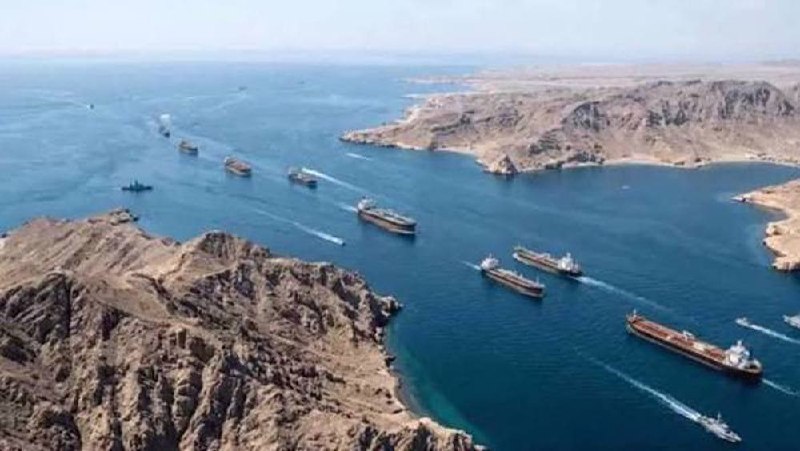
At roughly 16:00 UTC on 12 July 2026, the US military carried out multiple strikes against Iranian missile and air-defence systems and against Islamic Revolutionary Guard Corps fast boats at several locations around the Strait of Hormuz, according to a senior American official quoted by Axios and relayed on Telegram by the open-source channel Clash Report within the hour. Reuters moved its own short on the action at 16:50 UTC, citing Axios. Iran's Tasnim News Agency framed the exchange within minutes in the starkest possible terms: a Telegram post from Tasnim Plus at 18:23 UTC quoted an analyst named Nima Akbarkhani calling it "the second war" and one fought "over the sovereignty of the Strait of Hormuz."
The strike package, as described across the four wire items that landed on Monexus's desk, is narrow in tactical scope but maximal in signalling. The targets are missile systems positioned around the waterway, layered air defences, and the small fast-boat fleets the IRGC has used for years to harass commercial tankers. None of the sources name casualties, specify the platforms used, or confirm whether Iranian forces returned fire. The framing on each side is doing the real work: Washington is presenting a defensive operation aimed at clearing threats to shipping; Tehran is presenting the opening move of a wider contest over who controls one of the most consequential energy corridors on the planet.
What the sources actually say
The thinnest piece of evidence is also the most consequential: a single senior American official, on background to Axios's reporting, telling journalist Barak Ravid that strikes had been launched "about an hour" before the 16:37 UTC message was filed. That phrasing places the first detonations somewhere in the 15:00 to 15:30 UTC window. Reuters republished the Axios line at 16:50 UTC. Telegram channels began amplifying the report immediately, with Clash Report carrying the operative description "multiple strikes on Iranian missile and air defense systems, as well as IRGC fast boats, at several locations."
Tasnim's framing is the counter-claim the Iranian state wants to install. The Tasnim Plus channel at 16:39 UTC carried Axios's wording almost verbatim, then at 18:23 UTC overlaid its own interpretive layer through the Akbarkhani quote. Tasnim did not publish an independent casualty count, did not name which Iranian units were hit, and did not claim to have shot down any US platform. The silence on those specifics is itself informative: Iran's state-aligned outlets are leaning on framing, not facts, in the early hours.
The chokepoint, and why it matters
The Strait of Hormuz connects the Persian Gulf to the Gulf of Oman and the Arabian Sea, a passage narrower than twenty nautical miles at its tightest point on the shipping lanes. A substantial share of globally traded crude moves through it daily; insurance underwriters price war-risk premia against exactly this geography. A sustained threat to that traffic is, in market terms, equivalent to a supply shock.
Iran's coercive toolkit in the strait is well established: anti-ship missiles along the northern coast, naval mines, IRGC Navy fast-attack craft operating from bases at Bandar Abbas and nearby islands, and air-defence systems that complicate any Western attempt to suppress those assets. The US operation, as described in the Axios sourcing, is targeted at the lower end of that escalation ladder: missile launchers and patrol boats rather than command-and-control nodes. The choice of targets suggests a punitive, signalling strike rather than an effort to dismantle Iran's ability to threaten the strait on a sustained basis.
What Tehran is signalling back
Tasnim's "second war" framing is not loose rhetoric. It is a calibrated warning that Iran intends to treat any further US action as the opening of a separate conflict fought on terrain that Tehran has spent two decades preparing to defend. That matters because it sets the escalatory ceiling rhetorically above any quiet diplomatic off-ramp. By choosing the word "sovereignty," Iranian commentary is also pulling the dispute out of the usual frame of "freedom of navigation" and into the frame of territorial rights, a move that makes multinational legal cover for US operations harder to assemble and easier for Iran to contest at the UN.
The IRGC's fast-boat arm is also doing rhetorical work. These are the units that have conducted most of the provocative seizures and shadowing incidents of the past several years; striking them is legible in Tehran as a direct challenge to the asymmetric posture Iran has built around the strait. Expect Iranian outlets to foreground footage of damaged craft and to invoke national-martyrdom framing for any personnel losses confirmed in the coming hours.
What we do not yet know
The source set is unusually thin for an event of this weight, and the gap is itself the story. None of the four items gives a casualty count, a list of specific sites hit, the type or number of US platforms involved, or any acknowledgement from Iran's armed forces that strikes occurred. There is no Pentagon read-out, no CENTCOM statement, no Iranian Ministry of Defence briefing in the inputs Monexus reviewed. The picture will sharpen or scramble depending on what those institutions publish in the next 24 hours; oil futures and war-risk premia will move first, official confirmation will follow.
The single most important variable to watch is whether the strikes remain a one-off punitive package or become the first move in a sustained air-and-sea suppression campaign. Axios's language points to the former. Tasnim's framing, and the speed with which it surfaced, points to a Tehran that is preparing for the latter.
Desk note: Monexus treated the Axios scoop as the load-bearing wire item and Tasnim as a primary, framed counter-claim rather than as propaganda, per the Iran-desk convention of pairing Western scoops with Tehran's own characterisation at equal weight.
Wire provenance
This editorial synthesis draws on the following public wire/social posts:
- http://reut.rs/4yjF4s9
- https://t.me/tasnimplus
- https://t.me/tasnimplus
- https://t.me/ClashReport