US strikes Iranian missile and air-defence sites near the Strait of Hormuz
Within an hour of the first reports, the US hit Iranian missile systems, air defences and small boats along the world's most important oil chokepoint, with Tehran silent so far and oil markets waiting for a response.
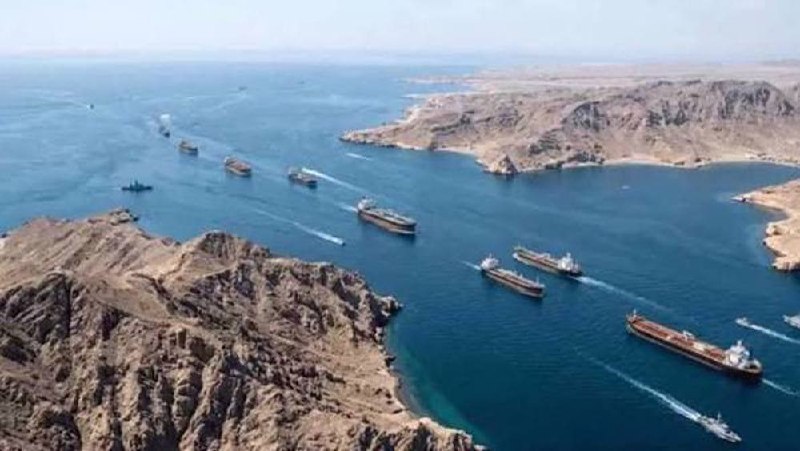
At roughly 15:50 UTC on 12 July 2026, the United States military opened what Axios correspondent Barak Ravid described as a coordinated wave of strikes against Iranian missile and air-defence systems in and around the Strait of Hormuz, with additional action against Iranian speedboats in several locations along the waterway. Reporting from Reuters and Telegram channels tracking the same feed put the first accounts on the wire inside an hour, with the US side characterising the operation as a defensive response to recent Iranian activity and Iran yet to publicly confirm or deny losses.
The pattern is the story. A superpower with global reach has used air and naval power inside the territorial approach of the world's most consequential oil chokepoint, in a corridor that carries roughly a fifth of seaborne crude, against a regional adversary it has been unable to bring to the table diplomatically. Tehran's silence in the first hours, combined with reports of multiple Iranian missile batteries, radar nodes and fast-attack craft being hit, suggests a US operation built to be felt but not, at least publicly, framed as the start of a wider war. Whether that framing holds is the question markets, governments and Iran's own command will spend the next 48 hours testing.
What was hit, and where
The targets named in the initial reporting are specific. According to the OSINTdefender relay of Ravid's Axios story, US forces struck Iranian missile systems and air-defence installations, and additionally engaged small Iranian boats in several positions around the Strait of Hormuz. The Iranian state-aligned outlet Tasnim, summarising Axios on its Telegram channel, used the same language: strikes against Iran, and against Iranian speedboats at multiple points along the waterway, launched roughly an hour before the publication of the report at 15:45 UTC.
None of the reporting on the wire by mid-afternoon UTC identified the platforms used, the ordnance employed, or the exact coordinates. Reuters' 15:50 UTC dispatch, sourcing Axios, is the highest-tier confirmation of the strike package itself, and the channel chain is consistent: a US official briefed Axios, Axios reported, OSINTdefender and Tasnim both paraphrased the Axios account, and Reuters republished the underlying claim. The chain gives confidence that strikes occurred; it does not yet give a battle damage assessment. Iranian state media, in the first hour, had not claimed any successful intercepts or any loss of Iranian personnel.
Why the Strait, and why now
The Strait of Hormuz is the narrow mouth of the Persian Gulf, bordered by Iran to the north and Oman to the south, with shipping lanes that narrow to roughly three nautical miles in each direction. Through it passes the bulk of Gulf crude exports from Saudi Arabia, the UAE, Kuwait, Iraq and Qatar, as well as Iranian exports to Asia. Disruption of even a few days' flow historically moves global benchmarks: a credible threat of closure is, in effect, a tax on the world economy and a lever Iran has held since the Iran–Iraq war of the 1980s.
The decision to use force inside that geography is therefore a signal, not a tactical footnote. The US framing, as relayed by Axios's senior US official, is that the action is a response to recent Iranian moves, described in the same breath as missile and air-defence systems that could threaten commercial or military traffic through the strait. Iranian fast boats, the same category of small craft that have shadowed US Navy vessels in the Gulf for two decades, are an additional target set: low-cost, deniable, and politically combustible.
What the framing hides
The dominant Western wire line is that this is a calibrated defensive strike, the kind of action a global naval power takes when an adversary crowds the threshold of its own chokepoint. That line has weight, and Israeli and Gulf security concerns about Iranian missile coverage of the strait are real, not invented. But the framing also obscures three things worth saying plainly.
First, the strikes sit inside a longer US posture in which diplomacy and maximum pressure have run in parallel for years, with neither track delivering a durable nuclear or missile arrangement. Second, the targeting of small boats is a category the US has historically treated as harassment to be deterred, not as a casus belli; treating it as such represents an escalation threshold that has moved. Third, Iran does not get a voice in the first-hour Western narrative. The absence of an Iranian readout is not yet a position, but it is a reminder that the only actors quoted in the first cycle are American officials and American-aligned outlets.
What to watch next
Three concrete data points will determine whether 12 July 2026 is remembered as a punch or as the first round. Iranian state media's first official statement, when it comes, will set the escalation menu: denial and quiet, retaliatory signalling through proxy fire, or direct confrontation. Brent and Dubai crude prints, when Asian markets open, will show whether traders read the strike as contained or as the leading edge of a closure risk. And the US Navy's freedom-of-navigation posture through the strait over the next 72 hours, in particular whether commercial traffic is being actively escorted, will tell the world whether Washington believes the chokepoint is now safer, or merely quieter for a moment.
The reports so far describe a strike, not a campaign. They do not yet describe a peace.
Desk note: Monexus is leading with the Axios and Reuters wire because they are the only tier-1 outlets currently on the record, and treating the OSINTdefender and Tasnim relays as secondary, sourced paraphrase rather than independent confirmation. Iranian state media's silence is itself a data point and is being reported as silence, not as agreement.
Wire provenance
This editorial synthesis draws on the following public wire/social posts:
- http://reut.rs/4yjF4s9
- https://t.me/s/osintlive
- https://t.me/s/tasnimplus