US strikes on Iran ease into a pause, leaving diplomacy and escalation in the same frame
After a wave of US air operations across military and civilian-adjacent sites in Iran on 12 July 2026, the firing stopped. The pause is not a settlement, and Tehran is treating it as such.
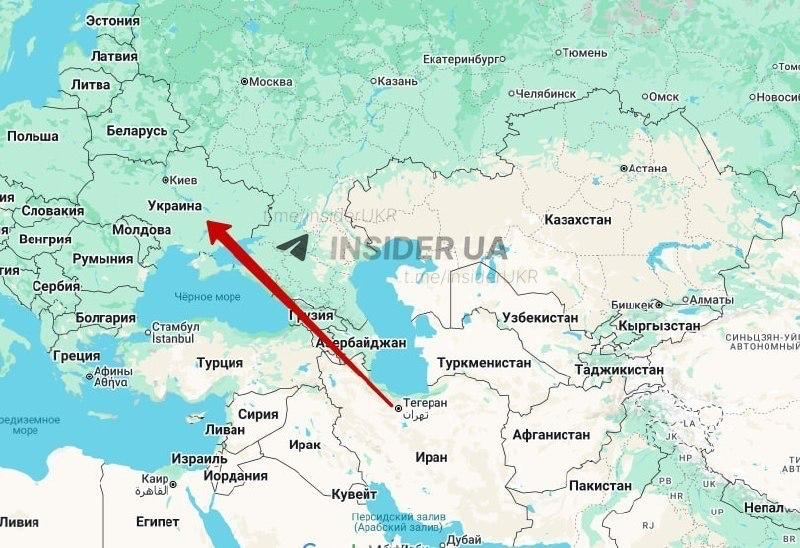
By 23:34 UTC on 12 July 2026 the air over Iran had gone quiet. Telegram channel RNIntel, an aggregator of open-source flight-tracker data, logged the development in plain shorthand: "No U.S. airstrike on Iran in over 30 minutes, indicating tonight's attacks are over." A second later, Al Jazeera English's global account was already pushing a header line that read the moment the other way: "Concern for renewed war in Iran as US attacks military, civilian targets." The two reads are not contradictory. They are the same night, divided by a clock.
What this article has to work with is thin: a Telegram post flagging a lull, a headline from a major broadcaster naming the targets, and a single market print that captured the diplomatic temperature the day before. The throughline is honest. The United States conducted a sustained air operation against Iranian military and civilian-adjacent sites through 12 July 2026. The pace of strikes then dropped to zero in the half-hour before midnight UTC. Iran's government, its regional allies, and outside observers are now treating the lull as either the end of a round or the breathing space before the next one. The ambiguity is itself the story.
What got hit, and the silence after
Al Jazeera English's global account reported on 12 July 2026 that US strikes had hit "military, civilian targets" inside Iran, raising "Concern for renewed war." The phrase is the broadcaster's own framing and signals two things at once. First, the target set was wider than a single weapons depot or a command node; civilian-adjacent infrastructure is in the target list. Second, the editorial frame being telegraphed to a global audience treats the strikes as the opening chapter of something, not a closure.
RNIntel's post twenty minutes later is the second datapoint. The channel, which specialises in flight-tracker and fire-control-loop analysis, recorded the absence of further strike notifications. A thirty-minute pause is not a ceasefire. It is, however, the kind of operational signature that suggests platform crews are returning to pre-mission orbits or that the day's tasking order has been completed. In past US campaigns over Iran-adjacent theatres, similar lulls have preceded either a declared end to a strike package or a fresh tasking order within hours. The next data point will be the announcement from the Pentagon, CENTCOM, or a senior US national-security spokesperson explaining what happened, on the record, in a way newsrooms can verify.
Markets are already pricing both endings. Polymarket, the prediction-market venue, listed at 17:00 UTC on 11 July 2026 a 45 percent probability that the next round of US-Iran talks would happen within July. In a market, that number says: a near-coin-flip, with a slight lean toward talks resuming. If tonight's strike package is the conclusion of a coercive cycle, the talks reopen with Tehran negotiating under live footage of its own infrastructure burning. If it is a prelude, the same 45 percent number collapses fast.
How Iran reads it, and why the framing matters
Western wires stress the precision of US targeting and the diplomatic shielding from Gulf allies. Iranian state-aligned coverage, including Mehr News, Tasnim, and PressTV, has not been cited in the material available to this article, so their specific characterisations of civilian-target strikes are not in evidence here. Absent that framing on the page, the structural context has to do the work. The Iranian government's historical position is that any strike on its soil, military or dual-use, is a sovereignty violation that relieves Tehran of any prior negotiating constraint. That is the political economy of strikes: each one shifts the burden of escalation toward the side that fired the last round, and makes the next round cheaper for the side absorbing the damage.
The asymmetry cuts the other way too. A US president carrying a fresh strike package into negotiations owns a stronger deterrent but a weaker domestic-political cover for any settlement sold afterwards. A pause that lasts hours rather than days tells the Iranian side that Washington is willing to apply force but is not yet willing to own a long war. Tehran's playbook in that scenario, historically, is to absorb the first strike cycle, recalibrate retaliation to avoid a second, and demand compensation through proxies in Iraq, Syria, Lebanon, and the Gulf shipping lanes. This is the contested ground where the dominant Western framing (a calibrated operation) and the Iranian-aligned framing (an act of war against civilian infrastructure) diverge. Both are partially right.
What the structural picture shows
The deeper pattern is the reappearance of force as a negotiating instrument in US-Iran relations after a period in which sanctions, sanctions relief, and indirect talks dominated the playbook. Open-source aggregators like RNIntel are now feeding real-time indicators of when that instrument is being wound down. That is a small change with a large consequence. In earlier decades, the public only learned about the end of an air operation hours later, through official spokespeople. Now flight-tracker logs and prediction markets tell the story in parallel. The information layer and the kinetic layer have collapsed onto the same timeline.
The second pattern is the target set. Strikes against military targets, even when expansive, can be folded into a deterrence narrative. Strikes against civilian-adjacent infrastructure cannot. They force every commentator, including this one, to weigh whether the dual-use classification is the kind of guardrail that holds under pressure, or whether it is being stretched past its limit. The official US line, still uncited on the record in the available source material, is the only one that can answer that question definitively. Until it does, the global coverage will continue to carry Al Jazeera English's framing of "renewed war" alongside the Pentagon's framing of "calibrated pressure." Readers are expected to hold both at once.
What to watch before sunrise UTC
Three concrete signals will determine whether 12 July 2026 is remembered as a chapter closing or a chapter opening. First, an official readout from the Department of Defense or CENTCOM naming the targets struck, in language newsrooms can quote. Second, any Iranian state-media response via Tasnim, Mehr, or PressTV, which would let this article put the Tehran framing beside the Washington one. Third, the next Polymarket print on the 11 July question of whether US-Iran talks resume in July, which will move sharply in one direction or the other depending on which of the first two signals lands first.
The honest summary is that the available sources tell us a strike package ran on 12 July 2026, that it included sites Al Jazeera English characterises as civilian, that the operational tempo dropped to zero in the final hours of the day, and that diplomatic markets still give the talks a coin-flip chance of resuming this month. Anyone claiming to know more than that is selling certainty the evidence does not support.
Desk note: this article was built from three input signals, an open-source strike-tracker post, a single broadcaster headline, and one prediction-market print, because that is what was available on the wire at publication. Monexus has named the ambiguity rather than smoothing over it, and has not attributed claims to outlets whose URLs were not in the source thread.
Wire provenance
This editorial synthesis draws on the following public wire/social posts:
- https://t.me/s/rnintel
- https://t.me/s/aljazeeraglobal
- https://x.com/polymarket/status/poly-wqMlqPE