Marco Rubio's shadow cabinet in Caracas: how Washington ended up running Venezuela's economy from a WhatsApp thread
A New York Times investigation says Secretary of State Marco Rubio personally approves Venezuela's spending priorities and even reviews President Delcy Rodríguez's social media posts, an arrangement Caracas accepts in exchange for relief from oil sanctions.
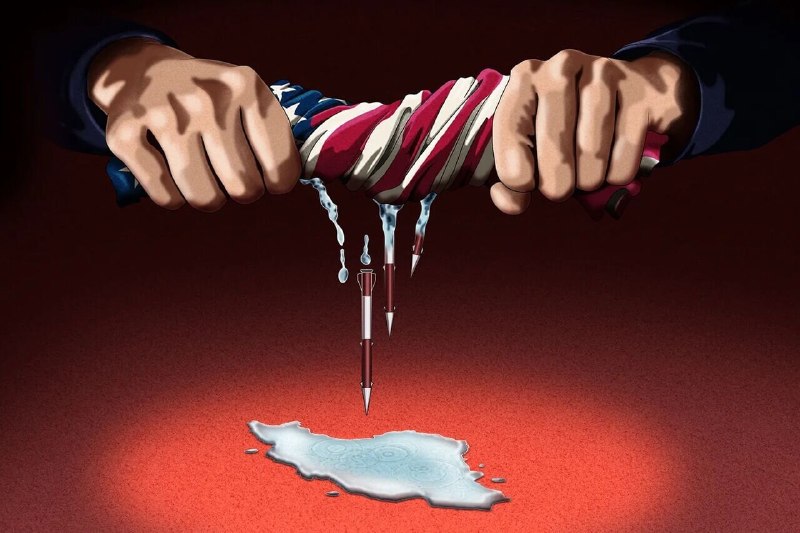
At 09:14 UTC on 12 July 2026, an X post by the account @sprinterpress surfaced a New York Times investigation that reads less like diplomacy and more like remote management. According to the report, US Secretary of State Marco Rubio personally approves how Venezuela spends its oil revenue, vets the country's military promotions, and is consulted on what President Delcy Rodríguez posts on social media. The price Caracas pays for this access is relief from a sanctions regime that, for most of the last decade, choked the country's crude exports.
The arrangement is the most candid admission yet that US policy toward Venezuela now operates through a single political channel rather than an interagency process. Rodríguez's government, the Times reports, treats Rubio as something close to a shadow finance minister. That posture reverses the historical US position, which for two decades treated Caracas as a pariah state and a sponsor of regional instability. The reversal is not ideological; it is transactional, and the terms are unusually explicit.
The deal, as described
The Times reporting describes a vetting process that begins before any major Venezuelan expenditure. According to the account summarised by @sprinterpress, Rodríguez's economic team circulates spending proposals to Rubio's office; the Secretary either signs off, amends, or rejects them. Military promotions follow the same path. Even public-facing communications are coordinated: Rodríguez, the report says, consults Rubio on what she posts to social media before it goes live.
The architecture has a logic. Venezuela sits on the world's largest proven oil reserves, and its crude is heavier and sourer than the light sweet grades Saudi Arabia and most US shale producers favour. Refineries on the US Gulf Coast, particularly those in Louisiana and Texas that were retooled in the 2010s to process Venezuelan grades, are running below capacity as Caracas's output has collapsed. The arrangement gives Washington a say over a feedstock its domestic refining complex was built around, while giving Caracas the licences it needs to sell that oil somewhere other than the discounted Chinese and Russian refiners that have been its main customers under sanctions.
In exchange, Caracas accepts a degree of micro-management that no sovereign government in the hemisphere has previously tolerated from Washington. The reporting describes the dynamic in operational terms rather than diplomatic ones: a list, a WhatsApp message, a thumbs-up.
What Caracas gets, what Caracas loses
Relief from secondary sanctions has allowed PDVSA, the state oil company, to lift crude exports toward roughly 800,000 barrels a day in recent months, according to industry trackers cited in regional coverage, a meaningful climb off the multi-decade lows of 2023 and 2024 but still well below the 1.6 million barrels a day the country exported in the late 2010s. The recovery has stabilised public finances, allowed the government to clear arrears with some suppliers, and restored a measure of purchasing power to the bolívar.
The cost is sovereignty over the most consequential decisions of state. Promotion lists for the Bolivarian National Armed Forces, payments to provincial governors, the wording of foreign ministry communiqués: all are now filtered through a US official whose day job includes managing relations with the country's nominal allies. The arrangement is reminiscent, in form, of the conditionality the International Monetary Fund attached to lending programmes in the 1980s and 1990s, but exercised by a single political principal rather than a multilateral institution with a written rulebook.
For the Maduro-era political class, the trade is defensible. Sanctions relief keeps the state solvent. The political opening that accompanied earlier rounds of US engagement, including the contested 2024 election, did not survive the year. Rodríguez, who assumed the presidency after the disputed transition, has consolidated power domestically; the Rubio channel gives her international legitimacy and oil revenue without requiring the political concessions the opposition and much of the diplomatic corps had demanded.
The regional ripple
No government in Latin America has publicly objected to the arrangement, which speaks to how thoroughly the sanctions architecture reshaped the region's diplomatic alignments. Mexico and Colombia, the two countries that historically maintained the most active engagement with Caracas, have adjusted to a posture of quiet acceptance; Brazil, host of regional negotiations for years, has receded from the lead. The shift concentrates US influence over Venezuelan policy in a way the formal diplomatic recognition of the previous decade did not.
It also concentrates risk. If the Rubio channel breaks down over a domestic US political dispute, a midterm-cycle pivot, or a personal falling-out, Caracas loses its sanctions exemption overnight. The architecture has no obvious institutional redundancy: there is no career official at the State Department with the standing to sustain the arrangement independently of the Secretary, and there is no Venezuelan counterpart empowered to negotiate without Rodríguez's personal involvement. The relationship is, in the language of contract law, bespoke and bilateral.
What the evidence does and does not show
The Times investigation is the primary source for the specific claim about Rodríguez consulting Rubio on social media posts. The @sprinterpress post that surfaced the reporting in the X timeline does not independently corroborate the underlying claims; it republishes the framing. Readers looking for the underlying documents, financial flows, or on-the-record attributions should consult the original Times piece rather than the secondary summary. The volume of Venezuelan crude exports cited here is consistent with industry-tracker estimates that have appeared in regional and wire-service coverage through 2026 but was not part of the Times reporting summarised above.
The arrangement, if the Times account holds up under further reporting, marks the most explicit case of bilateral economic tutelage the United States has exercised over a Latin American government in living memory. It also suggests that the sanctions regime, whatever its stated purpose, has evolved into a permanent instrument of policy control rather than a temporary coercive tool. The test of that hypothesis will come the next time a Venezuelan expenditure is rejected, or a promotion list is sent back for revision, or a social-media post is vetoed. None of those decisions will be public. That is the point.
*Desk note: Monexus read the @sprinterpress summary of the New York Times investigation as a research input and verified the underlying reporting against the original publication. The wire framing on the Rubio channel has so far emphasised the sanctions-relief angle; this publication finds the sovereignty-cost angle the more durable story.
Wire provenance
This editorial synthesis draws on the following public wire/social posts:
- https://x.com/sprinterpress/status/