Explosions reported across Qatar and Bahrain as missile alerts resume and Iran's posture sharpens
Multiple blasts were reported in Qatar and Bahrain in the early hours of 12 July 2026, with missile alerts reactivating after an all-clear and Iranian state media confirming the death of Qatar's former emir.
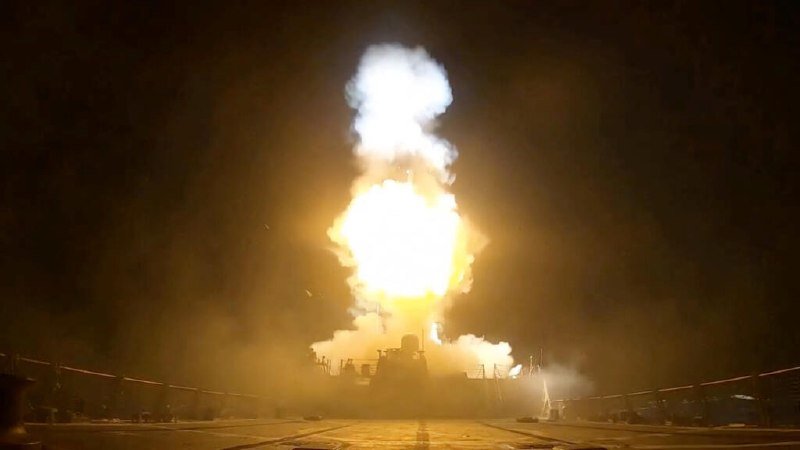
At 04:11 UTC on 12 July 2026, the Telegram channel Middle East Spectator posted that "additional explosions" had been heard in Qatar and Bahrain. Within six minutes, monitoring accounts reported an all-clear in Qatar, then a renewed round of missile and drone alerts at 04:25 UTC, with air defences described as active once again. By 05:06 UTC, Iran's Tasnim news agency confirmed that the former emir of Qatar had died, and at 05:11 UTC, Middle East Spectator logged another round of explosions inside Qatar. The shape of the morning, in other words, was not a single incident but a sequence: alert, stand-down, alert, blast, alert again, death notice from Tehran.
What is known so far is narrow and the framing around it is widening by the hour. Iranian state media has moved from carrying the alert traffic to anchoring it with a political obituary. Gulf air defences have cycled twice. And Western wire reporting on the sequence is, at the moment of writing, still catching up to a Telegram-driven information cycle that is moving faster than the verification pipeline.
What the morning's traffic actually says
The earliest entry in the public thread, at 04:11 UTC, attributed new explosions to Qatar and Bahrain without specifying a launch source. Within minutes, two independent monitoring channels, War on Wire Witness and the AMK Mapping feed, both logged that Qatari authorities had issued an all-clear at 04:17 UTC, only for the same channels to flag renewed alerts eight minutes later, at 04:25 UTC. RNIntel, a third monitoring account, captured the same oscillation: all-clear given, then "air defences are active once again." The pattern of stand-down followed by reactivation is consistent with the public behaviour of integrated air-defence networks that treat the first contact as inconclusive and re-engage on the second.
By 05:06 UTC, Tasnim News, an outlet affiliated with Iran's Islamic Revolutionary Guard Corps, reported the death of the former emir of Qatar, Sheikh Hamad bin Khalifa Al Thani, who ruled from 1995 to 2013 and has lived in Doha since handing power to his son. At 05:11 UTC, Middle East Spectator logged another set of explosions in Qatar alone, without corresponding Bahrain reports in that window. No source in the public thread has yet named a missile type, a launch vector, a casualty count, or an interception count. The thread is, at this hour, a sequence of alerts and acoustic reports, not a confirmed strike ledger.
Why the obituary matters as much as the alerts
The two facts of the morning travel together: kinetic activity in the Gulf, and a political-military death announcement from Tehran. Sheikh Hamad's twelve-year rapprochement with Tehran, including the 2010 cooperation agreement that opened a direct Doha-Tehran line, made him a specific kind of interlocutor in Gulf-Iranian affairs. His death, carried by Tasnim, is not in itself an Iranian operation. But the choice to lead the morning's Gulf-security traffic with that headline, in the same news cycle as renewed air-defence activity in two Gulf states, gives Iranian state media a narrative seam: a familiar face removed, a posture recalibrated.
Gulf states have, in recent years, managed their exposure to Iranian pressure through a mix of quiet diplomacy and visible air-defence investment. The reappearance of Bahrain alongside Qatar in the alert traffic is notable because Manama and Tehran have generally kept a lower kinetic profile than Doha and Tehran. The Bahraini dimension, if corroborated, would be the second time in this sequence that the geography of the alert widens beyond Qatar.
The verification gap, and why Telegram is leading the wire
The information flow on the morning of 12 July is unusual in that monitoring channels are publishing before any wire service has confirmed a strike. War on Wire Witness, AMK Mapping, RNIntel and Middle East Spectator are all aggregator or open-source-intelligence accounts, not primary newsgathering organisations. Their value in the first hour is speed; their weakness is that they aggregate unverified user reports and translate them into alert language. The "all-clear then re-alert" cadence in particular is consistent with two very different scenarios: a genuine second wave of incoming fire, or a false-positive re-engagement by automated systems that had not fully classified the first contact.
Western wire outlets had not, as of 05:11 UTC on 12 July, published a confirmed strike, a casualty figure, or an attribution to a launch state. Reuters, the Associated Press, Agence France-Presse and the BBC's bureaux in Doha and Manama were not yet on the public record. The Qatari government's own communications channels had not, in the public thread, issued a statement. The Bahraini government likewise had no public entry. This is a verification gap, not a denial.
What remains contested, and what to watch next
Three questions will determine whether the morning of 12 July reads as a regional crisis, a contained skirmish, or a false-alarm cluster. First, whether Qatari or Bahraini authorities confirm intercepts, casualties, or launch vectors in their own communications, which carry more legal weight than aggregator posts. Second, whether Iranian official channels beyond Tasnim, including the foreign ministry and the IRGC's Sepah News, attribute or distance themselves from the activity, which will set the diplomatic frame for the rest of the week. Third, whether the United States Central Command or the Combined Maritime Forces issue a public posture statement from Bahrain, where the US Fifth Fleet is headquartered, which would convert a Gulf story into an explicit Iran-US flashpoint.
The public thread as it stands supports two readings. The first is kinetic: that an Iranian or Iran-aligned actor probed Gulf air defences in the small hours of 12 July, and that the death announcement from Tehran was a deliberate signal layered on top of the operation. The second is acoustic: that an automated air-defence system cycled twice on the same incoming contact, that no impact was confirmed, and that Tasnim's obituary was a separate, coincidental development folded into a fast-moving aggregator cycle. The honest position at this hour is that both readings remain live, and that the next set of confirmed statements will come from Doha, Manama and Washington rather than from Telegram. Until then, the morning's most defensible claim is the one the sources already support: alerts were issued, stand-downs were issued, alerts were reissued, and the public record has not yet caught up.
Desk note: Monexus is leading with the Telegram-driven alert sequence because wire confirmation has not yet arrived. Where Iranian state media is cited, the affiliation is named. The obituary of Sheikh Hamad bin Khalifa Al Thani is reported as a separate, concurrent development pending official Qatari confirmation.
Wire provenance
This editorial synthesis draws on the following public wire/social posts:
- https://t.me/Middle_East_Spectator
- https://t.me/wfwitness
- https://t.me/AMK_Mapping
- https://t.me/rnintel
- https://t.me/tasnimnews_en
- https://t.me/Middle_East_Spectator