Three Iranian ballistic missiles hit Kuwait's Shuwaikh port area
Three Iranian ballistic missiles struck the vicinity of Kuwait City's commercial port on 12 July 2026, with smoke columns visible near the Iraqi frontier and large fires reported across the affected zone.
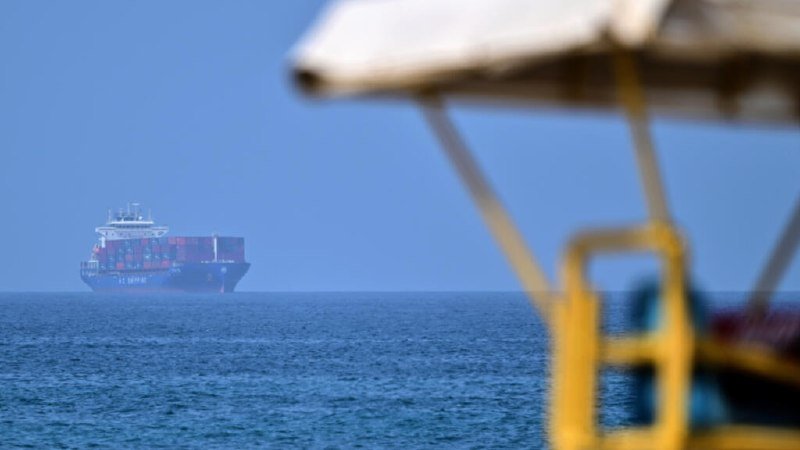
Three Iranian ballistic missiles struck the vicinity of the Shuwaikh commercial port in Kuwait City at approximately 15:18 UTC on 12 July 2026, according to a breaking alert carried by the Telegram channel rnintel, with follow-up imagery posted twenty-eight minutes later by DDGeopolitics showing smoke columns and large fires in an area near the Kuwait–Iraq border.
Kuwait is a small, oil-rich Gulf monarchy that hosts a significant US military presence, sits astride some of the world's most loaded tanker lanes, and has spent two decades carefully balancing its relations with Tehran, Riyadh and Washington. A direct Iranian missile impact inside its capital would mark a dramatic escalation of that balancing act, and the thin source base available in the first ninety minutes after impact limits how much can be said with confidence about motive, ordnance type, or whether this was a deliberate strike or a mis-routed salvo in a broader exchange.
What the wire alerts actually say
The opening dispatch from rnintel at 15:18 UTC was a single-sentence bulletin: three Iranian ballistic missiles had impacted the vicinity of the Shuwaikh Port in Kuwait City. A second rnintel post at 15:46 UTC, twenty-eight minutes later, carried on-the-ground footage captioned as scenes from the Port of Shuwaikh, Kuwait. Between those two timestamps, DDGeopolitics reported at 15:23 UTC that smoke columns were rising from the area of the explosion near the border with Iraq, and that large fires had erupted, with the channel noting that "some sources report" details that did not survive into the corroborated bulletin.
The clean factual claim, traceable across both channels, is narrow: three missiles, attributed to Iran, landed in or near the commercial port district of Kuwait City between roughly 15:00 and 15:30 UTC, and produced visible fires. Everything else, including casualty figures, the specific impact points, the missile class, and the political framing of who ordered the launch, remains unverified by independent reporting captured in this thread.
The geography of a strike
Shuwaikh is not a symbolic target. It is the workhorse commercial gateway through which much of Kuwait's imported goods flow, sitting on Kuwait Bay on the southern edge of the capital, a short drive from the country's main military bases and from the US facilities that have anchored American power projection in the Gulf since the 1991 war. A strike in its vicinity, if deliberate, hits Kuwait where its economy and its security infrastructure physically meet.
The location also matters because of what sits across the border. The DDGeopolitics alert placed the smoke columns "near the border with Iraq," which is consistent with Shuwaikh's geography and with a longer-running pattern in which Iranian missile and drone activity aimed at US and partner assets in Iraq and Syria has spilled into adjacent states. That context does not by itself resolve whether the salvo was intended for Kuwait or whether Kuwait absorbed a round meant for someone else. It does, however, sharpen the question Kuwaiti, American and Iranian officials will face within hours: was this an act of war against a Gulf state, a message to a third party that happened to land off-course, or a fragment of a wider exchange that has not yet been publicly named.
What we verified, and what we could not
What we can verify from the thread: three missile impacts were reported at or near Shuwaikh Port in Kuwait City between 15:18 and 15:46 UTC on 12 July 2026; both rnintel and DDGeopolitics attributed the launches to Iran; footage described as from the Port of Shuwaikh was posted publicly within the first hour; and large fires were visible in the affected area.
What we cannot verify from the thread: the exact coordinates of impact, the missile class, casualty figures, the state of port infrastructure, whether US forces at or near the base were among the targets, and any official read-out from Kuwait's ministry of defence, the US Central Command, or the Iranian military. The wire alerts did not cite any government spokesperson by name, and no casualty number, infrastructure damage assessment, or attribution statement from a named official is present in the source material available. Independent confirmation through Kuwait's state news agency KUNA, the official account of the Kuwaiti Ministry of Defence, US Central Command, and Iranian outlets such as IRNA, Tasnim or PressTV would be the next step before any of those gaps can be closed.
The pattern, and what to watch
Even before motive is established, this sits inside a familiar Gulf pattern: Iranian ballistic and cruise missile salvos have repeatedly been used as signalling tools, aimed at US positions in Iraq and Syria, at Israeli-linked shipping, and at the infrastructure of regional adversaries. Kuwait has so far been a careful abstainer from that fight, hosting US forces while keeping its diplomatic channel to Tehran functioning. A strike on its principal commercial port would be the first time since the 1991 Iraqi invasion that Kuwaiti soil has been directly hit by a foreign missile force.
The next forty-eight hours will determine which reading holds. Watch for an official Kuwaiti statement, which will frame the incident as either an attack on the state or a violation of its territory requiring investigation; a US Central Command read-out, which will indicate whether American assets were a target or collateral; and an Iranian statement, which will determine whether Tehran claims the strikes, denies involvement, or stays silent. The pricing of Brent crude and the early moves in Gulf shipping insurance premia will be the market's first verdict on whether traders read this as a one-off or as the opening of a wider campaign.
Desk note: Monexus framed this as an attributed but unverified strike, with both the Iranian attribution and the casualty-free framing held to what the wire alerts actually said. Where the wire treated Iranian responsibility as stated fact, this article repeats the attribution as reported. Where casualty figures, official statements, and infrastructure damage would normally appear, this article left them out rather than guess.
Wire provenance
This editorial synthesis draws on the following public wire/social posts:
- https://t.me/rnintel
- https://t.me/rnintel
- https://t.me/DDGeopolitics