Israeli jets strike metal workshop in Gaza City as evacuation order follows
Israeli airstrikes hit a metal workshop on Al-Sinaa Street in southern Gaza City, with initial reports of injuries and an evacuation order issued for the site within minutes of impact.
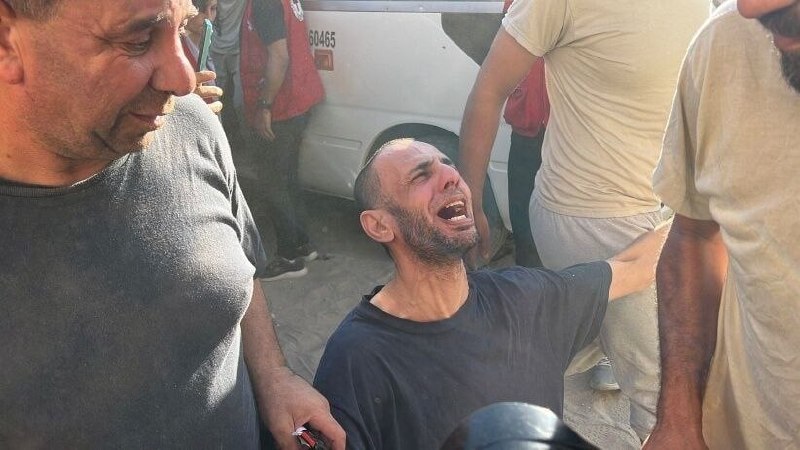
Israeli fighter jets struck a metal workshop on Al-Sinaa Street in southern Gaza City at roughly 13:28 UTC on 12 July 2026, according to initial Arabic-language wire reports, with injuries reported at the site and an evacuation order issued minutes after impact.
The strike pattern, in which an initial hit is followed within minutes by an evacuation warning for the same coordinates, has become a near-daily feature of aerial operations over Gaza City and is the operational signature Israeli authorities describe as the mechanism by which civilians are given the opportunity to leave a target before follow-on munitions are released. The latest incident compresses that sequence into roughly twenty-five minutes, the interval between the first Arabic-language flash and the order itself, and underscores how tightly compressed the warning-to-strike window has become in dense urban terrain.
The strike, in order
Al-Alam Arabic, the Iran-aligned satellite channel that broke the first flash at 13:28 UTC, reported that Israeli air strikes were targeting southern Gaza City. Eleven minutes later, at 13:39 UTC, the same channel updated with an injury count from a workshop specifically on Al-Sinaa Street. At 13:48 UTC, the Beirut-based field channel ClashReport named the broader area as the Al-Sinaa neighbourhood in western Gaza City, identifying the aircraft as Israeli fighter jets. By 13:53 UTC, the Telegram channel English Abuali reported that the struck site had received an evacuation warning after the initial strike, with the warning issued to the same location.
That timeline of four dispatches across twenty-five minutes, each adding a layer of granularity, mirrors the rolling structure of coverage during high-tempo operations in Gaza: a first flash naming a city district, a second dispatch specifying a site, a third naming the platform and platform operator, and a fourth adding the post-strike procedural step. None of the four dispatches carried a casualty count beyond the word "injured," and none named the owner of the workshop or its civilian-versus-military characterisation, leaving open the central question of what the building was being used for at the moment of impact.
What the wires do not yet say
The four dispatches, all from Arabic-language and conflict-tracking channels, agree on the geography and the platform type, but diverge in their framing of the strike's target and significance. Al-Alam Arabic frames the action as an "Israeli air strike" with injured at the site; ClashReport describes a strike on a named neighbourhood; English Abuali adds the procedural fact that an evacuation warning was issued after the strike landed. None of the four citations carries Israeli military confirmation that the site was being used for military purposes, nor an account of what munitions were used, nor a casualty figure beyond "injured."
The thin sourcing is the operative constraint on this story. A strike on a building identified only as a metal workshop in southern Gaza City, followed by an evacuation order on the same coordinates, is consistent with the standard Israeli procedure of striking a structure used for weapons manufacture or storage, and it is consistent with the standard critical framing that any strike on a workshop in a residential district risks civilian harm. The wires do not, at the timestamp of filing, allow a confident adjudication between the two readings. They do allow the description: four dispatches, twenty-five minutes, one site, an evacuation order issued after impact.
What the sequence itself shows
Strip the incident to its operational shape and a clearer pattern emerges. The order of events, hit first, warn after, leaves a thin window for anyone in the immediate vicinity to act on the warning, since the warning follows the strike that already put the building at risk of follow-on munitions. Israeli authorities describe the practice as a calibrated warning system intended to reduce civilian harm, in which a small initial munition or a knock-on-the-roof device alerts occupants before the main strike. Critics, including humanitarian organisations tracking strikes across Gaza, argue that the interval between first-strike and follow-on has narrowed over the course of the war to a span that is procedurally defensible but operationally indistinguishable from a same-day second strike.
The structural point is not which side is right about intent, but about the asymmetry of information. A workshop in southern Gaza City receives a flash, then a warning; the personnel inside have, in the best reading, minutes to react to a warning issued after the first event. The information advantage sits entirely with the platform that selects the building, the munition, and the moment, with the warning timed to its own operational logic rather than to the residents' movement on the ground. That asymmetry is the load-bearing element of how strikes on workshops in dense urban terrain proceed, and it is what the four dispatches, taken together, document.
The regional stakes
A single strike on a metal workshop in southern Gaza City does not, by itself, move the regional balance. The pattern in which it occurs is what does. On 12 July 2026, the dispatches from Al-Alam Arabic, ClashReport, and English Abuali place this incident inside a wider tempo of operations across Gaza City that has produced similar four-dispatch sequences on a near-daily basis, with the procedural signature of hit-then-warn increasingly visible in the wire cadence. The reading the dominant Western framing offers is that this tempo reflects calibrated counter-terror operations against a designated adversary's industrial capacity. The reading the regional and humanitarian critical framing offers is that a workshop designation, applied to a building whose use the public record does not independently verify, is the operative label under which civilian harm accumulates.
The honest report at 13:53 UTC on 12 July 2026 is narrower than either frame. A metal workshop on Al-Sinaa Street in southern Gaza City was struck by Israeli fighter jets; injuries were reported at the site; an evacuation warning was issued to the same coordinates within twenty-five minutes of the first flash; and the wires that covered the strike did not, by the time of filing, name the workshop's operator, its registered use, or the casualty count. The next dispatch in the sequence will tighten or loosen the picture, depending on whether Israeli authorities confirm the target's military use and whether a hospital or civil-defence source releases a casualty figure. Until then, the facts that hold are geographic, chronological, and procedural.
This publication frames the strike through the operative wire sequence, naming the channels that broke each flash and the procedural fact of a post-strike evacuation order, rather than asserting a target characterisation the dispatches do not themselves contain.
Wire provenance
This editorial synthesis draws on the following public wire/social posts:
- https://t.me/alalamarabic
- https://t.me/alalamarabic
- https://t.me/ClashReport
- https://t.me/englishabuali
- https://t.me/alalamarabic