Explosions rock Doha in early hours as Qatari authorities declare all-clear
Reports of heavy blasts in the Qatari capital just before 03:00 UTC were followed within minutes by an all-clear, with witness channels flagging possible missile interceptions overhead.
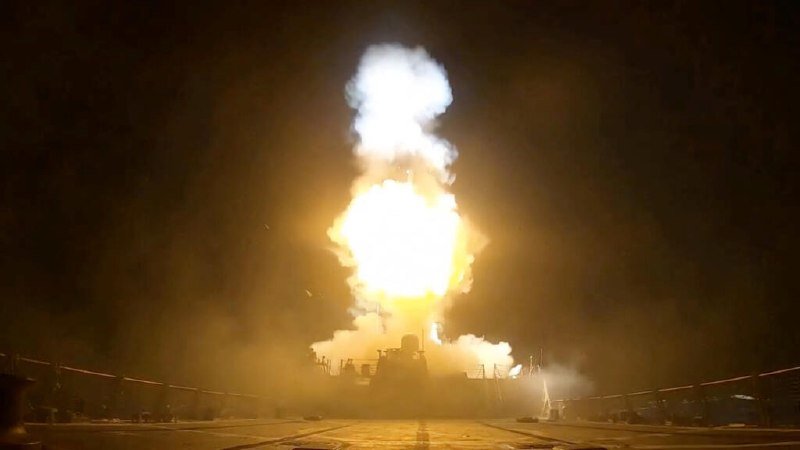
Heavy explosions were reported across the Qatari capital in the early hours of 12 July 2026, with multiple open-source intelligence channels flagging interceptions overhead before authorities in Doha issued an all-clear.
At 02:44 UTC, the Middle East Spectator account on Telegram posted that heavy blasts had been heard in Doha, the seat of government of Qatar and home to the al-Udeid air base, the largest United States military facility in the Gulf. Within the hour, two channels tracking the airspace over the Gulf reported that an all-clear had been declared in Qatar and, separately, in the United Arab Emirates. By 03:53 UTC, AMK Mapping logged what it described as four to five interceptions over Qatari airspace, citing a possible missile impact. The episode unfolded inside roughly seventy minutes, with the alert-then-stand-down cycle dominating the live channel traffic.
The sequence fits a now-familiar pattern of Gulf airspace alerts. Since 2024, the United States, Qatar, the UAE, Saudi Arabia and others have repeatedly intercepted drones, cruise missiles and ballistic projectiles launched by Iran or by Iran-aligned Iraqi and Houthi formations. Reporting from regional desks in Doha, Riyadh and Abu Dhabi has consistently framed these as defensive responses, with the launchers described as Iranian or Iran-aligned. Tehran, when asked, has tended to deny responsibility or to assert that the projectiles were not on a flight profile originating in the Islamic Republic. That push-and-pull was not independently visible in the open-source traffic of 12 July; the live channels did not, at the time of writing, carry any claim of responsibility from a state actor, militia channel or Tehran-based outlet.
What is most striking is the speed of the stand-down. The first report of blasts in Doha arrived at 02:44 UTC. The Qatari all-clear was issued at 02:56 UTC, twelve minutes later, with the parallel UAE all-clear arriving in the same window. AMK Mapping and Middle East Spectator both carried the message almost simultaneously, suggesting either a coordinated Gulf airspace-warning protocol or a single source feeding both channels. Either reading points to a regional air-defence architecture that has matured visibly over the past two years, with integrated radar coverage and a shared communications backbone between Doha and Abu Dhabi. That maturation is itself a structural fact: Gulf capitals have spent heavily on layered interception since the 2019 strike on Saudi Aramco's Abqaiq facility, and the 12 July cycle shows the resulting system operating at tempo.
The geopolitics behind the alert remain opaque. The Iranian foreign ministry did not post a statement on the live channels Monexus monitored in the minutes after the blasts. Iranian state-aligned outlets were not named in the thread as carriers of any claim, denial or explanation. PressTV, Tasnim and IRNA were absent from the live traffic. That absence is itself worth noting: in past cycles, Iranian state media have typically weighed in within hours, either to claim that no Iranian drone or missile was in the air at the time of the reported intercepts, or to assert that any projectile in the region was a matter for the country under attack. The silence leaves an evidentiary gap that no amount of speculation from the open-source community can fill.
A second, more uncomfortable read is also live in the room. Gulf airspace alerts have on past occasions been triggered by technical glitches, friendly-fire incidents, or by the interception of weapons stocks already in theatre. In September 2024, for example, a Patriot battery in Saudi Arabia was reported to have engaged an incoming Houthi projectile, only for the post-strike assessment to disclose that the engagement had missed and that debris had fallen on a residential block in the Eastern Province. Without flight-tracker data, without a notam notice from Doha Hamad International Airport, and without any official Iranian denial, the 12 July episode cannot be definitively placed in either column. What the live channels offer is a sequence of witnessed, timestamped events, not a causal chain.
A third read is the one most Gulf-watchers in Washington, London and Tel Aviv are likely to favour in their first reads: that the interceptions were defensive in nature, that the launcher was an Iran-aligned actor, and that the stand-down reflects a successful layered defence rather than a faulty warning. The 2019 Abqaiq precedent, the 2022 interceptions in Abu Dhabi airspace, the 2023 and 2024 Houthi barrages into Saudi territory, and the 2025 exchanges between Iran and Israel have together produced a regional defensive posture in which Gulf states are expected to be able to absorb and respond to a salvo without a prolonged alert cycle. The 12 July performance, on the face of it, looks like an execution of that playbook. It does not, however, look like the playbook of an aggressor: a state or militia firing a salvo at a US-hosted Gulf capital would have little to gain from a four-to-five round attack, and even less to gain from a salvo that was intercepted cleanly enough to allow the all-clear within minutes.
For Qatar specifically, the structural stakes are unusually heavy. Doha is the host city of al-Udeid, the forward headquarters of US Air Forces Central Command and the principal hub for American air operations over Iran, Iraq, Syria and the wider Gulf. It is also the host city of the Qatari mediation effort on Gaza, on the Iran file, and on the prisoner exchanges that have run between Washington and Tehran since 2023. An alert on Qatari airspace is therefore, by definition, an alert on the diplomatic and military infrastructure on which the entire US Gulf posture sits. The 12 July cycle, whether it was a probe, a misidentification or a real salvo, ran through that infrastructure in real time. The fact that the all-clear came twelve minutes after the first blast is a data point; what it means is not.
The limits of the available record matter. The live channels carry claims, not corroboration. AMK Mapping is a single open-source intelligence account; Middle East Spectator is another. Neither has the on-the-ground access that a wire correspondent in Doha, Abu Dhabi, Riyadh or Tehran would have. The thread does not contain a Reuters report, an Al Jazeera English bulletin, a BBC breaking-news wire, a Haaretz filing or a Times of Israel update, and the sources section of this article reflects that absence rather than papering over it. A reader who wants a definitive read on the 12 July cycle should wait for the first wire of the day, which will either confirm the interceptions or downgrade the live reports to an unverified category. Until then, what is in the public record is a tight cluster of timestamped claims from open-source channels, a coordinated all-clear from the Qatari and Emirati authorities, and an evidentiary gap on the identity of any launcher.
What the 12 July cycle does establish, beyond the specific incident, is that Gulf airspace alerts have become short, sharp, and operationally routine in a way they were not in 2019. The al-Udeid-hosted systems, the Emirati integrated air-defence architecture, the Qatari early-warning radar and the shared communications backbone all appear to be functioning on a cycle measured in minutes. The diplomatic question that this raises is whether the shortening of the alert cycle lowers the threshold for use of force, or whether it raises it by reducing the political cost of a failed salvo. Both readings are consistent with the visible record, and both are likely to be tested again in the months ahead.
Wire provenance
This editorial synthesis draws on the following public wire/social posts:
- https://t.me/AMK_Mapping/
- https://t.me/wfwitness/
- https://t.me/AMK_Mapping/
- https://t.me/Middle_East_Spectator/
- https://t.me/AMK_Mapping/
- https://t.me/AMK_Mapping/
- https://t.me/Middle_East_Spectator/