Bahrain says three wounded by intercepted Iranian missile debris as Gulf sirens sound
Three people in Bahrain, including a child, were injured by debris from intercepted Iranian missiles and drones, the kingdom's Interior Ministry said, as danger sirens sounded across the small Gulf state early on 12 July 2026.
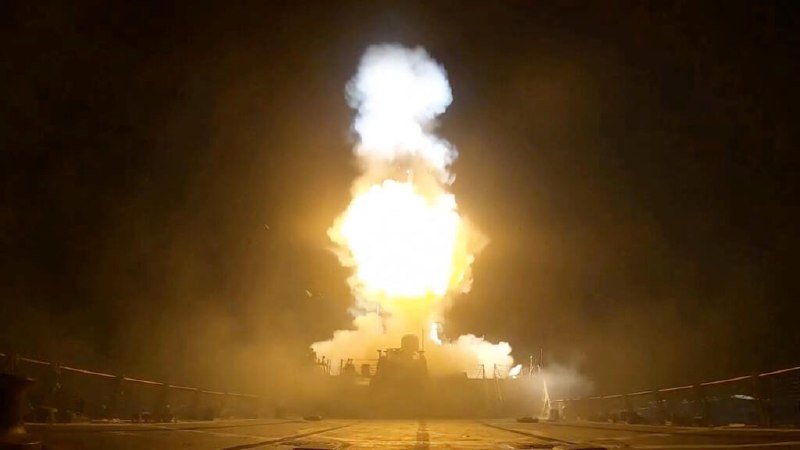
Bahrain's Interior Ministry said three people, including a child, were injured by falling debris from intercepted Iranian missiles and drones in the early hours of 12 July 2026, in what the small Gulf monarchy described as an active aerial threat to its territory. Air raid sirens sounded across the kingdom, and the ministry urged citizens and residents to move to the nearest safe location, according to a ministry statement carried by Iranian state-linked channels and corroborated by regional outlets. The injured were hurt by debris rather than direct hits, Bahraini officials said, suggesting that at least some of the incoming projectiles were engaged by air-defence systems before reaching the ground.
The episode marks a sharp escalation along the southern arc of the Gulf. It comes against a backdrop of repeated Iranian-aligned strikes and maritime harassment, and at a moment when US and Gulf-state officials have been quietly trading messages with Tehran through Omani and Qatari intermediaries. The Bahraini statement does not by itself explain the political chain behind the launch, but it places the kingdom, host to the US Navy's Fifth Fleet, inside the blast radius of a confrontation Washington has spent months trying to keep at arm's length.
What Bahraini officials said
The Interior Ministry's text, repeated by Iran's PressTV and by the regional Telegram channel Field Witness, was short and operational. Sirens were activated; the public was told to shelter; and three people, including a child, were injured by debris from intercepted missiles and drones. The ministry did not specify which neighbourhoods were hit, how many projectiles were fired, or whether the debris fell on a residential area, a military installation, or open ground. It also did not say whether any projectiles actually struck inside Bahraini territory or were all intercepted overhead.
The phrasing matters. "Intercepted Iranian missiles and drones" puts a name to the source of fire, which is unusual for a Gulf ministry in a fast-moving incident: the default instinct in most capitals is to describe projectiles by their trajectory or type, not by their country of origin. Bahraini authorities either have high confidence in the identification, or they are willing to say so publicly in real time, or both. The ministry has not, in the messages available so far, claimed any successful hits on Iranian assets in return.
Iran's side of the wire
Iranian state media, including PressTV and Fars, carried the Bahraini ministry's text almost verbatim, a routine practice when Tehran wants to highlight that a Gulf neighbour is being harmed by a strike, regardless of who fired. Iranian outlets did not, in the messages available on 12 July 2026, claim responsibility for the launch, nor did they deny it. The absence of a denial is itself a data point. Iranian state media typically deny or reframe strikes on Gulf states within hours; silence, in this setting, usually means the launch is either being claimed elsewhere or is being deliberately left unattributed so that deniability is preserved.
Independent Iranian-language outlets, diaspora reporters, and opposition Telegram channels have not, in the material available to this publication, added detail beyond what the ministry said. The evidentiary base, in other words, is the Bahraini statement, amplified by two Iranian state outlets and one regional channel that aggregates footage from Manama and other Gulf capitals.
What the evidence does, and does not, show
The corroboration is thin. Three Telegram-sourced statements, two of them Iranian state outlets carrying the Bahraini text, one of them a regional aggregation channel. No satellite imagery of impact craters, no radar track, no second Gulf-state readout, no Western wire confirmation has surfaced in the public record by the time of writing. The casualty figure of three, including a child, is sourced to the Bahraini ministry itself; the framing of the injuries as debris-related, rather than direct hits, is also sourced to the ministry.
That does not make the report false. Bahraini authorities have generally been cautious in their public language about Iranian-aligned threats, and a ministry that names Iran directly in a real-time alert is not casually improvising. But the corroboration ladder stops at the ministry's own statement. Anyone reading this on Monday morning should hold the casualty figure and the debris-attribution as ministry-sourced, and the broader sequence of events as ministry-sourced, until a second independent source confirms the count or the projectile type.
The structural frame
The Gulf's air-defence architecture has hardened considerably over the last three years. Saudi Arabia, the UAE and Qatar operate layered US-made and, in the UAE's case, partially French-made systems, including Patriot batteries, THAAD interceptors, and newer terminal-phase systems that have intercepted Houthi missiles over Yemen and Iranian drones over the Emirates with increasing regularity. Bahrain, smaller and more exposed, hosts the US Fifth Fleet and is within uncrewed-aerial-vehicle range of Iranian launch sites on the opposite shore of the Gulf. A missile arriving over Manama is, in operational terms, a missile arriving next to an American carrier strike group.
That proximity is the structural reason the Bahraini statement carries more weight than its size would suggest. A projectile that requires interception over Manama is also a projectile that has crossed into airspace the US Navy patrols. The question for the next 48 hours is not whether the Bahraini count of three is right; the question is whether the projectile was aimed at a target inside Bahrain or, as has happened in earlier episodes, was intercepted en route to a US or Gulf-state asset further downrange. The ministry's silence on that point leaves the strategic read open.
What to watch next
Three things will tighten the picture in the next 24 to 48 hours. First, a second source for the casualty count, ideally a Bahraini hospital or a Western wire on the ground. Second, an Iranian statement of responsibility or denial, which Tehran's foreign ministry or the IRGC usually issues within 12 to 24 hours of a launch that produces public casualties in a third country. Third, a US Fifth Fleet or US Central Command readout, which would confirm or rebut the ministry's identification of the projectiles as Iranian.
Until those three arrive, the public record is a single ministry statement carried by channels that span the geopolitical spectrum. The injuries are real, in the sense that a named institution says they happened. The political chain behind them is, for now, asserted by the same institution that was hit.
This article was filed from the available wire on 12 July 2026. The source base for the casualty count and the projectile identification is the Bahraini Interior Ministry, as carried by Iranian state-linked outlets and a regional aggregation channel. The article will be updated as Western wires and a US military readout become available.
Wire provenance
This editorial synthesis draws on the following public wire/social posts:
- https://t.me/FarsNewsInt
- https://t.me/wfwitness
- https://t.me/presstv