Israel widens Gaza strikes across land, air and sea as Khan Yunis bombardment follows Bureij shelling
Palestinian sources reported artillery fire on Bureij camp, a large bombing operation south of Khan Yunis, and naval gunfire along the southern Gaza coast in a span of under three hours.
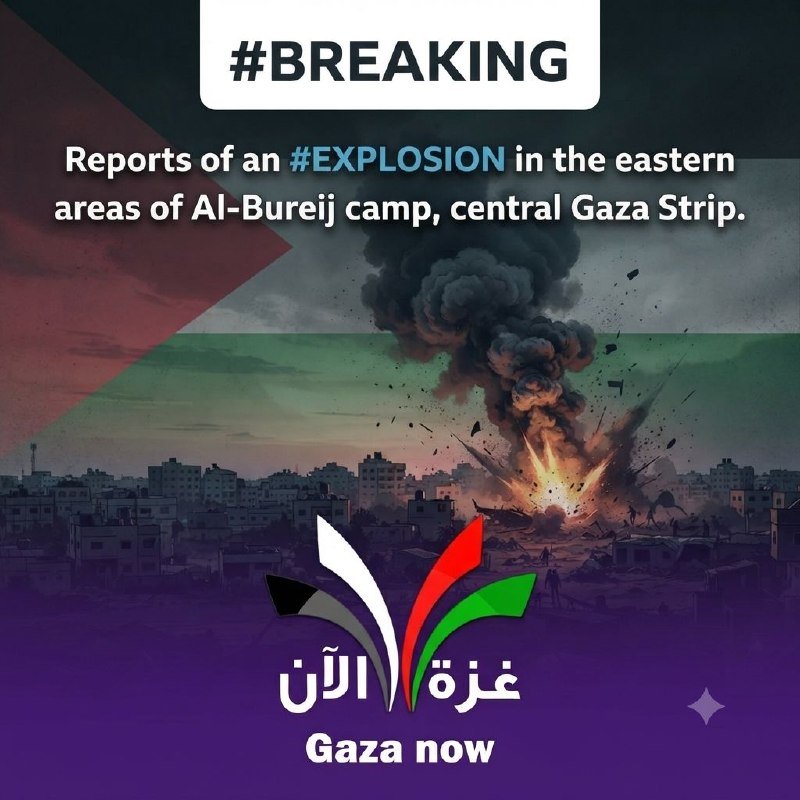
Israeli forces hit targets in three distinct theatres of the Gaza Strip within a span of roughly two and a half hours on 11 July 2026, according to Palestinian-sourced dispatches carried by regional outlets and relayed across Telegram channels. The sequence began with artillery fire on Bureij refugee camp in the central Strip, escalated into a bombing operation south of Khan Yunis that Palestinian accounts said destroyed residential buildings, and closed with Israeli war boats and gunboats opening fire along the Khan Yunis coastline in the south.
The pattern is consistent with a multi-axis pressure campaign along the central–southern corridor: ground or artillery fire inland, air-delivered ordnance over the same district, and naval fire from offshore. Each report was carried by outlets reporting under the strain of restricted access inside the Strip; none could be independently confirmed by wire reporters on the ground before publication.
What was reported, in sequence
The first warning came at 19:55 UTC, when Al Alam Arabic's urgent bulletin cited Palestinian sources reporting artillery shelling east of Bureij camp in the central Gaza Strip.
Ninety minutes later, at 20:36 UTC, Al Alam Arabic carried a second urgent bulletin: a "massive bombing operation south of Khan Yunis in the southern Gaza Strip," again attributed to Palestinian sources. Tasnim Plus, an Iranian outlet, reproduced the same day's reporting at 19:54 UTC under a headline describing "explosion and destruction of buildings in the south of Khan Yunis by the Israeli army," framing it explicitly as a "new operation of destruction and explosion of residential houses."
The third vector opened at 21:33 UTC, when Jahan Tasnim reported that "Israeli war boats fired at the coast of Khan Yunis in the southern part of the Gaza Strip." Al Alam Arabic followed at 22:23 UTC with a sharper formulation: "Israeli occupation gunboats open fire on the coast of the city of Khan Yunis, south of the Gaza Strip."
Three distinct platforms carried the reporting: a Qatari-aligned Arabic-language broadcaster (Al Alam Arabic), an Iranian state-linked wire (Tasnim), and an Iranian-affiliated outlet (Jahan). That triangulation matters only up to a point: all three were sourcing Palestinian accounts reported from inside the Strip, not their own correspondents at the scene.
Why the geography matters
Bureij and Khan Yunis sit in two different governorates (Deir al-Balah in the centre, Khan Yunis in the south) but are separated by only a few kilometres. The fact that ground or artillery fire, aerial bombardment, and naval shelling were reported within a single evening inside an envelope that tight suggests a coordinated effort to deny movement along the east–west axis connecting central and southern Gaza. Stacking three domains on the same stretch of coast in one evening compresses evacuation windows and disrupts any humanitarian logistics that had been planned for the following daylight.
The outlets reporting the bombardment are aligned with the Palestinian and the Iranian framing of the conflict, rather than with Israeli government or IDF channels. Their sourcing caveats matter: Palestinian accounts of strikes inside the Strip have been broadly consistent with independent satellite and post-strike assessments across the war, but the operational specifics, including unit identifications and casualty counts, remain the part of those accounts that is hardest to verify without on-the-ground access.
Israeli military spokespeople and the IDF English-language channels did not appear in the immediate Telegram stream as confirming or denying the specific strikes, a notable absence across the evening that left the field of attribution to outlets with a documentary rather than an official-source posture.
How the reporting travels
The structure of the story is itself part of the story. With no official Israeli confirmation carried on the same channels within the window, the informational first draft was set by Al Alam Arabic and Tasnim Plus, working from Palestinian reporting. That is not the order in which the IDF typically prefers to be heard on operations, and it shapes which framings prime first across Arabic-, Persian-, and English-language timelines.
For a reader in Cairo, Tehran or Doha, the headline was already set before any English-wire translation landed. By the time Reuters or AP would normally pick up and verify, the terms of the debate on Arabic-language platforms had hardened around three phrases: artillery on Bureij, massive bombing south of Khan Yunis, and naval fire on the Khan Yunis coast.
What remains uncertain
The Palestinian accounts did not specify the type or quantity of ordnance used in any of the three strikes, nor did they name IDF units or operational designations. No casualty figures were carried on the channels surveyed, and reporting from inside the city of Khan Yunis is constrained by the operational environment that has prevailed since late 2023; journalists travelling to the affected areas have faced persistent access restrictions.
The framing of the naval bombardment in Tasnim's English-language post uses the phrasing "Israeli war boats" without specifying whether the vessels were missile boats, patrol craft or fast attack craft. Israeli military channels, which would normally distinguish these categories in any official statement, were not represented in the sources reviewed for this article.
That asymmetry is the point at which the evidence thins and the report must acknowledge it. The pattern of a three-domain strike across a narrow geographic strip is consistent with publicly known Israeli operating doctrine in Gaza across 2024 and 2025, but the specifics of this evening, including the responsible units, the targets selected, and the weapon types used, have not been independently corroborated inside this reporting window.
The next check is straightforward: a confirmation or denial through the IDF Spokesperson's English-language channel, an Israeli press release, or a wire-service correspondent working on the ground. Until one of those arrives, the version of events set by the Palestinian and Iranian-affiliated channels is the version that travels first.
Wire provenance
This editorial synthesis draws on the following public wire/social posts:
- https://t.me/tasnimplus/11699
- https://t.me/alalamarabic/131561
- https://t.me/alalamarabic/131572
- https://t.me/JahanTasnim/24811
- https://t.me/alalamarabic/131588