Tehran seals the Strait: Iran's IRGC Navy shoots at a transiting tanker and shuts the world's oil chokepoint
A single warning shot in the world's busiest oil artery has, on paper, cut a fifth of global seaborne crude off from its buyers. Tehran's gamble is now in the hands of the vessels that don't turn around.
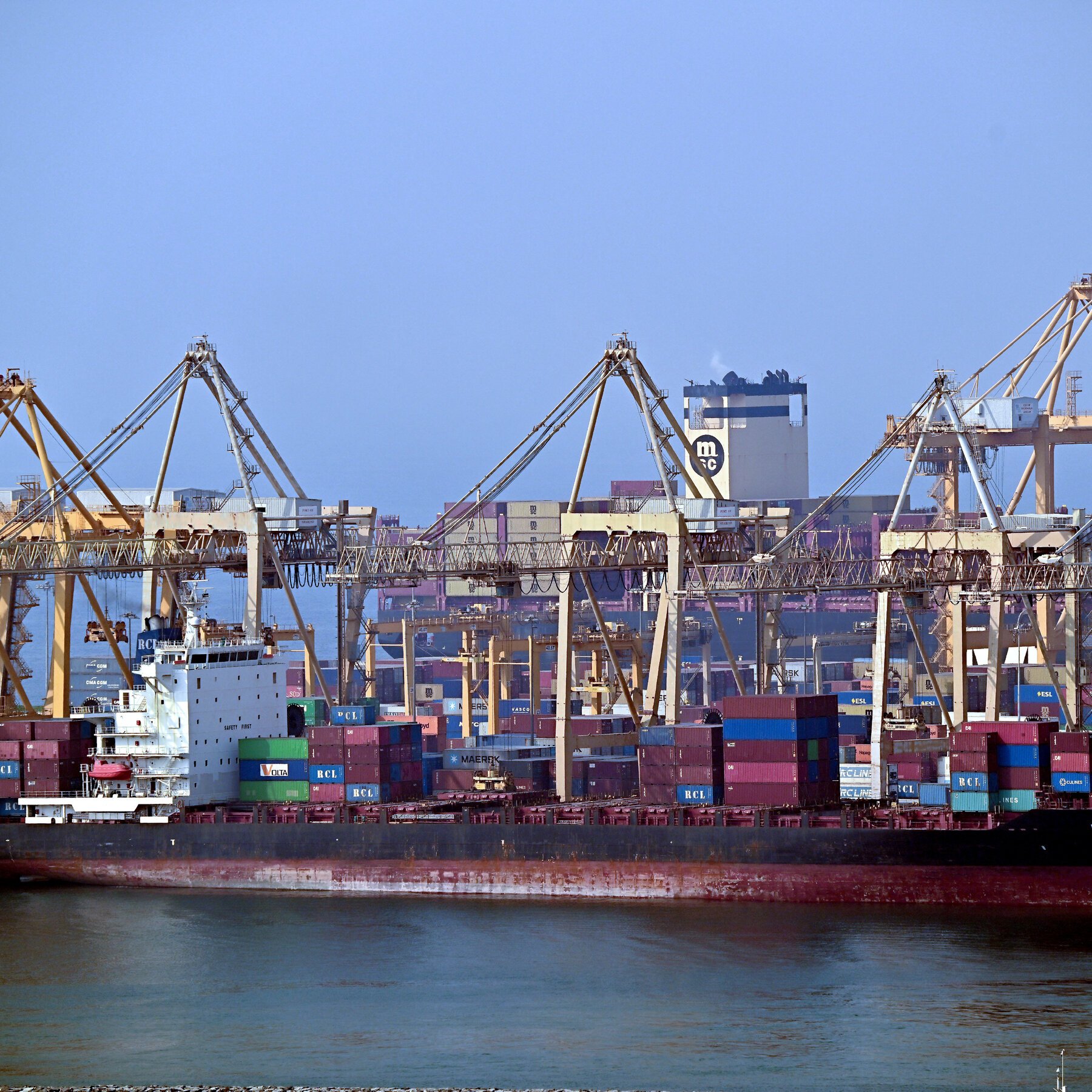
At 22:40 UTC on 11 July 2026, Reuters flashed a one-line bulletin from Tehran: the IRGC Navy had declared the Strait of Hormuz closed until further notice. Forty-one minutes earlier, Fars News, the wire closest to the Revolutionary Guards' public-facing messaging, said a warning shot had been fired at a vessel the Guards judged to be on an "illegal route." Deutsche Welle's English desk confirmed the closure within minutes, citing the Iranian navy's condition: the waterway would reopen once Washington ended what Tehran called its "interference in the region." By 23:18 UTC, Telegram channels tied to Iranian-aligned media were amplifying an additional claim that special forces were laying mines on the Omani side of the strait, and that a previously reported ship had been struck by an anti-ship cruise missile.
What happened between roughly 22:00 and 23:30 UTC on Friday night is small in the number of vessels involved and enormous in its implications. The Strait of Hormuz, the 21-mile-wide funnel between Iran and Oman through which roughly a fifth of the world's seaborne crude normally passes, is now, on paper, off limits. The closure is not a blockade in the technical sense, at least not yet; it is a declaration of intent backed by a single shot and a demand directed at a foreign power.
What Tehran actually said
The IRGC Navy's statement, carried by Fars at 22:46 UTC and 22:17 UTC, framed the firing as a warning shot at a ship that had been warned off an "illegal route." Deutsche Welle, citing Iranian state media, said the closure would hold until the United States ended "interference in the region." Iran's Navy, in a separate line relayed by the disclose.tv account on X at 22:49 UTC, repeated the closure language. Reuters attributed the announcement to "Iran's IRGC navy" and "state media." Reuters' own short URL, reut.rs/4h2QNoM, was the first Western-wire confirmation to circulate.
The sequence of the messages, Fars first, then Reuters and Deutsche Welle picking up the Iranian state line, then the more aggressive mine-laying and cruise-missile claims surfacing on Telegram, suggests a deliberate escalation ladder. Read in order, the official line is calibrated for maximum diplomatic cover: warning shot, conditional closure, named grievance against Washington. The mine and missile claims sit one rung below that, on channels that allow deniability.
Why this is not 2019 again
The last time the strait looked like this on paper was the summer of 2019, when Iran seized the British-flagged Stena Impero after a series of tanker incidents that the US, UK and Iran each blamed on the other. That episode unwound after several weeks of quiet diplomacy and a visible de-escalation window around the G7 summit in Biarritz. The 2026 episode is different in three ways that matter for pricing and policy.
First, the closure is framed as conditional rather than punitive. Tehran has not, in the language Reuters and Deutsche Welle saw, named a specific ship to be released or a specific grievance to be addressed; it has attached the strait's reopening to a generalised US withdrawal demand. That is a much larger ask than the Stena Impero was. Second, the channel through which the closure has been announced, the IRGC Navy rather than the regular Iranian Navy, points to the harder end of Iran's security state rather than the more conventional regular forces that handled the 2019 episode. Third, the mining allegation on the Omani side of the strait, carried only by Telegram channels tied to the DDGeopolitics feed, is, if true, an operationally significant step beyond a warning shot, because naval mines do not discriminate between a Chinese VLCC and a US carrier strike group.
What the sources actually show, and what they don't
The verifiable spine of this story is tight and short. Reuters reports the IRGC Navy's closure statement. Deutsche Welle reports the same closure and adds the conditional language about US "interference." Fars reports the warning shot. The disclose.tv account on X relays the Iranian Navy's parallel "closed until further notice" line and attributes the framing to Reuters. What the public sources do not yet show, and what this publication has not been able to independently verify, includes: the name of the vessel that was fired on; the flag state of that vessel; whether anyone was hurt; whether any mine-laying operation is in fact underway; and whether the "anti-ship cruise missile" strike referenced in the DDGeopolitics Telegram channel corresponds to the warning-shot incident or to a separate, earlier event.
What we verified: that Iran's IRGC Navy announced the closure, via state media, on 11 July 2026 at approximately 22:40 UTC; that the closure was conditioned on a US withdrawal demand; that a warning shot was fired; and that the closure language was independently carried by Reuters and Deutsche Welle within minutes.
What we could not verify, as of publication: any casualty figure, the identity of the ship, the presence of mines, and the cruise-missile claim. The mining and missile reports originate on Telegram channels whose provenance this publication cannot independently confirm; they should be read as Iranian-aligned counter-claim material, not as established fact.
The structural read
Strip the language of official spokespeople down to its mechanics and the pattern is familiar. A regional power with a strategic chokepoint inside its maritime boundary uses a kinetic incident, a single shot is enough, to convert a price of oil into a price of US presence in the Gulf. The demand is public, maximal and conditional. The verification chain runs through the same agencies that would have to enforce any reopening. That is not a miscalculation on Tehran's part; it is the playbook.
For the buyers of Gulf crude, the relevant question is not whether the strait physically closes; it usually does not, in the sense of every tanker being stopped. The relevant question is what insurance underwriters, flag-state registries and major charterers do in the next twelve hours. War-risk premia, which had been drifting lower through the first half of 2026 on assumptions of de-escalation, will reprice on Monday's open in London and Singapore. VLCC owners who can route around the Cape of Good Hope will start booking tonnage for the longer voyage. Buyers in Asia, where roughly 70% of Gulf crude ends up, will be the first to feel the duration of the disruption, not its announcement.
For Washington, the demand attached to the closure is, in its plain form, not negotiable. Tehran is not asking for a sanctions easing or a prisoner exchange; it is asking for an end to US force posture in the Gulf. That is the kind of ask that gets refused quickly, and the refusal is what gives the strait its volatility through the back half of July.
For the wider Middle East, the most consequential audience is in Riyadh and Abu Dhabi. The GCC states have spent three decades building the political and financial infrastructure to look like a Gulf that does not depend on US carrier presence for its own defence. A closure event of this shape forces the question of how much of that infrastructure is operational and how much is still American hardware in Saudi and Emirati uniforms. The Omani government, which has cultivated a deliberate ambiguity between Tehran and the Gulf Cooperation Council for years, now finds the mine-laying allegation pinned to its side of the waterway, which is the one combination Muscat cannot afford.
Stakes through August
If the closure holds in name through the weekend, three dates will do most of the work. The first is the reopen of Asian markets on Monday morning, where the front-month Brent contract will set the opening tone. The second is any formal US Navy statement of escort posture; the Pentagon's standing doctrine for the strait is defensive escort, not aggressive clearance, and any deviation from that line will be read in Tehran within minutes. The third is the next round of IAEA reporting and any quiet back-channel between Oman, Qatar and Iran that has historically preceded de-escalation. The 2019 playbook is the obvious template; the 2026 playbook, with its IRGC framing and its mine allegations, may not be.
The single most under-reported fact in the current reporting is also the simplest: the closure language is conditional, and the condition is the United States. That means the duration of this episode is not, in the first instance, a function of Iranian domestic politics or of Gulf state behaviour. It is a function of what the US decides to do, or not do, in the next seventy-two hours. Until that decision is signalled, the world's most important oil artery is, in the literal wording of the announcement that Reuters and Deutsche Welle both carried on Friday night, closed until further notice.
This publication framed the closure as a kinetic declaration with a political condition attached, rather than as a fully fledged blockade, because the verifiable evidence at 23:30 UTC supports only the former. The mine and missile claims remain unverified.
Wire provenance
This editorial synthesis draws on the following public wire/social posts:
- https://t.me/bricsnews
- https://t.me/farsna
- https://x.com/disclosetv/status/2076074117300703232
- http://reut.rs/4h2QNoM
- https://t.me/farsna/2
- https://t.me/DDGeopolitics