Apple sues OpenAI over alleged hardware trade-secrets theft
Apple has filed suit accusing former employees of funneling confidential hardware know-how to OpenAI, opening a fight that puts the AI sector's hiring practices under judicial scrutiny.
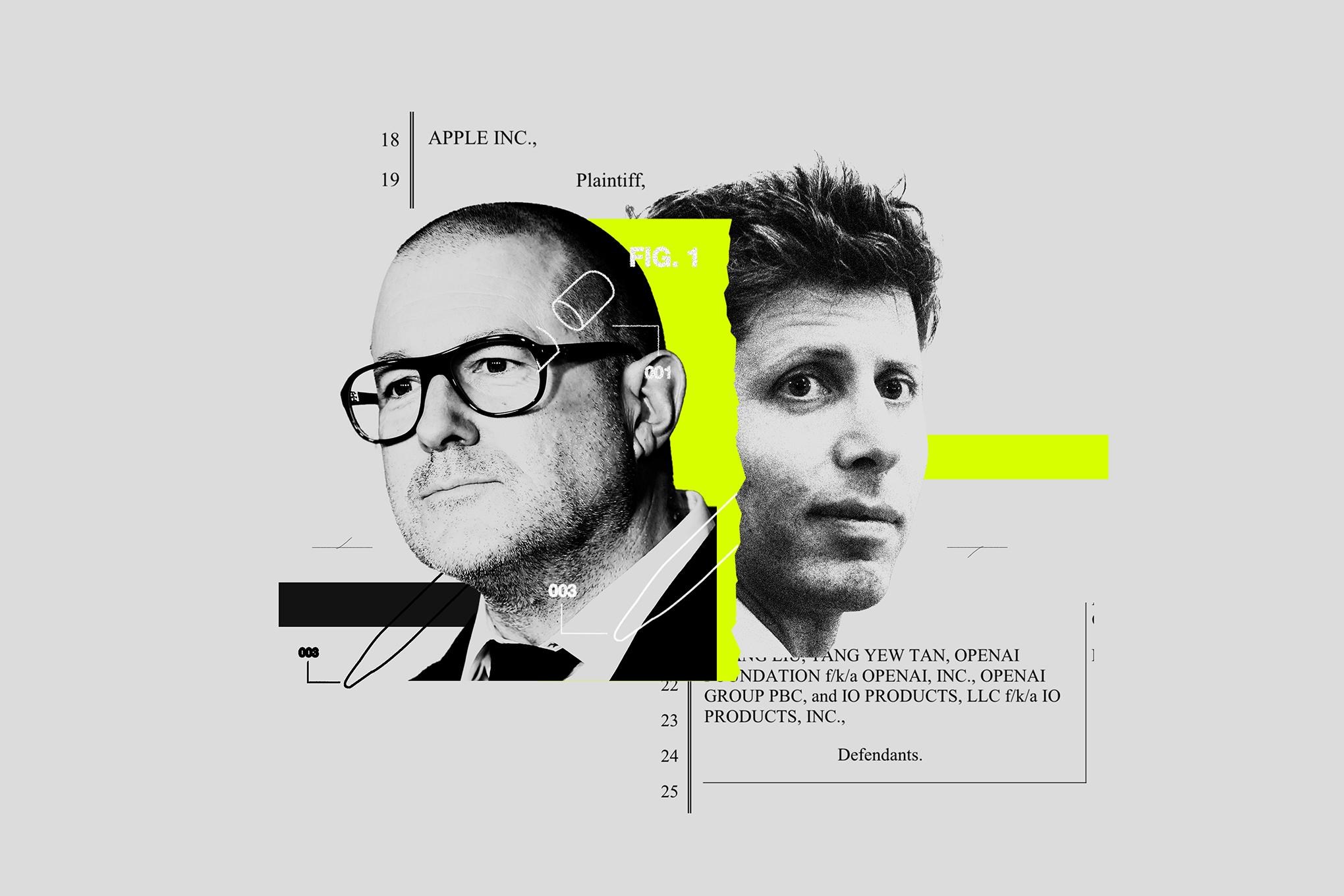
Apple Inc. filed suit against OpenAI on 10 July 2026, accusing the artificial-intelligence company of orchestrating a campaign to extract confidential hardware information through former Apple employees. The complaint, summarised by The Verge the same evening, alleges that ex-staff who moved to OpenAI carried proprietary knowledge "for the benefit of OpenAI," and that the AI lab knew what it was receiving.
The filing marks an unusual public collision between the world's most valuable consumer-electronics company and the private lab at the centre of the generative-AI boom. It also lands in a year already crowded with litigation over AI talent, model weights and training data, and it sets up a discovery fight that could expose how aggressively the frontier labs have recruited from Apple's silicon and device-engineering ranks.
What Apple is alleging
According to The Verge's account of the complaint, Apple alleges it has "uncovered evidence" that former employees now at OpenAI took proprietary information. The suit frames the conduct as coordinated rather than incidental, accusing OpenAI of orchestrating the transfer rather than passively receiving it. Telegram channels covering the filing, including the @aipost feed, summarised Apple's position as a deliberate campaign to obtain confidential material.
The substantive allegations are not yet public in full. The complaint appears to centre on hardware know-how rather than model code or training data, which is the more common territory of recent AI copyright suits. Apple's case is therefore closer to a trade-secrets action in the long line of non-compete and IP disputes that have followed California's hardware industry for decades than to the copyright fights that have dominated AI litigation so far.
Why a hardware claim, and why now
Generative-AI lawsuits to date have largely been brought by authors, news publishers and visual artists against model makers, with the substantive theories being copyright infringement and unlawful training. A hardware trade-secrets claim sits in different doctrinal territory and signals a different corporate anxiety: Apple is not contesting what an AI model has read. It is contesting who built the silicon and devices that the next generation of models will run on.
That framing matters because Apple's hardware roadmap is its strategic centre of gravity. The company's silicon programme, the vertical integration of its devices, and the on-device processing pitch that distinguishes its AI positioning from cloud-only rivals all rest on a body of internal engineering knowledge that does not exist in any public paper. If a meaningful fraction of that team has migrated to OpenAI, the question of what they took with them is existential rather than incidental.
The counter-narrative OpenAI is likely to deploy
OpenAI has not yet filed a public response in the sources available to this publication. The plausible defence sits on three rails, and any of them would be conventional.
First, individual engineer mobility is lawful in California, where non-competes are unenforceable for most workers. OpenAI can argue that the people, not the files, are what it hired. Second, OpenAI can contest the "orchestrated" framing in Apple's complaint and reframe the conduct as a series of ordinary recruiting decisions by a fast-growing lab competing for scarce talent. Third, OpenAI can push the case toward arbitration and sealed proceedings, which would limit public discovery and deny Apple the deterrent signal that a public filing is designed to produce.
A separate line of defence runs through the structure of the AI talent market itself. The frontier labs have collectively raided the same handful of large-tech engineering organisations, and any one of them could argue, with some evidentiary support, that Apple's complaint is a defensive move to slow a recruiting pipeline rather than a clean assertion of theft. The complaint's burden is to show specific files, specific communications and specific intent. The defence's burden is only to create reasonable doubt on each of those elements.
The structural frame: AI as a talent-laundering problem
The bigger story is not any single complaint. It is that the frontier-AI sector has built its compute stack, its research bench and now, increasingly, its hardware programmes on a model of aggressive lateral hiring from incumbents. The model works as long as the receiving companies can credibly argue that what they bought was the person, not the notebook. Once that distinction collapses in any one case, the precedent pressure on the rest of the industry rises sharply.
This is the pattern courts have seen before in semiconductor, autonomous-vehicle and biosciences hiring wars. The novel feature this time is the public visibility of the dispute. Apple has chosen to litigate in public rather than settle quietly, which is itself a strategic choice. The suit reads as much as a warning to the broader labour pool as a claim for damages against OpenAI specifically.
What is being tested in court
Three things will be tested over the next twelve to eighteen months if the case proceeds to discovery.
Whether Apple's evidence supports the "orchestrated" allegation, or whether the conduct is more accurately described as opportunistic individual decisions by former employees. Whether OpenAI's internal communications show knowledge of provenance problems with incoming information, or whether the lab can credibly claim it relied on representations by hires. And whether the court will allow the case to remain in the public docket or push substantial portions into sealed proceedings, which would materially reduce the deterrent effect Apple is buying with the filing.
The discovery fight is the real fight. Public complaints set the narrative; private discovery sets the outcome.
Stakes
If Apple prevails on a narrow theory, the immediate consequence is a financial settlement, an injunction limiting the use of any specifically identified proprietary material, and a tightening of internal information-controls at the frontier labs. If Apple prevails on a broad theory, the consequence is structural: hiring from incumbents becomes a presumptively litigious act, the talent market tightens further, and the frontier labs' growth model assumes new legal overhead.
If OpenAI prevails, the precedent reasserts the basic principle that engineers in California can move freely between employers and that the receiving company bears limited responsibility for what individuals bring with them, provided the receiving company did not direct the taking. Either outcome will be cited in the next several trade-secrets suits that follow, and several are already in the pipeline across the sector.
What the sources do not yet say
The complaint itself has not been published in the materials available to this publication, and The Verge's account is the most detailed public summary. The identities of the named former employees, the specific technologies at issue, and the dollar value of any alleged damage are not in the available reporting. The case's docket number and venue are also not in the available reporting. None of that prevents the analytical point, which is that the suit is a strategic move as much as a legal one, but it does limit any confident prediction about how the merits will unfold.
Desk note: the wire coverage so far, led by The Verge's same-day summary and amplified through Telegram aggregators, treats this primarily as a labour-mobility story. Monexus is framing it as a structural test of the AI sector's hiring model, where the legal theory matters less than the precedent the discovery fight will set for the rest of the frontier-lab recruitment pipeline.
Wire provenance
This editorial synthesis draws on the following public wire/social posts:
- https://t.me/aipost
- https://t.me/aipost
- https://t.me/theverge_news