US strikes on southern Iran resume as ceasefire 'temporarily ceases'
American strikes hit Choghadak as Washington publicly declared the Iran ceasefire 'temporarily ceased' and set a Strait of Hormuz deadline for tomorrow. Tehran's official channels answer with denials, sanctions counter-pressure, and a second Israeli strike cycle in southern Lebanon.
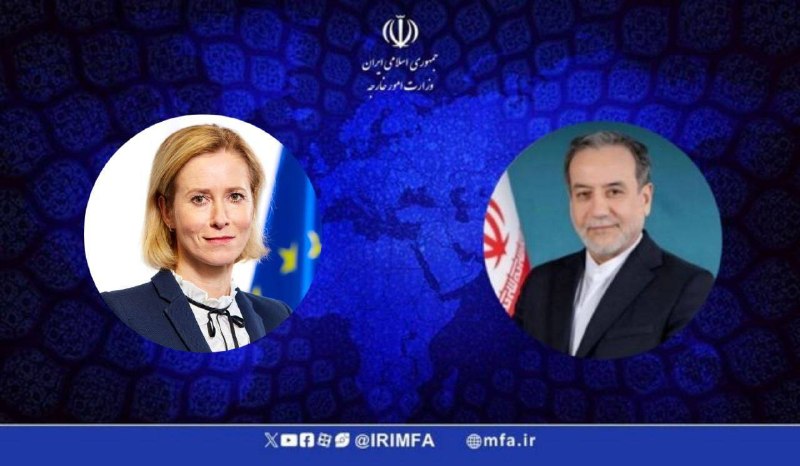
American strikes landed on the Choghadak area of southern Iran this week, with the Newsmax-sourced OSINTDefender feed corroborating earlier Telegram reports of fresh targeting near the coast. The strikes came hours after Washington publicly declared that the ceasefire with Tehran had "temporarily ceased" and the Axios reporting, picked up by OSINTDefender, that the Trump administration had issued Iran a hard deadline: publicly declare the Strait of Hormuz open to commercial shipping and commit to ending attacks on merchant vessels by tomorrow. The Choghadak detonations are the most verifiable kinetic fact in the record. A separate set of explosions reported at Iranshahr remains unattributed and unverified.
The structural reading, then, begins with what can be placed on a map and ends with the choreography around it. The US Navy's Central Command, as relayed by Fox News via Tasnim, insists that the southern route through the Strait of Hormuz "remains open and has been used continuously." The Iranian foreign ministry's line, carried by Iran's UN ambassador Amir Saeid Iravani and ministry spokesman Esmaeil Baghaei, is the inverse: that America is in violation, that Iran owes nothing further, and that the US and Israel bear "full responsibility" for the consequences. Iran's Press TV counterpart and IRNA amplify the same posture from Tehran.
The deal that wasn't
The negotiation that was supposed to substitute for the strikes has, in public, never fully cohered. Sprinter Press, citing Fox, reports that President Trump stated the ceasefire had ended because Iran had asked to continue talks and Washington had agreed, "but the facts speak for themselves." That formulation is doing real work. It is a one-line summary of a pattern in which the announcement of agreement and the resumption of firing have been almost simultaneous for three cycles running. The Geneva accord that Middle East Eye reports is set to be signed on Friday has not, on the record available, stopped anything overnight.
What Tehran signals back through official channels is a layered resistance. Iravani, via Sprinter Press, says the US and Israel bear full responsibility for the consequences of aggression, and warns that if America continues to violate its obligations "Iran is no longer required to fulfill its obligations." Parliament speaker Mohammad Bagher Ghalibaf, per IRNA's English wire, put the harder framing on the table: "Iran does not trust US; Only those ready for war can negotiate with US." President Masoud Pezeshkian, also via IRNA, warned of "regional sabotage" and stressed adherence to commitments, a notably more guarded register than his speaker's, but directed at the same audience.
What is, and isn't, on the water
The US, per Middle East Eye, used the day to issue a fresh sanctions package targeting a financier for Iran's new leader, Mojtaba Khamenei, and 13 other individuals and entities, in direct response to Tehran's "resumed attacks on oil tankers in the Strait." The Central Command position, per Tasnim's reproduction of Fox, is that shipping continues to use the southern corridor Tehran has effectively closed for the duration of the crisis. Iran's position, per Tasnim and Fox's reporting on the same footage, is the inverse: that ships are transiting only because they are using the route Iran has designated. Both statements can be simultaneously true if one accepts that the southern route is open, narrow, and operating under Iranian tactical say-so. That is not the same as the strait being open.
The freelance combat indicator, with less explanatory weight, is the mechanical. OSINTDefender, carried by Newsmax, reports that the USS Boxer and its embarked 11th Marine Expeditionary Unit were temporarily sidelined during the opening weeks of the conflict with Iran after an engine cooling system failure. A capital ship off the line, in a campaign organised around naval presence and deadline diplomacy, is the kind of detail that matters tactically and is easy to lose politically.
The wider ring of fire
The escalation is not confined to the Gulf. Tasnim's English wire reports an Israeli strike on the Al-Nabatiyah al-Fawqa area of southern Lebanon, described as the second such targeting within an hour and a violation of the ceasefire agreement by the "Zionists," with the same wording repeated in a separate window by wfwitness on Telegram. The pattern repeats the choreography of the Iran file: a declared framework, a measured breach, and a denial on one side paired with a kinetic event on the other.
The casualty ledger, where it can be assembled, is thin and official-only. Middle East Eye reports that the Iranian health ministry puts the strike death toll at 17 people. That figure moves the body count from "operations are precise" rhetorical territory into arithmetic. It is not a number attached to any specific installation, but to a population in a populated coastal district, and the difference matters for the language used downstream.
What the deadline actually demands
The Axios-led reporting carried by OSINTDefender is specific: the Trump administration has given Iran until tomorrow to publicly declare the Strait of Hormuz open to commercial shipping and to commit to ending attacks on merchant vessels. The framing matters. A private commitment from the foreign ministry, the kind Esmaeil Baghaei might extend in a back channel, does not satisfy the condition. The demand is for a public act, in Iranian official media, that translates into observable traffic on the water and into observable restraint from Iranian naval units and their proxies.
Mohammad Marandi, posting on X, called a Jennifer Jacobs report that Iranian officials had privately conceded an "error" in shooting at commercial ships "fake news." That denial sits inside the structural problem: Iran cannot publicly concede error without making the deadline condition easier to satisfy, and it cannot publicly repeat the denial without hardening the very pattern the administration is trying to terminate. The negotiation is being conducted partly in a language of who is allowed to admit what, in front of which audience, in a 36-hour window.
What the next 36 hours are buying
Pressure on a system of escalation management is rarely an isolated event. It is a sequence of small concessions and small denials, each testable in real time on AIS feeds and at Iranian docks. The Friday Geneva target date, the Saturday Strait-of-Hormuz declaration demand, the Lebanese ceasefire that holds by an hour at a time, the fresh sanctions ledger, the 17-person health ministry figure, and the sidelined Boxer together describe a conflict managed in narrow increments, each of which leaves the next decision point on the calendar.
The piece worth watching is not the announcement but the late-night wire. If a public Iranian declaration lands before tomorrow's US deadline, the Choghadak pattern is interrupted. If Tehran's official channels hold Marandi's line and Baghaei's, the deadline either expires, with whatever decision follows, or it resets into another round in which the declaration and the strike again arrive on the same news cycle. The next data point is the language used by IRNA's English service at hour mark tomorrow, not the language of any individual negotiator.
Sources: Middle East Eye live blog, Jul 10 2026 · Fox News via Tasnim English, Jul 10 2026 · Axios via OSINTDefender, Jul 10 2026 · Newsmax via OSINTDefender on USS Boxer, Jul 10 2026 · Iran MFA via IRNA English · President Trump statements via Sprinter · Mohammad Marandi on Jennifer Jacobs report, Jul 10 2026.
Desk note: Monexus led with the verifiable Choghadak strikes and the Axios-corroborated Strait deadline, and held the Iranshahr explosions to the language of "reported and un-attributed," rather than reporting through the anonymous-officials frame that dominated parts of the wire.