Farage resigns as MP for Clacton, forcing by-election he says he intends to contest
Nigel Farage has resigned as MP for Clacton, forcing a by-election he says he intends to fight. The move converts a safe seat into an explicit mandate claim and tests whether Reform UK can run a clean professional contest from a standing start.
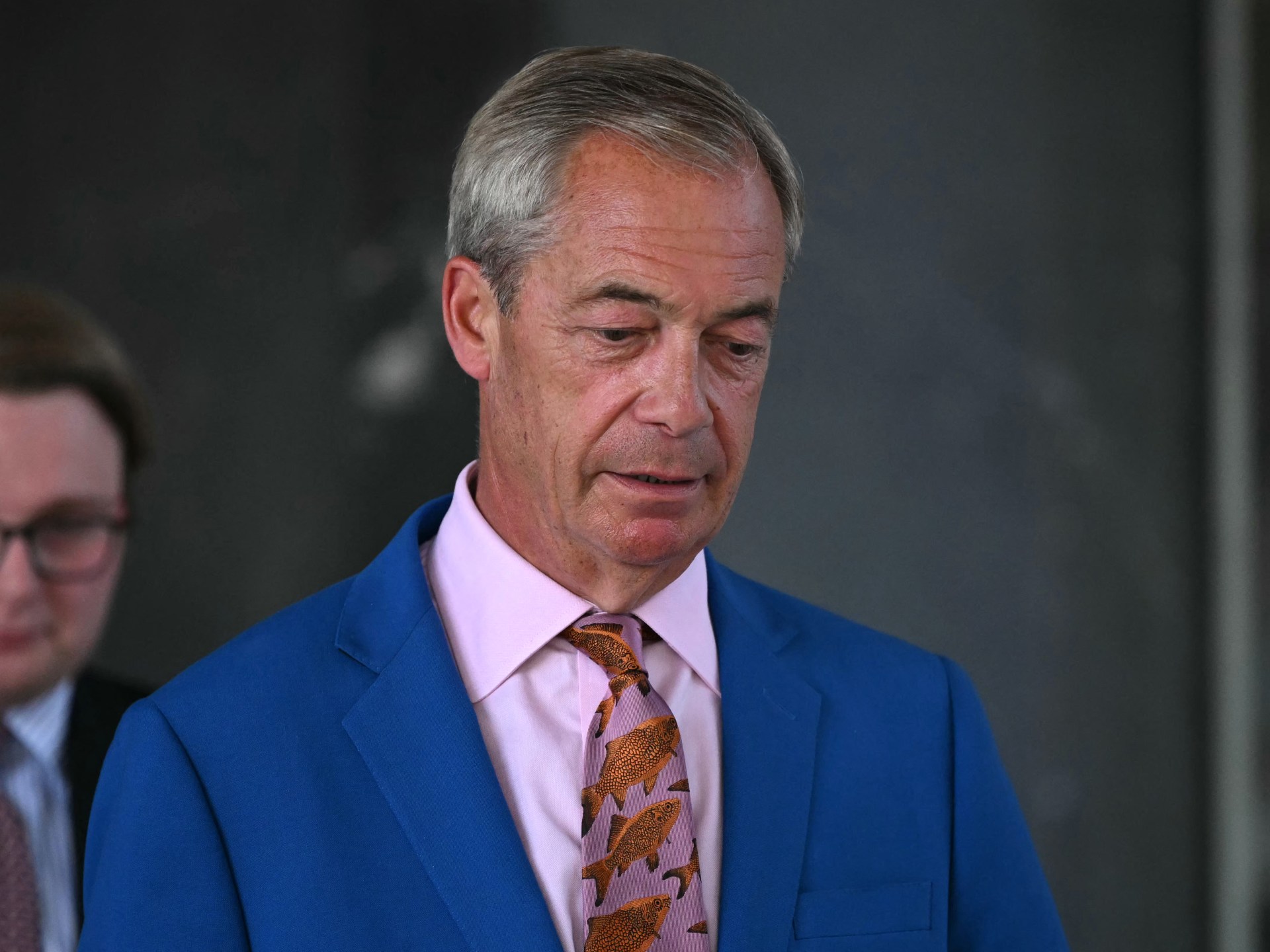
Nigel Farage stepped down as the MP for Clacton on 7 July 2026, triggering a parliamentary by-election he has publicly stated he intends to fight. The resignation lands in the middle of a UK political year already reshaped by a fractured Conservative opposition, a Labour government operating on a thin working majority, and a Reform UK party that has spent eighteen months converting protest energy into parliamentary footprint.
The arithmetic of Westminster gives the move an obvious tactical logic. A vacant Clacton seat returned by a sitting MP almost always favours the incumbent party of the holder, particularly when the holder signals an intention to contest. Farage's resignation does not diminish Reform's Commons presence in the short term; it converts a guaranteed vote into an explicit mandate claim. The risk runs the other direction: a contested by-election turns a safe seat into a national proxy vote, with turnout, postal ballot handling, and the small-unionist-libertarian coalition that carried Clacton in 2024 placed under forensic examination.
The Clacton variable
Clacton-on-Sea has been more than a parliamentary seat for Farage. It was where he first won a Commons seat in 2024 after seven failed attempts elsewhere, a constituency carved around coastal Essex dissatisfaction with housing supply, small-boat channel crossings, and the perceived detachment of Westminster from industrial-town England. Turnout in 2024 was high by by-election standards because it was a general election; turnout in a midsummer by-election in a seaside town in the school holiday season is a different proposition.
Reform's organisational work in the seat since 2024 has been visible: a steady stream of town-hall events, leaflet rounds in Jaywick and Holland-on-Sea, and a county-council footprint in Tendring that expanded after the 2025 local elections. None of that insulates a by-election from the weather, the postal-vote deadline friction, or the question of whether disaffected Conservative voters, the supply chain of Farage's 2024 majority, return to a now-leaderless Conservative candidate or sit the contest out.
A party in a hurry
Reform UK has spent 2025 and 2026 building the institutional infrastructure of a governing-in-waiting party rather than a permanent insurgent outfit. Membership dues, regional offices, a policy programme drafted in numbered white papers, and a shadow frontbench staffed with defectors from both major parties. The Farage resignation reads, against that backdrop, as the next logical step: convert a Parliament of roughly a dozen Reform MPs into a brand whose leader can claim a clean personal mandate unmediated by an inter-party defection.
The cost is procedural. By-election rules prevent the sitting MP who triggered the vacancy from campaigning in any official party capacity until the writ is moved, and there are narrow windows in which the chief whip and party officers, rather than the leader, operate the ground operation. For a party that has styled itself as a movement, the discipline of running a clean, narrow, professional by-election will be a test of whether that institutional build-out is real or cosmetic.
The opposition arithmetic
For the Conservatives, the timing is awkward. Kemi Badenoch's leadership has spent a year stabilising the parliamentary party after the 2024 wipeout, recovering a modest floor in the polls and rebuilding a policy offer around tax, small-state conservatism and selective state intervention. A by-election in a seat that the Conservatives last held as recently as 2017 is one they cannot ignore and cannot win.
For Labour, the calculation is simpler and colder. A Reform-versus-Conservative fight in coastal Essex does not threaten Sir Keir Starmer's majority unless it spreads; the government's interest is in the by-election staying Clacton-shaped rather than turning into a referendum on the budget, on small-boat crossings, or on the trade unions bill currently moving through the Commons. The press operation will be aimed at denying Farage the oxygen of a national frame.
What a result actually proves
By-election results have been misread by every Westminster lobby for a generation. A swing to Reform in Clacton confirms what the polls already say. A hold at a similar share to 2024 confirms institutional consolidation. A fall to the high teens or low twenties would be the first real warning shot that the Reform-to-Conservative coalition of 2024 is fragmenting under the pressure of a sitting government and a mid-cycle Labour budget.
The deeper question is structural. Farage has spent two decades as a figure who reshapes British conservative politics without quite holding it, a role his critics call opportunist and his supporters call necessary. A win in a by-election he himself triggered is a smaller claim than the one he made in 2024; a loss would be larger than the seat's marginality suggests, because it would be a voluntary loss. The result therefore reads either as a coronation or as a referendum on whether Farage's project can survive the conversion from movement to institution.
The next ten weeks
The writ will move once the Speaker's office confirms the procedural timetable, with the contest likely to fall in early September before party conference season compresses the political calendar. Three dates matter: the close of nominations, the postal-vote dispatch deadline, and polling day. Each is a pressure point where turnout mechanics, coastal holiday traffic, an ageing electorate, the postal ballot's disproportionate weight in low-turnout contests, will reward whoever has built the better ground operation.
For now, the framing belongs to Farage: a resignation presented as a refresh, a by-election framed as a re-endorsement, and a party asking a constituency it already holds to confirm what it has already said once. The risk is that the country, asked to vote again on the same question eighteen months later, answers with a shrug.