The NATO summit opens under the shadow of its own contradictions
Trump left Ankara claiming concessions, then landed in England aboard the older Air Force One as his own officials told CNN the Iran ceasefire had 'at least temporarily ceased,' exposing the structural contradiction the summit could not paper over.
Donald Trump touched down at RAF Mildenhall on Wednesday evening aboard an older Air Force One, having left the NATO summit in Ankara earlier the same day and opted against continuing on the Qatari-gifted Boeing that had carried him to Türkiye. The plane swap was a logistical footnote in a day that was anything but. By the time Air Force One's wheels were down in Suffolk, the alliance's annual gathering had produced concessions Trump publicly claimed as his own, an open clash with allies over the Iran war, and a fresh bout of interest in acquiring Greenland, all while a US official told CNN the ceasefire with Iran had "at least temporarily ceased."
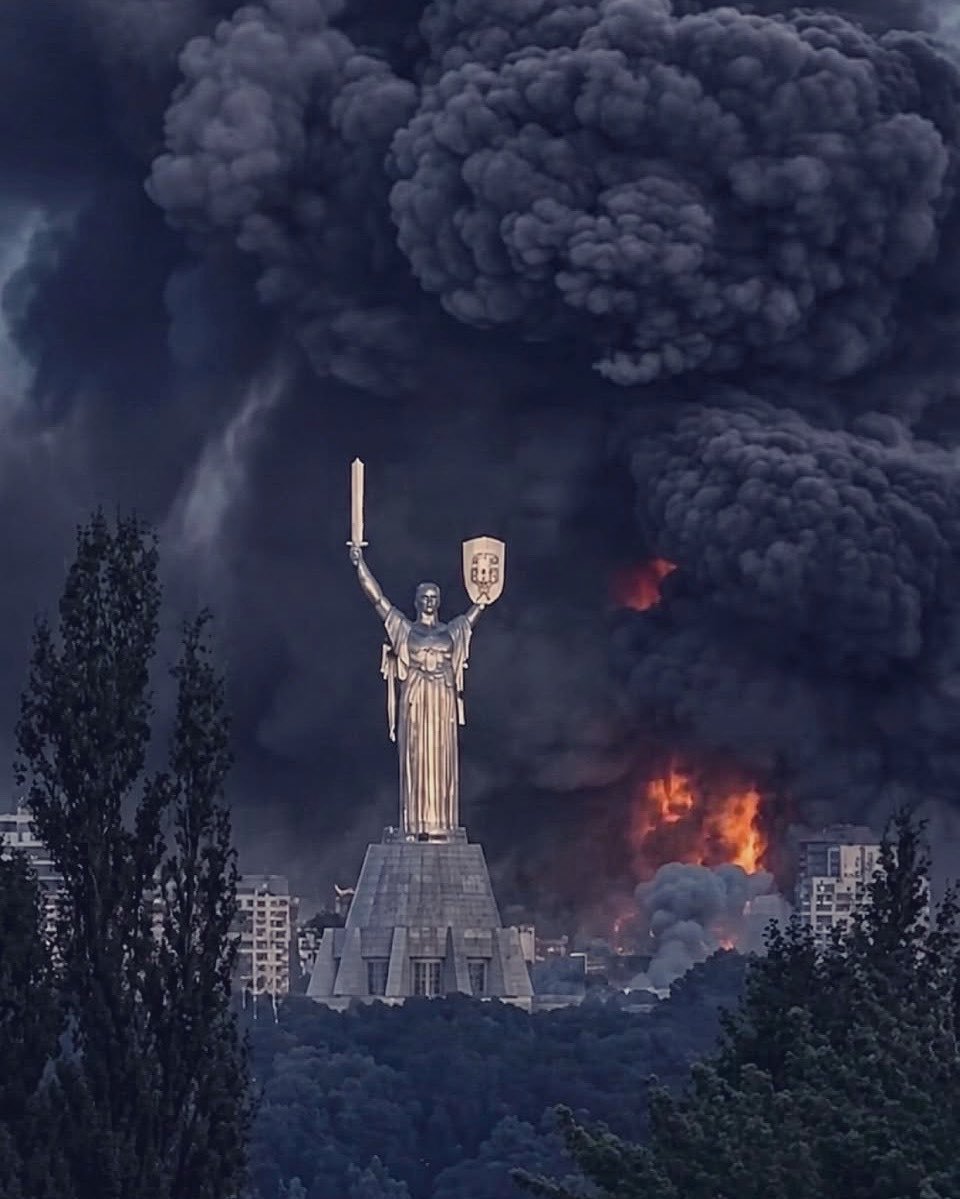
What Ankara actually delivered, and what it did not, is the more honest story. The summit convened under a cloud the BBC's visual team did not bother to disguise: a "black cloud" over unity, as the broadcaster framed it, after Trump used the opening sessions to berate allies for failing to back his war on Iran and to revive the long-dormant question of US sovereignty over Greenland. The contradictions on display are not new. They are, however, becoming harder to launder as tactics.
The summit as theatre
Trump told a reporter on the tarmac that NATO members "came a long way today" and "made some concessions," pushing back against the suggestion, drawn from his own remarks, that his only reason for attending was the Turkish venue. The substance of those concessions, and the price extracted for them, will take days of leaks to reconstruct. What is already public is the optics: a president who arrived aboard a foreign-donated aircraft and left aboard a familiar one, lecturing Europeans on burden-sharing while a parallel confrontation with Tehran was visibly unravelling.
Iran's deputy foreign minister, Kazem Gharibabadi, was happy to provide the counter-narration. In remarks carried by Iranian state media, he said Trump's recent posture "clearly vindicate[s] Tehran's p[osition]" and that "Trump understands language of force better," a line state outlets amplified alongside the gloss that the president's statements amounted to "an admission of failure." The messaging is calibrated for a domestic Iranian audience and for the wider Global South consumer of US-Iran coverage. It also reads as a confident read of a White House that, by its own officials' on-record account, is no longer operating within a ceasefire framework.
The Iran war comes indoors
The single most consequential wire out of Ankara was not about NATO at all. Aboard the USS Abraham Lincoln in the north Arabian Sea, a US official told CNN's Pamela Brown that the ceasefire with Iran "has at least temporarily ceased" and that the situation remains "very dynamic." That phrasing, hedged but unmistakable, places the military track on a collision course with the diplomatic one Trump was simultaneously selling to alliance members. You cannot, in any straightforward sense, extract burden-sharing concessions from European capitals on the basis of shared threat while the threat in question is one your own officials are escalating.
Iran's read of the situation is not subtle. The IRNA and PressTV feeds on Wednesday evening framed the same remarks as proof that Tehran's strategic posture had been correct all along, and that Washington understood only coercive vocabulary. Russian-aligned outlets, predictably, took the opportunity to pivot the story: the Rybar digest for July 8 cast the US as the party helping Ukraine strike Russian refineries while pressing Moscow to make concessions, a sequencing Moscow presents as Western overreach rather than allied coordination. Both frames are selective. Both will be quoted in the days ahead.
What the alliance is actually for
Strip away the press conference theatre and the question Ankara posed to its members was older and starker than the day's headlines suggested. An alliance built around a shared threat assessment cannot operate when one member's official spokesperson is telling a CNN reporter on a carrier deck that a regional ceasefire has lapsed, and another member's head of state is using the summit to relitigate the acquisition of a NATO ally's territory. The Greenland revival, in particular, is not a curiosity. It is a signal to every member state with a US garrison, a basing arrangement, or a forward-deployed unit that the contractual floor of the alliance is negotiable from the American side.
Europe's response on Wednesday was muted, which is itself a tell. Public criticism of Trump in summit settings has, historically, been priced in by his own team as a domestic political asset. Concessions extracted under that pressure are treated in Washington as victories, not slights. The harder European question, and the one that will define the alliance's next eighteen months, is whether member states are willing to underwrite their own defence on the assumption that US commitments remain conditional and reversible.
The contradiction the summit cannot resolve
Trump's Wednesday was a single, compressed demonstration of the problem. He demanded allied support for a war whose ceasefire was, by his own officials' account, no longer holding. He pressed for burden-sharing against a threat he is himself escalating. He left on a familiar plane rather than the foreign-gifted one, a small but legible act of brand discipline. And he claimed credit for concessions whose content has not yet been disclosed.
The pattern is now familiar enough to name. The summit did not resolve the contradiction between an alliance of sovereign members and a hegemon that treats its commitments as transactional. It gave that contradiction a stage, a date, and a venue. What comes out of Ankara in the days ahead, in communiqués and quiet bilateral readouts, will determine whether this was the summit where the alliance began to act like its own press coverage and find a workable arrangement, or the one where the gap between rhetoric and structure became impossible to credibly close.
Sources
- BBC World on Telegram, Watch: Why is there a 'black cloud' over unity at the Nato summit? (2026-07-08, 21:38 UTC) [https://t.me/BBCWorldoffl]
- Clash Report on Telegram, Trump comments on the NATO summit and Türkiye venue (2026-07-08, 23:17 UTC) [https://t.me/ClashReport]
- IRNA English on Telegram, Iran deputy FM on Trump's remarks (2026-07-08, 22:27 UTC) [https://t.me/Irna_en]
- Press TV on Telegram, Gharibabadi quotes on Trump (2026-07-08, 22:50 UTC) [https://t.me/presstv]
- OSINT Defender on Telegram, Trump arrives at RAF Mildenhall (2026-07-08, 22:39 UTC) [https://t.me/osintlive]
- Intelslava on Telegram, US official on Iran ceasefire to CNN (2026-07-08, 21:51 UTC) [https://t.me/intelslava]
- World News wire, Trump switches back to older Air Force One for England trip (2026-07-08, 22:49 UTC) [wire]
- Rybar on Telegram, July 8 digest (2026-07-08, 21:47 UTC) [https://t.me/rybar_in_english]
Desk note: Monexus treated the Ankara summit as a story about alliance structure rather than a personality one, weighing Iranian state media, Russian milblogger framing, and the BBC's visual framing against the live wire out of the USS Abraham Lincoln that undercut the diplomatic read of the day.