A Funeral in Tehran and the Geometry of Global Alignment
The dignitaries filing past a coffin in Tehran on 3 July 2026 are not paying respects to a dead man alone — they are rehearsing a future map of patrons and clients.
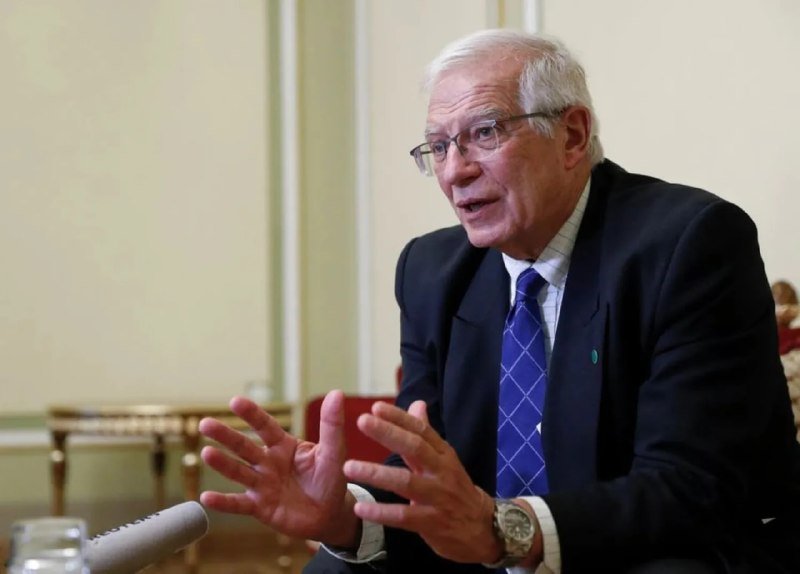
On the morning of 3 July 2026, the Secretary General of the Shanghai Cooperation Organisation, Nurlan Yermekbayev, filed past a coffin in Tehran. According to a release on the official Khamenei.ir Telegram channel at 15:40 UTC, he paid tribute to what the channel calls "the body of the martyr, the leader of the Islamic Revolution." A parallel post at 15:05 UTC on the same channel names the deceased explicitly: Grand Ayatollah Imam Sayyid Ali Hosseini Khamenei, "the martyred Leader of the Islamic Ummah."
In ordinary times the choreography of foreign dignitaries attending a state funeral would be a footnote, a wire-service round-up item. These are not ordinary times, and the guest list is the story. The Tehran ceremony has become, in effect, an inventory of who is willing to be photographed standing near an Iranian coffin — and therefore who is positioning themselves, however cautiously, inside an Iranian-led political orbit.
The SCO signals a hierarchy
Yermekbayev's presence is the most consequential of the morning's arrivals. The Shanghai Cooperation Organisation is the principal security and economic body linking China, Russia, India, Pakistan and the Central Asian states; its Secretary General does not drop in at a funeral for protocol alone. That he did, and that the visit was published by the Iranian state itself rather than quietly confirmed, indicates a deliberate signal from Tehran's partners that the institution stands with the succession in Tehran.
The framing in the official channel is worth noting for what it does not do. It does not name a successor. It does not convene a regional summit on the side-lines. It performs respect, not policy. That is itself information: in moments of contested transition, the safest foreign posture is grief expressed loudly and commitments issued quietly.
A widening arc of delegations
The SCO presence was bracketed by a wider cast. At 14:42 UTC, Charles Mubita, Minister in the Presidency of the Republic of Namibia, was reported as having paid his respects to the same body. At 14:51 UTC, Cevdet Yılmaz, Vice President of Türkiye, did likewise. By 14:54 UTC, a delegation from the Ministry of Foreign Affairs of the Kingdom of Saudi Arabia was recorded in the same role. At 15:01 UTC, the channel published an interview with Hafizuddin Ahmad, Speaker of the Parliament of the People's Republic of Bangladesh, framed around his attendance at the funeral procession.
Read individually, each is a courtesy call. Read together, the geographic spread — Central Asia via the SCO secretariat, Southern Africa, Anatolia, the Gulf, South Asia — describes a coalition of states whose relationship to Tehran has been historically uneven, and which now find reason to converge in public. The list includes NATO's second-largest army (Türkiye), the Gulf heavyweight (Saudi Arabia), and a key South Asian Muslim-majority democracy (Bangladesh). The absences are equally eloquent, but cannot be reconstructed from the source material available.
What the optics argue
The pattern points to a familiar diplomatic geometry: a rising or consolidating power uses a moment of vulnerability in a partner state to demonstrate the depth of its coalition. The mechanism is older than the SCO — grief is the cheapest form of alignment, because it costs nothing to perform and a great deal to refuse. Tehran is collecting these performances and broadcasting them because they convert attendance into evidence of legitimacy, at a moment when the question of who runs the Islamic Republic is, openly or otherwise, being negotiated.
The Chinese and Russian governments are notably absent from the published list of arrivals in the available source material, even though both have institutional weight inside the SCO and strategic interests in Iranian stability. Their silence is consistent with how Beijing and Moscow handle contested succession in partner states: they issue statements, send lower-ranking envoys, and wait for the dust to settle before committing at the top of the political pyramid. The SCO Secretariat's attendance, by contrast, is exactly calibrated to register institutional backing without binding any one capital.
Stakes, and what remains opaque
The stakes of the choreography are concrete. Iran sits on top of a network of axis-of-resistance partners and clients; its internal succession will determine whether that network holds, fragments, or is redirected. The funeral guest list is the first open audit of who will follow the next Iranian leadership and who will hedge. Türkiye and Saudi Arabia do not share an ideology; their shared appearance in the same hall is a transactional photograph, not a doctrinal convergence. Namibia's presence is a marker of South–South diplomatic posture rather than a security commitment. The SCO Secretary General's appearance is the most consequential: it implies that the institutions built around Beijing and Moscow's diplomatic weight are willing to lend their banner to the transition.
What the published material does not clarify is the succession itself. No successor is named in any of the six items available to this publication. The framing of the deceased as "martyr" is a doctrinal claim with political weight inside Iran; outside Iran, it is a contested characterisation that Western and many regional outlets are unlikely to adopt. The institutional language used by the channel — "Leader of the Islamic Ummah," "lofty station" — is the vocabulary of the Iranian state, and the absence of corroboration from non-Iranian wire services in the source set means readers should treat the description of events as the Iranian state's own telling of them.
The funeral will end. The photographs will not. From Namibia to Türkiye, from Dhaka to Riyadh to Beijing's SCO secretariat, the men standing near the coffin on 3 July 2026 have written themselves into a record that future Iranian governments — whoever leads them — will read as a tally of friends.
This publication reads the published attendance list as a coalition map in the making: grief as protocol, protocol as alignment, alignment as capital. The sources are an Iranian-state feed; the inferences drawn from the guest list are this publication's own.
Wire provenance
This editorial synthesis draws on the following public wire/social posts:
- https://t.me/Khamenei_en
- https://t.me/Khamenei_en
- https://t.me/Khamenei_en
- https://t.me/Khamenei_en
- https://t.me/Khamenei_en