The Farewell That's Not a Funeral: Reading Khamenei's Final Send-Off
Tehran staged a farewell ceremony for Ayatollah Khamenei, killed in a February US-Israeli airstrike, and reframed the funeral as a covenant rather than a closing. Iraq shut down for it, Iranian reformist ex-presidents stayed away, and the guests list read like a foreign-policy document.
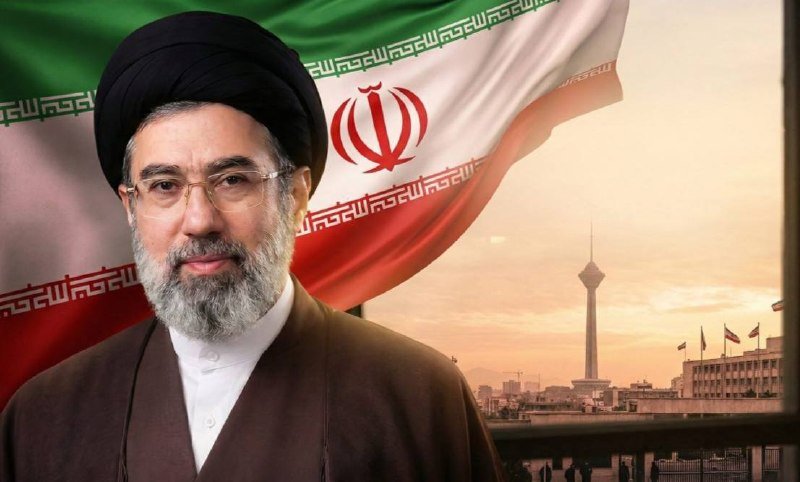
Tens of thousands of mourners packed Tehran's Mosalla on the morning of Saturday, July 13, for the farewell ceremony of Ayatollah Ali Khamenei, whose body was laid to rest alongside members of his family after a week of mass processions across Iran. The Supreme Leader was killed in a US-Israeli airstrike on February 28, and the state has spent the days since converting that loss into something closer to a political coronation: not a burial of a predecessor, but a stage-managed debut of the order he built. Reuters described the gathering in clinical terms: mourners, a Mosalla, a week of processions. The diplomatic choreography of a state funeral, however, is rarely accidental. Read this one not as liturgy but as map. The guests list is the policy.
The framing battle started almost before the eulogies ended. Tasnim News quoted President Masoud Pezeshkian rejecting the word "farewell" altogether. "I do not accept the interpretation of farewell," the Iranian president said. "This is a pact to continue." The Telegram channel tied to Khamenei's official office ran a parallel translation of the same message: martyrdom, it insisted, "is not the end of one's story; rather it is the beginning of a new chapter." Official Iranian messaging is rarely poetic by accident, and the choice to rebrand the funeral as the opening of a new chapter, rather than the close of an old one, tells you what the regime wants the next chapter to look like: a project still under construction, with the dead man's fingerprints still wet on the cement.
A regional funeral, not a national one
Nine Iraqi governorates announced the suspension of official working hours for the day of the ceremony. Al-Najaf al-Ashraf, Holy Karbala, Maysan and six others cleared their bureaucracies for mourning that was not theirs. Maysan's governor went further, ordering 120 service centres activated and the wheels of state departments turned to transporting citizens to the mourning grounds. Iraqi tribal sheikhs and clan networks, according to Al Alam, called their constituents to participation in language that read less like condolences and more like mobilisation orders. The funeral's gravitational pull across the border is the single most legible signal in the entire programme. Iraq shut down for Iran. That is not a courtesy visit; it is a confession about whose shrine the faithful in Najaf consider central.
The resistance frame was made explicit at the ceremony itself. State-aligned reporting from the Khamenei office framed the mourning as "renewing allegiance to the Resistance at its architect's farewell." Chants of "Allahu Akbar" were curated into the official coverage as the through-line of the day, described as "the cry that has kept the Iranian nation alive." Sprinter Press circulated a Guardian report citing calls at the ceremony for the assassination of US President Donald Trump. Taken together, the Iranian state is doing two things at once with this funeral: it is asserting internal continuity, and it is signalling externally that the regional architecture Khamenei spent four decades building is now a covenant, not a coalition.
The absentees and the attendees
Tasnim Plus published a notable list of those who did not appear at the prayer ceremony: former presidents Mahmoud Ahmadinejad, Hassan Rouhani and Mohammad Khatami, plus former foreign minister Mohammad Javad Zarif. The absences cut across the entire reformist–principalist spectrum and include figures who once sat at the centre of Iran's foreign-policy establishment. The absence is the news. Three sons of the slain leader attended, while his presumed successor, Mojtaba Khamenei, was neither seen publicly nor photographed, reportedly injured in the same strike that killed his father. The visible family and the invisible heir: a deliberate piece of staging that keeps the question of succession on ice while the symbolism of the funeral does its political work.
The foreign guest list carried its own signal. RN Intel noted that US-based influencers associated with Russian-aligned media ecosystems, including Jackson Hinkle and Max Blumenthal, attended the funeral in person. That an Iranian state funeral cleared space for figures aligned with Moscow's information war against Washington is a quiet but real foreign-policy statement, made in the language of who gets a visa. The visitors were not the point; the choice of visitors was.
What the choreography actually says
A farewell that everyone in charge insists is not a farewell is, by definition, a launch. Pezeshkian's "pact to continue," the official translation of martyrdom as new chapter, and the regional suspensions of official business all converge on the same claim: that the structures Khamenei built will outlive the man, and that grieving them publicly is itself an act of political alignment. The funeral is a stress test of which institutions, which clerics and which foreign audiences can be counted on to perform the required mourning in unison. Iraq passed. The Iranian reformist ex-presidents did not. Russian-aligned American commentators did. The map of who showed up, and who refused to, is a draft of the next Iranian decade drawn in real time, while the cameras were still warm.