Putin's 'talks' offer is a battlefield posture, not a negotiating one
On 29 June 2026, Vladimir Putin told reporters he was willing to keep talking with US envoys — while simultaneously insisting the ground campaign in Ukraine continues. The contradiction is the message.
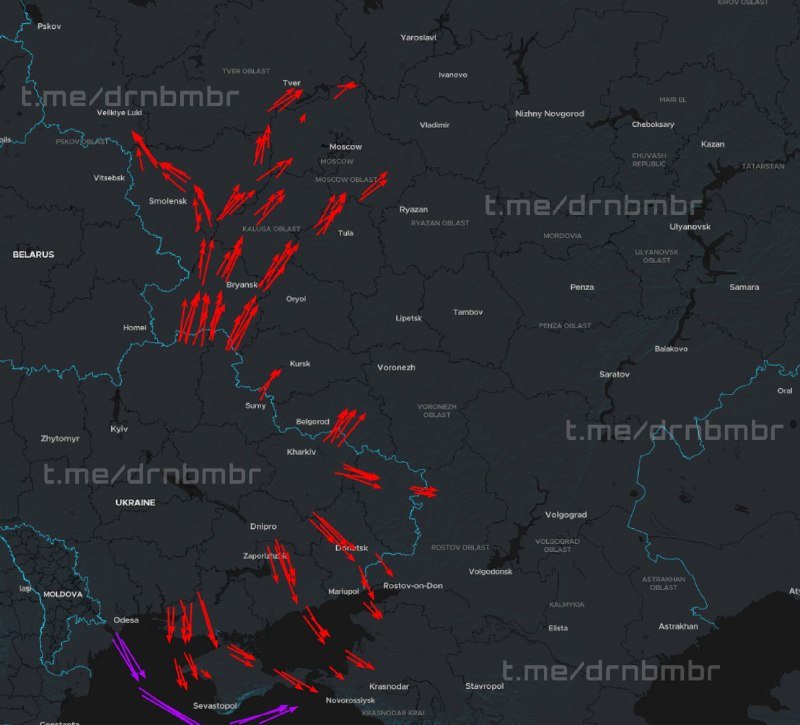
Vladimir Putin used a Sunday appearance on 29 June 2026 to deliver two sentences that point in opposite directions, and that is by design. He is ready, he told reporters, to continue talks with United States envoys on ending the war in Ukraine. He is also ready, he said in the same setting, to reject a proposed halt to long-range strikes and to press ahead with Russia's stated battlefield objective of fully capturing the four Ukrainian regions Moscow claimed to annex in 2022. The two messages are not in tension. They are the same message, delivered twice.
Read together, the remarks amount to a posture, not a proposal. The diplomatic channel stays open because a closed channel costs Moscow leverage; the ground campaign continues because the campaign is the leverage. Western officials who frame the next round of engagement as "a chance to break the deadlock" are, on the evidence of what Putin actually said on Sunday, optimists.
What was actually said
The clearest version of Putin's position arrived via two Telegram channels, wfwitness and ourwarstoday, both timestamped 29 June 2026. In substance, the Russian president said three things: he is prepared to keep talking with US envoys; he has rejected an American proposal to halt long-range strikes, which Moscow characterises as retaliation; and the front-line campaign will continue regardless of what Ukraine puts on the table. The third point is the one that ought to anchor any Western reading of the first two. A negotiating position that is conditional on the other side losing more territory is not a negotiating position. It is a demand for surrender dressed in the language of diplomacy.
The American proposal Putin dismissed, on the available reporting, concerns a moratorium on long-range strikes — that is, mutual restraint on the kind of deep strikes that have hit Russian logistics hubs and Ukrainian cities throughout 2025 and into 2026. Moscow frames any such strike as unprovoked retaliation; Kyiv and its partners frame the same strikes as legitimate response to a full-scale invasion. The disagreement over characterisation is itself the negotiation.
The counter-narrative, taken seriously
Moscow's framing is not without internal logic, and it deserves a fair hearing before being dismissed. From the Russian government's vantage point, a halt to long-range strikes freezes in place a battlefield geometry that has, by most open-source accounts, shifted slowly but measurably in Russia's favour across 2025. A freeze now would lock in Ukrainian possession of ground that Moscow says it intends to take. There is also a domestic-audience problem: any visible concession on strikes, before the annexed regions are secured, is a hard sell inside the Russian information space.
The structural problem with the Russian framing is that it treats the war as a static map-drawing exercise rather than a contest over a sovereign state's territorial integrity. The four oblasts Moscow claims — Donetsk, Luhansk, Zaporizhzhia and Kherson — are, under established international law, Ukrainian territory currently subject to Russian occupation. A Russian demand to keep fighting until those regions are "fully captured" is, in plain terms, a demand to complete the annexation. There is no version of that demand a Ukrainian government, of any political colour, can sign.
What the diplomatic track actually looks like
The United States has, across 2025 and into 2026, run an intermittent channel with Moscow in parallel with military and financial support for Kyiv. That channel is now being read in Western capitals as a hopeful sign. The Sunday remarks suggest the channel is being used by Moscow for the opposite purpose: to generate just enough diplomatic activity that Western publics read progress, while the front-line campaign generates facts on the ground that no diplomatic progress can undo.
This is not a novel pattern. Diplomatic openings during wars of territorial conquest have historically been used by the side doing the conquering to manage the pace of outside intervention, not to compromise. The longer the talks continue without a ceasefire, the longer the campaign continues, and the harder any eventual settlement will be to enforce.
Stakes, plainly stated
If the trajectory of the past 48 hours holds, Ukraine enters the next phase of the war fighting on two fronts — the literal one in the Donbas and the south, and a procedural one in which every reported "talks" cycle is used to soften Western publics on the scale and tempo of military assistance. The country that loses in that configuration is Ukraine, because the ground it stands on is the ground that is being lost. The actor that gains is the one that can keep both conversations running at once.
The honest read of Sunday's remarks is that the diplomatic channel is open precisely because it does not, at this stage, constrain the military one. Until that changes, the channel is not a path to a settlement. It is the continuation of the war by other means.
Desk note: Monexus treats the Russian readout of Putin's Sunday remarks as primary on what was said, and reads the strategic intent through Ukrainian and Western-wire framing — Ukraine is the invaded party, the annexed regions are occupied territory under international law, and a Russian demand to keep fighting until those regions are "fully captured" is, in plain terms, a demand to complete an occupation.
Wire provenance
This editorial synthesis draws on the following public wire/social posts:
- https://t.me/wfwitness
- https://t.me/ourwarstoday