Israeli airstrikes hit Nabatieh al-Fawqa and Mayfadoun in south Lebanon
Two southern Lebanese villages came under Israeli airstrike on the evening of 28 June 2026 in a pattern consistent with months of attritional air operations in Bint Jbeil district, with a separately identified IDF point-kill reported near Al-Manzala.
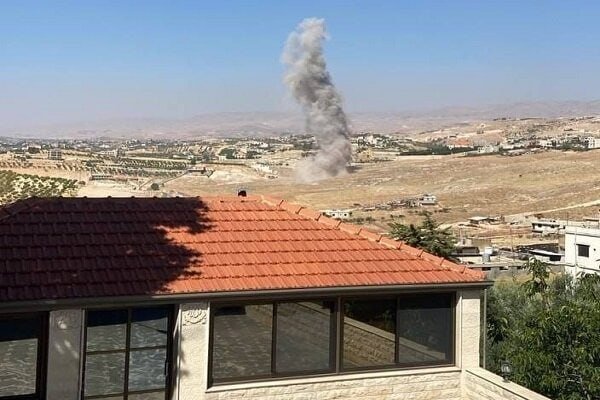
Two villages in Lebanon's southern Bint Jbeil district came under Israeli airstrike on the evening of 28 June 2026, in a pattern that tracks the broader air campaign IDF planners have been running against what they describe as Hezbollah-linked infrastructure for the better part of a year. Local reporting from the field identified Nabatieh al-Fawqa and Mayfadoun as the struck locations, with separate eyewitness channels indicating strikes also landed near Al-Manzala, where the IDF separately said it killed a Hezbollah operative it accused of operating close to Israeli positions. The dual-target shape of the evening, two villages in the same caza inside a narrow window, is consistent with the drone-and-munition patterns documented across 2025 and into this year, not a one-off.
The operational picture on the night was thin but specific. Reporting distributed by witness channels and regional outlets pointed to strikes at the two named villages, with damage and fires visible from the surrounding hills. The IDF's own messaging around the same window focused on the Al-Manzala incident, characterising the killed man as a Hezbollah member who had been operating near IDF forward positions. That framing, that the strikes are best understood as point-kills against identifiable threats, is the one Israeli spokeshave defaulted to throughout the southern Lebanon theatre since the campaign broadened beyond the immediate border strip late last year.
What we know, and what we don't
The factual record for the 28 June strikes is shorter than readers used to Western-wire precision would want. Two channels that have been on the ground consistently, the witness network affiliated with the daily sitreps and the Beirut-based geopolitical desk that aggregates field reports, both named the same two villages. Neither published a casualty figure for the evening. That absence is itself informative: a hard number usually surfaces within hours through civil defence or local hospital channels if the strike footprint warrants it. The omission suggests either a low-casualty profile for this particular salvo or, more likely, that the count from the field hadn't been assembled by the time the early alerts went out.
The Al-Manzala strike sits in a slightly different evidentiary bucket because the IDF spoke on the record about it. The framing, Hezbollah operative, posed a threat to our soldiers, is the standard Israeli language. It does not establish which unit the killed man belonged to, whether he was armed at the moment of the strike, or whether the threat characterisation rests on signals intelligence, a confirmed cell profile, or a broader area-denial logic. None of those distinctions change the headline. They do change how a reader who follows the campaign closely weighs tonight against the running total.
The campaign this fits into
Israeli air operations in southern Lebanon through 2026 have been, by the IDF's own preferred vocabulary, an attritional campaign against a militia that spent two decades entrenching itself north of the border. The strikes of 28 June do not announce a new phase. They extend one. Bint Jbeil's terrain, ridge-lines that look down onto northern Israel and the Galilee panhandle, is the kind of geography where Hezbollah conventional thinking long assumed rocket batteries would sit. Israeli planners, working from their own maps, appear to have moved through that geometry methodically since operations widened from the border fence outward.
The interesting question is not whether Nabatieh al-Fawqa and Mayfadoun were struck but what the choice of those particular villages says about target selection that week. Bint Jbeil district has roughly two dozen villages inside the strike zone that Israeli planners have hit in cycles. Striking two of them within hours of each other, on the same evening, in the same district, is consistent with a localised targeting wave rather than a retaliatory punctuation. That is a pattern, not an event, and reading it as either a discrete escalation or a de-escalatory gesture misses the structure of what's been running.
The framing contest
Different channels narrate the same evening in incompatible accents. The Hezbollah-aligned regional outlets frame strikes of this kind as aggression against civilians in villages that have been emptied and re-emptied through months of displacement. The IDF's English-language messaging frames them as defensive point-kills. Each framing hangs on a different rung of the same evidentiary ladder.
The witness channel that published the village names for tonight's strikes has a track record of low editorial overlay and high specificity, which is why the geographic coordinates it carried can be relied on. The Hezbollah-adjacent outlets carry more political narrative and less granular location work, but when they match the witness reports on basic facts those basic facts gain a second corroborating witness. Where they diverge, on casualty claims, on damage assessments, on motive attribution, the divergence is left visible rather than resolved by editorial fiat. Readers who want a clean verdict on every strike will not find one in the open-source record; readers who want a defensible factual floor can assemble one.
What to watch through the week
The right timeline to hold in mind is not the single strike but the week's strike count. If Bint Jbeil sees another evening with two or more village-level hits inside the same window, the 28 June salvo reads as the opening round of a short, focused wave. If subsequent nights revert to lower-intensity point operations around the border villages, tonight folds back into the campaign's baseline tempo. The IDF's own posting cadence is the cleanest tell: a night with multiple village strikes and an English-language X thread tends to indicate the operation warranted the spokesperson desk's attention, whereas point-kill announcements inside southern Lebanon typically travel in Hebrew-language statements first and only get English translations when the targeted individual is named.
Two dates matter on the near horizon. Any ceasefire-track negotiation that surfaces this week, particularly anything tied to UNSCR 1701 implementation, will colour how a reader should interpret every strike that arrives during the talks. And the next IDF operational summary, usually a week-day briefing when the cycle is active, will likely either confirm or soften the Al-Manzala point-kill framing. For tonight, the record is small: two named villages, one named operative, no published casualty count, and a campaign that has been running long enough that a single evening of strikes is news without being newsworthy.
Desk note: Monexus treated tonight's strikes as a continuation of an established air campaign rather than as a discrete escalation. Where the two available channels agreed on facts (locations, timing, the dual-target pattern), those facts carried; where each channel editorialised differently, the framing was attributed and the divergence left for the reader to weigh. No casualty figure was used because none appeared in the source items.