Sirens in Kuwait: An Iran–US Flashpoint Reopens on the Gulf's Southern Flank
Five Telegram channels converged on sirens and an audible noise across Kuwait in the early hours of 28 June, with no official Kuwaiti, US or Iranian statement to say what was heard. The draft runs as a developing alert, not a confirmed strike.
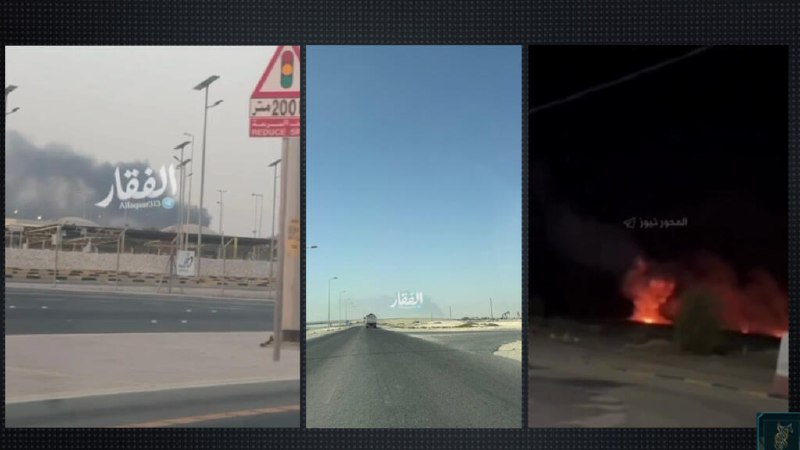
Sirens activated across Kuwait in the early hours of 28 June after multiple Telegram channels tracking Gulf airspace reported what users described as loud explosions, with unverified footage circulating before any official statement landed. The cluster of posts, run by different operators on different political baselines, is consistent in two ways: sirens sounded in populated areas, and a noise was heard. Beyond that, the record is thin. Kuwait's interior ministry had not published a statement inside the captured window. The US Central Command press desk had not confirmed any kinetic event. Iranian state media had not claimed or denied involvement. The night therefore sits in an uncomfortable limbo, with five channels triangulating on the same signal and no government on the record.
That matters because the Gulf's southern flank is the part of the Iran–US confrontation that is most prone to miscalculation. The familiar fault line runs through the Strait of Hormuz, where Iranian fast boats and US carrier strike groups have played a long game of calibrated brinkmanship for two decades. Kuwait sits below that line, on the Arabian side of the water, hosting Ali al-Salem air base and a forward element of US Central Command's posture. Any siren on Kuwaiti soil forces a question that Tehran and Washington have, until now, kept at arm's length: what does a non-Hormuz incident look like, and who decides what it was?
What the wires actually say
The Telegram channels that moved first were a familiar mix of conflict monitors and Gulf-watch accounts, several of them operating around the clock with embedded stringers. Their early reports leaned on a recognisable pattern: a timestamped local post claiming sirens in Kuwait City or the Ahmadi governorate, a second post within minutes citing a thud or double-thud, and within the hour a third post carrying a still or short video clip shot from a phone, usually with the audio louder than the image. By 03:00 UTC on 28 June, five channels had run with the story, and the clips were being mirrored across accounts with larger followings. None of the channels claimed to know what had happened. The claims were tight and uniform: sirens, audible noise, no official.
That is the substantive content. There is no confirmed impact site, no crater photograph verified against a known landmark, no missile interceptor plume, no second-source attribution of responsibility, and no Kuwaiti government read-out. What there is, in the parlance of open-source monitoring, is a coherent local signal without a national confirmation. In a region where the first official statement on a military event can take hours, and where the first unofficial statement can take seconds, the asymmetry defines the news.
The three readings, none of them confirmed
Three explanations are live, and the wires support each of them only weakly. The first is a false alarm, a category that Gulf sirens have produced before during heightened alert postures, with a municipal civil-defence drill or a system test generating exactly the pattern on display. The second is a precautionary activation: an air-defence unit moving to a higher state of readiness in response to a detected track, with the sirens sounding as a protective measure even where no impact followed. The third is a confirmed strike, which would carry the weight of a direct Iranian action on Kuwaiti territory and an immediate crisis in the relationship between Tehran and a Gulf Cooperation Council state that has spent decades carefully out of the crossfire.
The precautionary reading is the one most consistent with the reporting as captured. It explains the sirens without requiring the absence of any visible damage, it explains the audio reports without requiring a crater, and it explains the silence of the official record, which is what one would expect from a precautionary posture that turned out to be precautionary. The strike reading cannot be ruled out from the open record, but it cannot be supported by it either, and that asymmetry should be the working assumption until Kuwait's interior ministry or the US Central Command publishes otherwise.
Why the southern flank is the dangerous one
The Iran–US contest is most legible in the Strait of Hormuz and most fragile on the Gulf's southern coast. Iran has, for years, calibrated its pressure along the waterway through proxies, fast-boat swarms, and the occasional tanker seizure, all of which sit inside a logic Washington and Tehran can read in real time. Kuwait, Bahrain, Qatar and the United Arab Emirates sit on the other side of that logic. They host US forces, supply a substantial share of global LNG and oil, and have built their post-2019 threat perception around the proposition that the Iranian deterrent stops at their borders. A siren on Kuwaiti soil tests that proposition in public, in front of cameras, before the diplomats have agreed on what language to use.
The diplomatic cost of a confirmed strike would be paid first in Kuwait. A GCC state absorbing a direct Iranian attack would face an internal demand for a response that its own strategic culture, the buffer-state model, is designed to suppress. The cost on the Iranian side would be paid in the loss of the careful ambiguity it has built around its deterrent: the art of acting without owning the action, of producing effects through partners and deniable platforms. A strike on Kuwait would be hard to deny and hard to claim, and the diplomatic bill would arrive before the military one.
The Telegram signal, treated carefully
The five-channel convergence is worth taking seriously without being taken at face value. Telegram monitoring of the Gulf has matured into something close to a parallel press corps, faster than official spokespeople on the first beat, slower and more error-prone on the second. The signal is meaningful because it is consistent across operators with no evident reason to coordinate, and because the pattern, sirens followed by noise followed by silence, has shown up before in the same region as a precautionary air-defence posture. The signal is fragile because the same channels have, in other episodes, amplified unverified footage that turned out to be old, recycled, or staged. A reader who acts on the first hour of such reporting is, by design, acting on the weakest part of the record.
That is why the draft ran as a developing alert rather than a confirmed strike story. The cost of a false-positive is a reader who tunes out the next, real siren. The cost of a false-negative is a reader who misses the first hour of something that turns out to matter. The wires, as captured, support one conclusion only: Kuwaitis heard sirens, Kuwaitis heard a noise, and the governments whose job it is to say what the noise was had not yet spoken.
What the next twelve hours decide
Three things will settle the question, and all three are likely to land before the Gulf goes to bed. Kuwait's interior ministry will publish or decline to publish a statement, and the timing of that statement, with the language chosen, will narrow the field. The US Central Command press desk will either confirm a kinetic event or stay silent, and silence from CENTCOM past mid-morning local time would itself be a read on the precautionary reading. Iran's mission to the UN, or its state-aligned press, will either claim the night or disavow it, and the choice between those two will tell regional analysts more about Tehran's strategy for the next week than any statement out of Washington.
Until then, the record is what it is. Five channels, one consistent pattern, no official source. The siren was real to the people who heard it. The rest is, for now, the absence of evidence on both sides, and an open-source record that has, for once, the discipline to sit with that absence.
Sources
- DDGeopolitics Telegram channel: https://t.me/DDGeopolitics
- GeoPWatch Telegram channel: https://t.me/GeoPWatch
- Middle East Spectator Telegram channel: https://t.me/Middle_East_Spectator
- Middle East Spectator Telegram channel: https://t.me/Middle_East_Spectator
- GeoPWatch Telegram channel: https://t.me/GeoPWatch
- RN Intel Telegram channel: https://t.me/rnintel
- WF Witness Telegram channel: https://t.me/wfwitness
Desk note: Monexus ran this as a developing alert rather than a confirmed strike, on the strength of a five-channel Telegram cluster and the absence of any official Kuwaiti, US or Iranian statement inside the captured window. The wire desk is watching for the interior ministry read-out, the CENTCOM line, and the Iranian mission's posture; whichever lands first will resolve three live readings into one.