Hormuz hotline: what Iran's de-escalation with Washington actually changes
A US-Iran understanding to halt strikes, brokered for Doha talks, collapsed within hours under fresh attacks on Bahrain and Kuwait. The corridor is calmer than last week; the contest over who runs it is not.
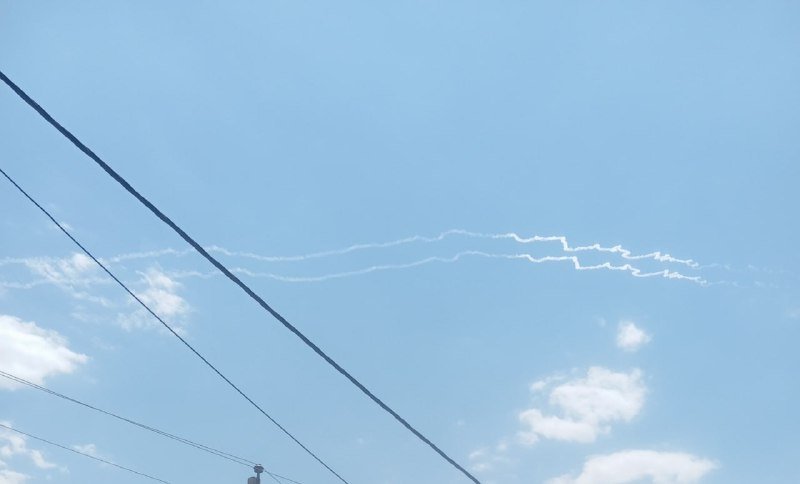
The phone lines between Washington and Tehran opened, briefly, on 28 June. Axios reported, citing a senior US official, that the United States and Iran had agreed to halt reciprocal strikes in the Gulf and to send technical delegations to Doha the following Tuesday to resolve their dispute over the Strait of Hormuz. Within hours, that picture had frayed. Iran launched fresh drone and missile attacks on Bahrain and Kuwait after new US airstrikes, according to France 24, and warned it would halt negotiations and close the strait if Washington continued what it called its aggression. Iranian state outlets said the technical talks set for the day were not attended by the Iranian team, citing recent US retaliatory strikes as the reason; US officials, OSINTdefender reported, insisted the meeting was still expected to proceed.
Read past the headlines and what the day delivered was narrower than either Washington or Tehran wanted to admit. A mutual stop on kinetic activity, brokered in a single phone call between foreign ministers and pinned to a Qatari capital known for hosting exactly this kind of back-channel. No treaty, no verification regime, no third-party monitor. Just an understanding, on the record, that the two sides would stop hitting each other long enough to argue about a 21-mile-wide shipping lane through which a fifth of the world's traded oil passes.
What was actually agreed
The mechanism was modest. According to the Axios reporting relayed by Telegram channels including al-Alam and Tasnim Plus, a senior American official said Washington and Tehran would meet in Doha to discuss the Strait of Hormuz dispute, with the explicit goal of halting reciprocal attacks during the talks. A separate account from the same wire, picked up by OSINTdefender on Telegram, quoted the official as saying, "We decided to stop all the kinetic activity." That language, kinetic activity, is the vocabulary of militaries that want to leave themselves room. It does not bind intelligence operations, cyber operations, sanctions enforcement, or the routine harassment of tankers by fast boats. It binds bombs.
Foreign Minister Abbas Araghchi, speaking in Baghdad alongside Iraqi President Abdul Latif Rashid, framed Iran's posture in similarly elastic terms. Fars News International reported him saying Iran was pursuing implementation of the so-called Islamabad Memorandum in good faith, while Tasnim's English channel quoted him pledging to "act decisively against America and Israel's breach of promise." On X, Araghchi himself posted that "Iran alone controls the Strait of Hormuz over the next 30 days," a statement that reads less like a concession than a declaration of administrative authority over a corridor the US Navy has policed, intermittently, since 1987.
The counter-narrative from Tehran
Iranian state-aligned outlets did not describe a de-escalation. They described a managed pause, on Iranian terms, that they could terminate at will. PressTV and al-Alam Arabic, the channels run by Iranian state broadcasting, framed the Doha talks as vindication of Tehran's longstanding position that the strait falls under Iranian sovereignty and that transit through it is a privilege Iran can grant, regulate, or revoke. The Rybar project's Mikhail Zvinchuk, writing for the Solovyov Live audience, offered a more pointed version of the same argument: that the peace being marketed in the Gulf had turned out to be illusory, and that the US and Iran had once again exchanged blows once the press cycle moved on. Russian milbloggers have an interest in framing any US-Iranian channel as cover for continued escalation; they are not neutral observers, but their reading of the gap between announcement and outcome was, on this day, accurate.
The harder counter-narrative came from Tehran's parallel signals. Abolfazl Amouei, a political analyst close to the foreign ministry, posted on X that Iran was "rapidly preparing for more US aggression," that "the Zionists push Trump toward confrontation," and that Tehran would neither cede the strait nor "tolerate Zionist occupation and genocide in Lebanon." That language does not belong to a negotiator preparing to land a deal. It belongs to a side keeping its maximalist constituency onside while a technical delegation flies to Doha.
Why a 21-mile waterway still runs the world
Strip out the rhetoric and the underlying contest is straightforward, and very old. The Strait of Hormuz is the bottleneck between the Persian Gulf's oil and gas exporters and the rest of the global economy. Roughly a fifth of seaborne oil transits it; nearly a third of liquefied natural gas. There is no realistic pipeline alternative at scale for most Gulf producers. Whoever credibly threatens to close it, even for a week, moves the oil price within hours.
That asymmetry is why the Doha channel matters even when it produces little. A direct line between the US and Iranian militaries lowers the probability of an accidental escalation, the kind that begins with a fast-boat incident off Bandar Abbas and ends with aircraft carriers repositioning. It does not resolve the underlying dispute, which is over who has the right to inspect, tax, escort, or blockade vessels in what both sides treat as a strategic artery. The 1987 Tanker War showed what happens when that question is left to at-sea encounters. The 2019 seizures, the 2024 shadow-fleet confrontations, and the attacks on shipping through the Bab el-Mandeb in recent years showed that the lesson was not fully learned.
The narrow operational channel
The right way to read 28 June is as a tactical pause with a 30-day shelf life, not as the opening of a diplomatic settlement. The technical talks in Doha will succeed or fail on procedural questions that rarely make the wire: who inspects what, which vessels are flagged as compliant, what happens to seized cargo, how sanctions enforcement is sequenced against transit guarantees. None of that resolves the larger US-Iran enmity, the Israeli campaign in Lebanon that Araghchi explicitly named, or Iran's missile and drone architecture, which is what made the Bahrain and Kuwait strikes possible in the first place.
Western wires will frame the week as a Hormuz de-escalation. Iranian state media will frame it as the vindication of an Iranian right to dictate transit. Monexus reads it as a narrow operational channel that lowers the probability of accident without resolving who runs the corridor. Watch the Doha technical session, not the foreign-minister readouts. The detail that matters will be in the annex, if there is one, and the absence of an annex will itself be the news.
Sources
- Axios, via Telegram channel @alalamfa, 2026-06-28: "America and Iran have agreed on the cessation of mutual attacks"
- Axios, via OSINTdefender on Telegram (@osintlive), 2026-06-28: US official quote, "We decided to stop all the kinetic activity"
- France 24, 2026-06-28: "Iran attacks Bahrain and Kuwait, threatens to halt talks after fresh US strikes"
- Tasnim News (@tasnimnews_en) and Fars News International, 2026-06-28: Araghchi remarks in Baghdad
- Abolfazl Amouei (@s_m_marandi) on X, 2026-06-28: statements on US aggression and the Strait of Hormuz
- Rybar / Mikhail Zvinchuk for @SolovievLive on Telegram, 2026-06-28: "peace in the Middle East turned out to be illusory"
Desk note: Monexus tracks the wire record and the Iranian-state record side by side. Where they diverge, we flag the divergence rather than pick a side.