Washington's superhero frame is the wrong story about AI
Washington's superhero-versus-supervillain framing of the AI contest, and Beijing's mirror-image rhetoric, are domestic sales pitches that obscure the industrial policy substance, compute, capital and supply chains, that actually decides who wins.
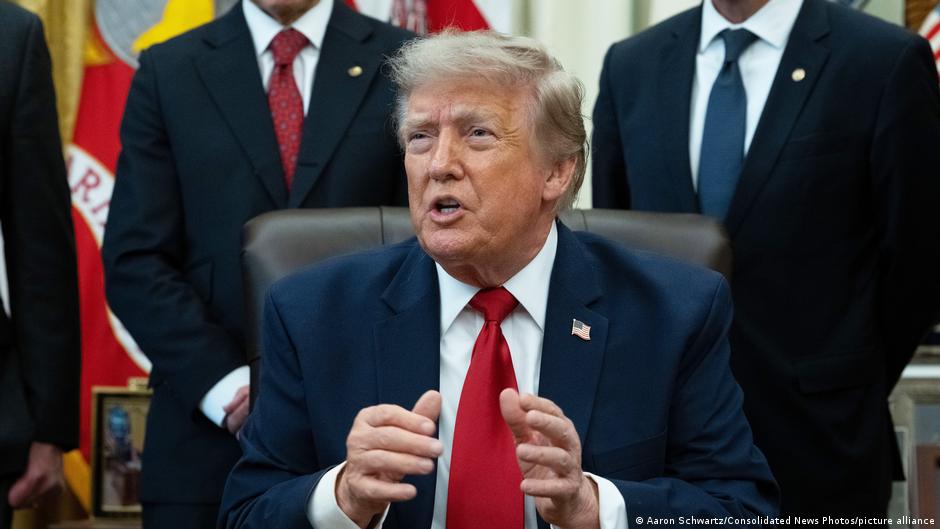
On the evening of 27 June 2026, Lebanon's presidency announced that Joseph Aoun had taken a phone call from Donald Trump in which the American president "congratulated" him on a framework deal just signed in Washington. The Lebanese statement, relayed by Iran's Tasnim news agency, framed the call as a reassurance of implementation. Five rounds of US-hosted talks had produced a trilateral arrangement between Lebanon and Israel, reported Middle East Eye the same night, with Al Jazeera English's global channel running simultaneous coverage of a Lebanese domestic reaction that was anything but unanimous.
The substance of the deal will take weeks to unpack. The framing is already unpacked. Washington's superhero-supervillain register, an Aoun-Trump call presented as a presidential benediction, a "framework" delivered with ceremony, is the wrong story about an artificial intelligence contest that is, on the evidence, a contest about industrial policy. The cape-and-cowl imagery that American commentators reach for when they write about the AI race, and the matching "malicious trade acts" rhetoric from Beijing, are both sales pitches. They sell different things to different domestic audiences. Neither tells readers where the chips, the models, or the electricity are actually going.
The superhero frame, briefly
The American frame treats AI as a heroic project under existential siege. Presidents summon tech chiefs to the Rose Garden, frame export controls as national defence, and treat frontier model releases as moon shots. The visual language is borrowed from comics for a reason: it converts an industrial contest into a moral one, where one side is civilisation and the other is its opposite. The frame is not wrong about stakes; it is wrong about mechanism. Industrial contests are not won by manifestos.
The mirror image, just as loud
Beijing's response runs on the same dramatic register in reverse. "Malicious trade acts" is the kind of language that frames American export controls as villainy rather than policy, and Chinese state media is fluent in it. The result is a parallel sales operation: a domestic audience in each superpower is told that the contest is a moral one, that their side is righteous, and that the other side is behaving badly. Both pitches are aimed at home audiences. Neither is aimed at the engineers, foundries, and grid operators who decide who ships.
What actually moves the needle
Three things determine AI outcomes in 2026, and none of them are speeches. Compute: who can procure, power, and cool the next generation of accelerators at scale. Capital: how patient the patient money is, and which governments are willing to underwrite losses for strategic reasons. Talent and supply chain: where the rare-earth refining, the advanced packaging, and the senior research staff sit, and whether they can move freely. The frameworks signed in Washington and the rhetoric issued in Beijing have, at best, indirect effects on each of these. A trilateral deal in the Levant, whatever its merits, is not an industrial policy for accelerator supply.
Why the framing persists
Officials prefer superhero frames because they are legible. A bureaucracy that tells voters "we are funding rare-earth processing capacity in allied jurisdictions to reduce single-point-of-failure risk" will lose the news cycle to one that says "we are winning the AI race and crushing our adversaries." The cost of legibility is that the public conversation about AI is conducted almost entirely in metaphors, and the metaphors are chosen by the side that wants to claim moral authority. The cost is paid later, when someone asks why the build-out did not match the rhetoric.
The reporting test
The test for any piece of AI coverage in this register is simple: does it name a fab, a foundry, a grid interconnection queue, or a specific export-control measure, or does it only name an attitude? Most of the wire copy that travelled with the Lebanon framework, and most of the commentary around it, named attitudes. The useful copy names facilities. The superhero frame is not just politically convenient; it is journalistically convenient. It lets a reporter describe a posture in place of a process. That is the frame worth resisting, because the contest that determines AI outcomes is a process contest, not a posture contest.
There is a Lebanese government to staff, a ceasefire architecture to verify, and a regional order that is being redrawn in real time. All of that matters. None of it is the AI story. The AI story is being written, line by line, in places that do not lend themselves to presidential phone calls, and the press that wants to cover it accurately will have to leave the superhero frame behind and start naming the supply chain.