Two major quakes off Venezuela's coast leave Caracas scrambling
Two earthquakes off Venezuela's Caribbean coast have killed at least 920 people, and the most granular ground reporting is coming from a personal trainer with a phone and TeleSUR correspondents, not the Western wires.
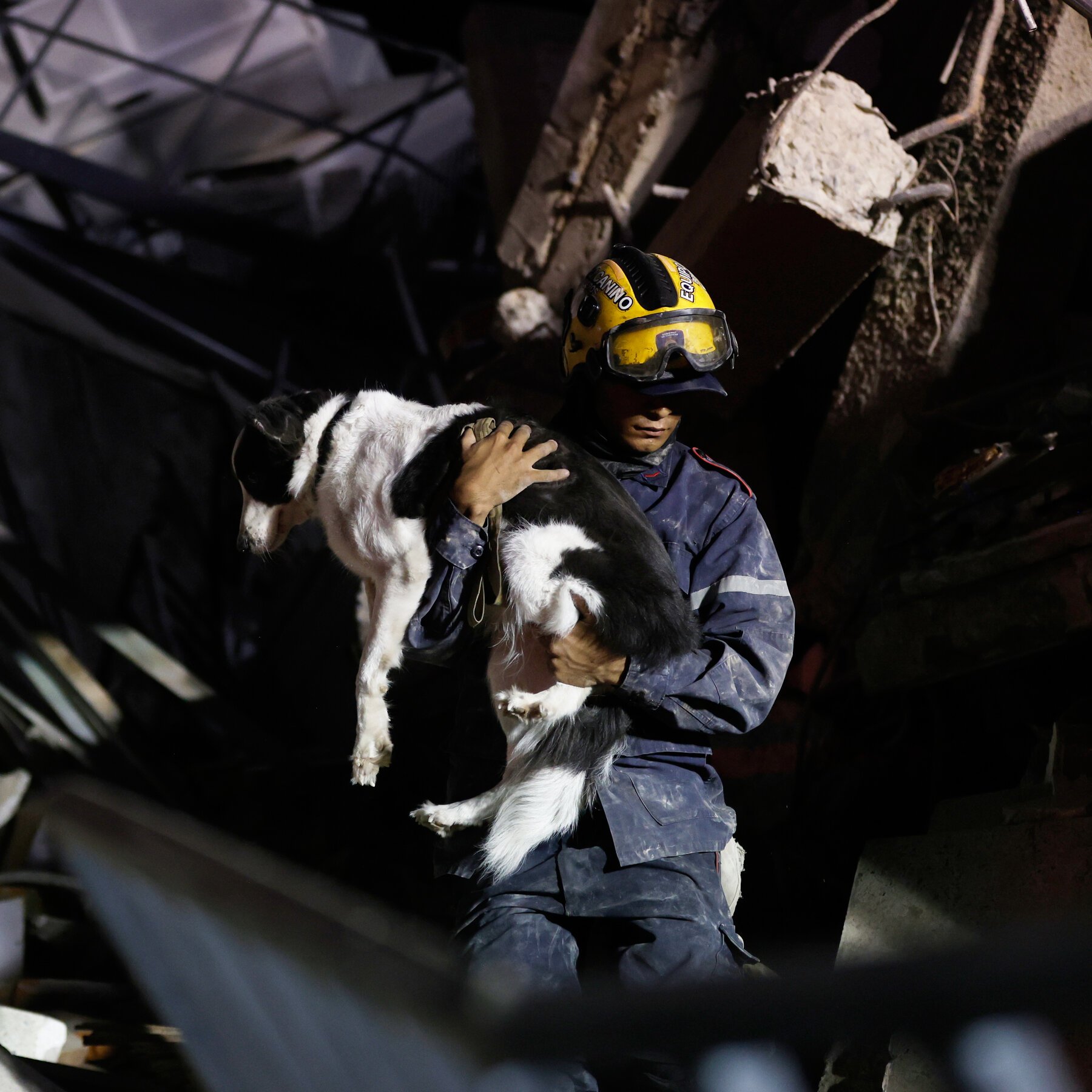
At least 920 people are dead, 3,360 injured, and more than 53,000 remain unaccounted for across Venezuela after two major earthquakes struck off the country's Caribbean coast earlier this week, according to figures released by National Assembly President Jorge Rodriguez on Friday and corroborated by humanitarian monitors on the ground. The death toll is still expected to climb as rescue teams work through rubble in La Guaira, the Libertador and Chacao municipalities of Caracas, and surrounding coastal states. A fresh 4.9-magnitude tremor detected on Friday afternoon, logged by both Reuters and Al Jazeera, has only deepened the paralysis.
This is not a story that the international wire system is well placed to tell. Two days into the disaster, the most granular ground reporting on the collapse of apartment blocks in Caracas and the rescue of 243 people from La Guaira is coming from a personal trainer named Edwin Borges who filmed himself clearing debris, and from state-aligned outlets like TeleSUR whose correspondents are inside the hardest-hit neighborhoods. The Western wire presence is thin. That asymmetry is the story behind the story: how a country absorbs a compound natural disaster when the institutions responsible for documenting it are already at their limit.
The country that took the hit
Venezuela sits on the boundary between the Caribbean and South American plates, a geological inheritance that makes the northern coast one of the more seismically active stretches of the hemisphere. The twin earthquakes on Wednesday landed on a stretch of coastline running from La Guaira state westward into Caracas, and the shaking exposed a structural vulnerability that had been building for years. As one Bellum Acta News dispatch noted, the quake effectively destroyed what little remained of Caracas's earthquake-resistant infrastructure, a candid framing rare in the early coverage.
The human geography of the damage tells the rest of the story. La Guaira, a narrow coastal state that hosts the country's main port and a dense web of working-class barrios climbing into the hills above the Caribbean, absorbed the worst of it. The Libertador municipality of Caracas, which covers the older central districts, and Chacao to its east, a more affluent commercial corridor, both registered collapses. TeleSUR's Paola Pérez reported from La Guaira on the arrival of humanitarian donations and the deployment of psychological support teams for children, a detail confirmed by Acting President Delcy Rodriguez's Friday announcements. Volunteers and neighbors, rather than formal search-and-rescue outfits, are doing much of the visible work. Borges's footage of neighbors hauling concrete by hand near collapsed apartment blocks is the visual that has travelled furthest in the absence of wire images.
The diplomatic geometry
Within hours of the second tremor, the United States was on the phone. Rodriguez, who has been acting president since the country's recent political transition, said she received a call from President Donald Trump and Secretary of State Marco Rubio, who reaffirmed U.S. support during the emergency. The call lands in an unusual diplomatic moment: Washington's posture toward Caracas has oscillated between hostility and quiet engagement, and a disaster of this scale forces a return to the basic mechanics of humanitarian cooperation regardless of the underlying political disputes.
The regional response has moved faster. India dispatched transcontinental flights carrying medical aid, reported the Indian Express, and the timing matters: India's outreach to Caracas has accelerated over the past year, and a high-visibility humanitarian delivery during a compound disaster offers a relatively cheap way to deepen that engagement. The visual of Indian-flagged relief aircraft touching down in a Caribbean disaster zone is a small data point in the larger repositioning of middle powers toward Latin America, and Venezuela's government has been quick to frame the response in multipolar terms.
The information environment
The asymmetry in who is telling the story is itself worth a paragraph. TeleSUR, the Caracas-based multi-state broadcaster, is providing correspondent-driven coverage from inside the disaster zone. Al Jazeera English has filed a wire-style update. Reuters moved a short alert on the Friday aftershock. The New York Times published a snapshot of the toll on Venezuela's hospitals, a more clinical, sourced piece drawing on hospital administrators and eyewitness accounts. BBC World has reporter Vanessa Silva on the ground in La Guaira.
What is missing, conspicuously, is the kind of sustained on-the-ground wire coverage that would normally anchor a disaster of this scale in the Anglophone press. The gap is being filled by Telegram channels that aggregate official communiques, witness video, and unverified claims with varying degrees of editorial discipline. Some of the most widely circulated figures from the early hours, including the 53,000 unaccounted-for number, originated from local officials and were amplified through these channels before being formally attributed. That sequence is not unusual in a fast-moving disaster, but it does mean that for now the public record is a hybrid of state-aligned media, witness video, and sparse wire confirmation.
What comes next
The Friday 4.9 aftershock, centered 78 km west of Caracas in the coastal waters off Aragua state, is a reminder that the seismic sequence is not over. Aftershocks of this magnitude are dangerous on their own, and they tend to push already-compromised structures over the edge. The institutional question is sharper. Venezuela's emergency-response capacity was already strained before the quakes: hospitals were operating under chronic supply shortages, fuel for rescue vehicles was rationed, and the formal search-and-rescue apparatus is thin. The decision to activate psychological support for children points to an awareness inside the acting government that the trauma layer, not just the casualty layer, will define the political aftermath.
The numbers will move. The 920 figure is a Friday count and is widely expected to rise as search teams reach collapsed buildings in the hill barrios above La Guaira and as the 53,000 unaccounted-for list is reconciled against hospital admissions and shelter rosters. The diplomatic openings opened by the Trump call and the Indian airlift will harden into something more durable, or they will not, depending on whether the humanitarian channel survives the political weather back home in Washington, Delhi, and Caracas. For now the country is doing what countries do in the first seventy-two hours of a disaster of this scale: counting the dead, treating the injured, and waiting for the ground to stop moving.
How Monexus framed this vs the wire: early reporting is dominated by Telegram-sourced eyewitness video because no major wire has yet filed ground coverage from Caracas; this article flags that asymmetry rather than smoothing it over, and treats the institutional capacity question, not just the seismology, as the durable story.
Sources:
- BBC World, via Telegram, "Watch: BBC reports from La Guaira, one of Venezuela's worst-hit areas," 2026-06-26, https://t.me/BBCWorldoffl
- Open Source Intel, via Telegram, "Venezuela earthquakes: at least 920 killed," 2026-06-26, https://t.me/osintlive
- TeleSUR English, via X, "Authorities confirmed the rescue of 243 people in La Guaira," 2026-06-26, https://x.com/telesurenglish
- Bellum Acta News, via Telegram, "New 5.4 earthquake on the coast of Venezuela, 78 km W of Caracas," 2026-06-26, https://t.me/BellumActaNews
- Reuters, via X, "New 4.9 quake felt in Venezuela, days after major earthquakes," 2026-06-26, https://x.com/reuters
- CGTN, via X, "Death toll from the powerful twin earthquakes has risen to 920," 2026-06-26, https://x.com/cgtnofficial
- The Indian Express, via Telegram, "Venezuela reels after deadly quakes, India sends transcontinental flights with medical aid," 2026-06-26, https://t.me/IndianExpress
- The New York Times, "Scenes of Collapse: The Emergency at Venezuela's Hospitals," 2026-06-26, https://www.nytimes.com
- BBC World, via Telegram, "Venezuela earthquakes kill 920 people as families desperate for news," 2026-06-26, https://t.me/BBCWorldoffl
- Epoch Times, via Telegram, "Personal trainer Edwin Borges joined search-and-rescue efforts," 2026-06-26, https://t.me/epochtimes