US Senate rebukes Trump with rare bipartisan vote to halt Iran military operations
A rare bipartisan war-powers resolution obliges Trump to halt operations against Iran, days before CENTCOM strikes on coastal radar and missile sites show the vote will be tested before the ink is dry.
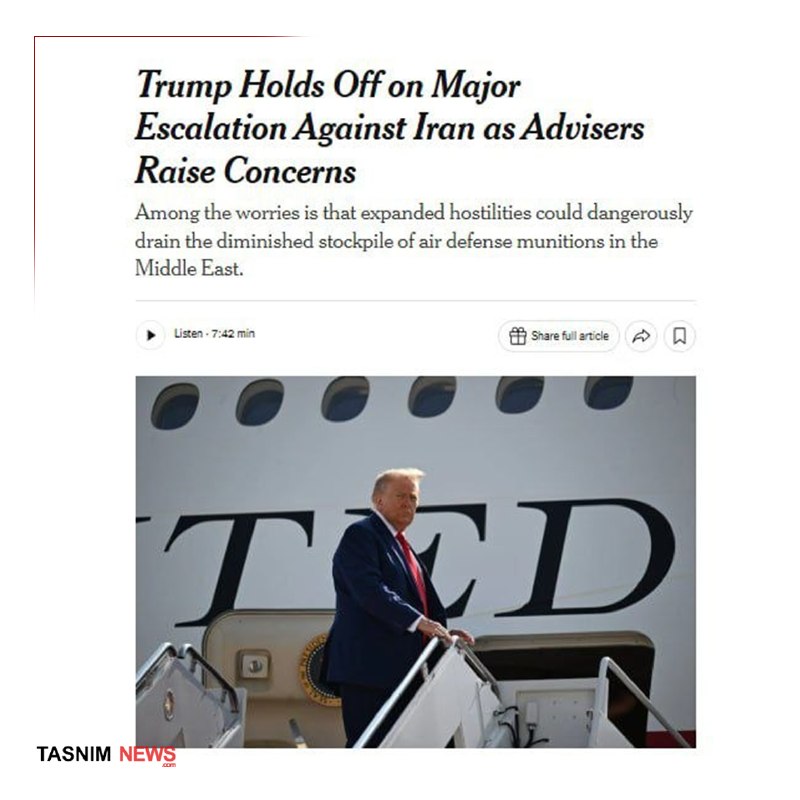
The United States Senate voted on Tuesday to compel President Donald Trump to halt military operations against Iran, a rare bipartisan rebuke that, on paper, reasserts congressional war powers in a foreign-policy crisis that has slid from sanctions to sabotage to open strikes in little more than a year. The resolution, reported by Deutsche Welle and tracked through US-allied and Russian channels within the hour of the vote, passed with enough Democratic and Republican support to deny the White House the unanimity it had sought as a launching ramp for a wider campaign. The text of the measure, as relayed by the Russian-aligned Two Majors channel, "obliges Donald Trump to stop any military actions against Iran." That is a constitutional posture, not a diplomatic one: the Senate is invoking its authority to shape the use of force, the same authority that has been quietly eroding through the post-2001 era.
The vote lands in a city already preparing for the next escalation. By the following Friday, US Central Command acknowledged carrying out strikes on Iranian coastal radar facilities and missile-and-drone storage sites along the Strait of Hormuz and on Qeshm Island, a US official told Fox News, with six US aircraft hitting four targets in an operation framed as a response to a one-way drone attack on the cargo vessel M/V Ever Lovely on 25 June. American officials were at pains, in the hours that followed, to insist that the strikes did not constitute a "resumption of large-scale military operations and war," an unusual formulation that the New York Times carried into the record. Iranian state media reported the reciprocal language almost in real time: the IRGC Navy claimed it had "struck US military positions in the region in response to America's aggression and treaty violation," a statement circulated via Tasnim, Fars and Press TV within minutes of the CENTCOM announcement. Each side, in other words, was already bracketing Tuesday's Senate vote as a constraint, not a verdict, on the fighting that would come after.
The vote that tried to draw a line
The politics of the resolution are the news. Bipartisan war-powers votes are vanishingly rare in the modern Senate: hawks in both parties have spent two decades treating the 2001 and 2002 authorizations as blank cheques, and presidents of both parties have expanded their use-of-force latitude through a combination of legal memos, signing statements and silence. That this Congress moved against an operation against Iran, a country against which the United States has run an escalatory campaign of sanctions, cyber operations and proxy combat for the better part of a presidential term, suggests a shift in the chamber's tolerance for executive overreach. Deutsche Welle framed the move as a "rare bipartisan rebuke," and that is the right register: not an impeachment, not a budget fight, but a direct constitutional counter-claim on a decision that, under any honest reading of Article I, belongs to Congress in the first instance. The Star Kenya's headline captured the procedural upshot in plain language: the Senate has voted to halt Trump's Iran operations. Two Majors, a Russian channel that has covered the war in the skeptical register of the Moscow commentariat, amplified the resolution as a constraint on the White House, an indication that the vote was read in adversarial capitals as consequential rather than performative.
What was actually being voted on
The text, as carried by Two Majors, is narrower than the political reaction suggests, and that matters. The resolution "obliges" the president to "stop any military actions against Iran," a phrase that reads as absolute on its face, but its binding effect runs through the appropriations power and the Senate's control of the military purse. A president determined to escalate can re-route funds, lean on allied contributions, and recharacterise operations as defensive responses to Iranian actions, a flexibility the post-Tuesday record suggests was already being used. The same Tuesday's vote also occurred against a backdrop of active diplomacy that complicates any clean narrative: a US-brokered framework agreement between Israel and Lebanon was reportedly signed in Washington on Friday, an arrangement that Israeli Channel 12 framed as an effort to "end the conflict and formally work toward ending the state of war" through phased Israeli withdrawal conditioned on security guarantees. A Senate voting to bind the president's hand on Iran, while a separate Middle East track inches toward something labelled a ceasefire, is not the same thing as a chamber voting to wind down all US military involvement in the region. It is, rather, a reassertion of authority over one theatre, with the others left to run their course.
The escalation that was already on the runway
Within four days of the vote, the theory behind it was being stress-tested. France 24 reported that the United States struck Iran on Friday in response to what President Trump described as an Iranian drone attack on a cargo ship in the Strait of Hormuz, a move that followed British military warnings about vessel activity in the same chokepoint. CENTCOM's subsequent statement, carried by Press TV and cross-referenced by Open Source Intel accounts on Telegram, described the targets as "missile and drone storage sites" and "coastal radar facilities" along the Iranian coast and on Qeshm Island. Six US aircraft were used; four sites were hit, a senior US official told Fox News. American officials, in language the New York Times sourced to a US official, insisted the strikes did not represent the resumption of "large-scale military operations and war," a hedge that the Iranians read as legal scaffolding for a campaign they were already describing, in IRGC statements, as "aggression and treaty violation." Trump's own contribution to the signalling, captured in a widely circulated video, was the phrase "You'll find out," an offhand sentence that did more work in forty-eight hours than a press briefing could have done in a week.
What the rebukes are, and what they are not
Read together, the resolution and the strikes describe a constitutional tug-of-war that has been underway since the first Trump-era deployment to the Gulf. Congress has, for most of the post-Cold-War period, deferred to the executive on the question of force, partly out of partisan habit and partly out of an honest recognition that fast-moving crises do not tolerate committee markups. The Iran file, however, has the structural features that tend to provoke reassertion: a long-running shadow conflict, an opaque legal basis, and a president who has openly treated the use of force as a discretionary instrument of negotiation. The Senate's vote is not a withdrawal, and it is not a declaration of peace. It is an attempt to write into the record, before the next round of strikes is ordered, that the constitutional authority to wage this particular war has not been delegated. Whether the White House reads it that way, whether the courts will be asked to weigh in, and whether the next cargo ship in the Strait of Hormuz will be hit before the appropriations fight is joined: those are the questions the next week will answer, and they are the questions the resolution was drafted to be on the record about.
Sources
- Deutsche Welle, "US: Senate vote calls for an end to Trump's Iran war in rare bipartisan rebuke," 24 June 2026, 06:55 UTC. https://www.dw.com
- Telegram, Two Majors channel, "US Senate approved a resolution that obliges Donald Trump to stop any military actions against Iran," 24 June 2026, 06:36 UTC. https://t.me/two_majors
- Telegram, The Star Kenya, "US Senate votes to halt Trump Iran operations," 24 June 2026, 07:27 UTC. https://t.me/TheStarKenya
- France 24, "Middle East War: US strikes Iran after Trump says ceasefire was violated," 26 June 2026, 21:39 UTC. https://www.france24.com
- Telegram, Open Source Intel (osintlive), "Senior U.S. official to Fox News: 6 U.S. aircraft struck 4 targets along Iran's coast bordering the Strait of Hormuz and on Qeshm Island," 26 June 2026, 23:32 UTC. https://t.me/osintlive
- Telegram, Press TV, "US CENTCOM reports 'attacking targets in Iran'," 26 June 2026, 23:26 UTC. https://t.me/presstv
- Telegram, Tasnim News (tasnimnews_en), "American official: Attacks on Iran do not mean the start of war," 26 June 2026, 22:51 UTC. https://t.me/tasnimnews_en
- Telegram, Mehr News (mehrnews), citing the New York Times on the same US official formulation, 26 June 2026, 21:41 UTC. https://t.me/mehrnews
- Telegram, Watching Frontline Witness (wfwitness), reporting on the US-brokered Israel-Lebanon framework agreement signed in Washington on 26 June 2026, 22:10 UTC. https://t.me/wfwitness
- Telegram, DDGeopolitics, carrying the IRGC Navy statement on strikes against US military positions, 26 June 2026, 22:36 UTC. https://t.me/DDGeopolitics
- Telegram, Fotros Resistance (FotrosResistancee), on the US military's stated targeting of radar sites after the M/V Ever Lovely attack, 26 June 2026, 22:38 UTC. https://t.me/FotrosResistancee
- Telegram, The Cradle (thecradlemedia), carrying IRGC Public Relations statement on US "treaty-breaking," 26 June 2026, 22:55 UTC. https://t.me/thecradlemedia
- Telegram, Palestine Chronicle, on Iranian warning that future retaliation will be "significantly broader," 26 June 2026, 23:35 UTC. https://t.me/PalestineChronicle
Desk note: Monexus has framed Tuesday's vote as a constitutional reassertion rather than a diplomatic breakthrough, consistent with the editorial compass for Middle East coverage. Russian-aligned channels (Two Majors, Fars, Tasnim, Press TV) appear here as counter-claim material with explicit sourcing, never as the dominant frame; the structural read of the vote leans on the DW and Fox-sourced US official record.