Senate's Iran War Powers Resolution Exposes a Republican Rift, Not a Reversal
The Senate's 51–47 procedural vote on a war-powers resolution curbing the Trump administration's Iran operations is a pressure signal from a small Republican bloc, not a meaningful check on executive authority.
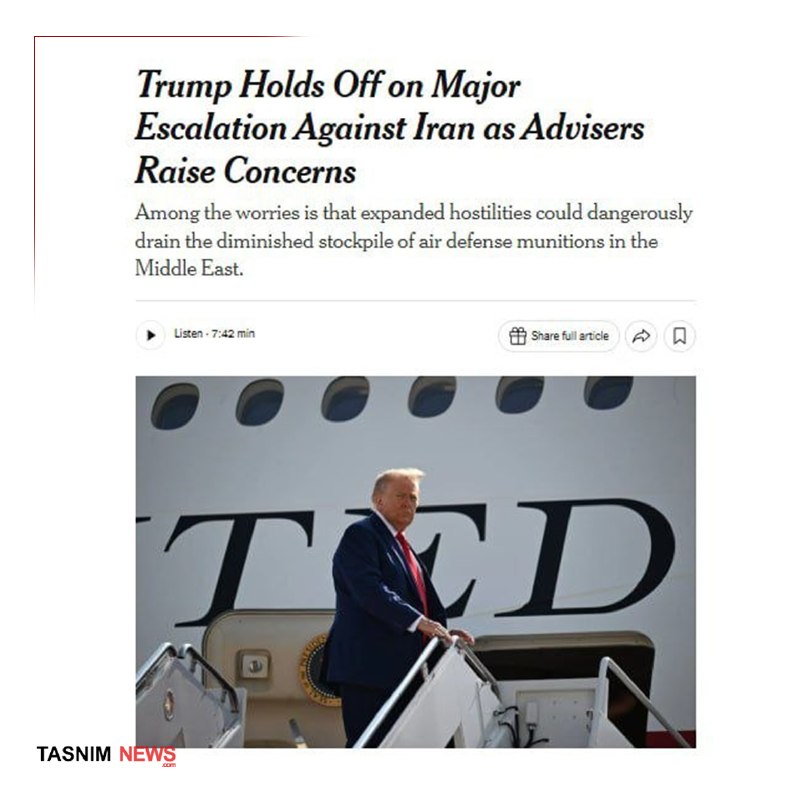
The US Senate, on 24 June 2026, advanced a bipartisan war-powers resolution aimed at curbing the Trump administration's latitude to sustain military operations against Iran. The 51–47 procedural vote, which drew support from both independents and a small but conspicuous bloc of Senate Republicans, was cast by the White House and most congressional Republicans as an act of political trespass rather than a genuine constitutional moment. It was, in the framing of senior administration officials, a coalition experiment that will not survive a sustained political counter-push.
The resolution itself does not undo the strikes now underway; it signals Senate displeasure. The House has shown no appetite to take up a companion measure; the administration has already telegraphed that it will treat the resolution as advisory even if both chambers were to clear it. The story is therefore less about the constitutional balance of war-making power, which has been eroding for decades, and more about the political stress fracture inside the Republican conference over how the Iran file is being run. That distinction has been soft-pedalled in several wire treatments of the same vote, which tend to frame the resolution as if it were a substantive check on executive authority. It is not. It is a pressure signal.
The votes that matter most
The 51–47 procedural cloture tally broke down along three lines: a near-unanimous Democratic caucus, both independents who caucus with the Democrats, and a group of four Republican senators whose foreign-policy instincts have run against the administration's Middle East posture since the start of the year. That bloc has spent months quietly registering objections in committee and floor colloquies, where the cost of dissent is lower and the cameras are elsewhere. Tuesday's vote was the first time any of them consented to put a number on the dissent. None of the four, by their own public statements, has been willing to follow the resolution through to a signed law, and the Republican leadership has signalled that the resolution will not be brought to final passage this week.
The arithmetic is the point. With Democrats already locked in opposition and the House uninterested, the resolution can only matter if it pulls more Republican votes in the days ahead or if it gives the Senate's institutionalist wing leverage in a future negotiation over an Authorisation for Use of Military Force. The White House has read the vote as a warning to keep negotiations inside the executive branch and to keep Congress briefed enough that a few Republican votes can be peeled back on the floor when it counts. That is a more accurate reading than the press releases issued by both parties on the night of the vote, and it explains why the administration's Iran posture has not visibly shifted in the forty-eight hours since.
A coalition pressure signal, not a reversal
What Tuesday's vote does reveal is the kind of pressure a White House can absorb and where it can be hurt. The administration can lose a procedural vote on the floor and still have a workable Iran policy, so long as the loss is narrow and the defectors are manageable. The hard ceiling, on the evidence of the last seventy-two hours, is a coalition that includes most of the Senate's defence-oriented Republicans plus the entirety of the Democratic caucus. The White House's working assumption is that this is the high-water mark of congressional pushback and that the costs of voting with the resolution will rise sharply once the administration's Iran negotiation enters a more fragile phase in the coming weeks.
That assumption is reasonable. The four Republican senators who broke with the administration on the procedural vote have shown no indication that they intend to vote for final passage, and the House Republican leadership has gone out of its way to declare the resolution dead on arrival. The administration, in turn, has used the interim to make clear through sympathetic outlets that the strikes now underway are calibrated, limited and reversible, an exercise in coercion rather than a march toward regime change. The political logic is plain: the White House is using the days after a wobbly floor vote to demonstrate that the Iran file is being run with discipline and that Congress is being kept informed enough to deprive wavering members of a politically clean reason to keep dissenting.
The other front: a tightening Gulf
The resolution landed as US Central Command confirmed strikes on Iranian missile and drone storage sites and coastal radar facilities along the Strait of Hormuz and on Qeshm Island, in what a senior US official described to Fox News as a calibrated response to an Iranian drone attack the day before. The same official, separately, told the New York Times that the attacks on Iran do not mean the resumption of large-scale military operations and war. That second read-out matters: it positions the strikes as a contained escalation, with a defined off-ramp, and it gives wavering Republican senators a face-saving rationale for not pushing the war-powers resolution through to final passage.
Tehran's response has been calibrated in kind, at least in language. The IRGC Navy said in a statement carried by Iranian state media that US military positions in the region had been struck in response to what it called American aggression and treaty violation, and warned that any new foolishness will face a harsh response that will be the regret of the enemy. An Iranian official told Middle East Eye that the US attacks constitute a reckless violation of ceasefire. Whether the rhetoric tracks operational reality will become clear in the days ahead; the immediate political effect inside Washington is to harden the case for a Senate vote that holds the administration's escalation lane open rather than narrows it.
A regional overlay that complicates the vote
The Iran file is no longer being run in isolation. The same 24-hour window produced a US-mediated framework agreement between Beirut and Tel Aviv, signed in the presence of Secretary of State Marco Rubio, which sets out a phased Israeli withdrawal from Lebanon in return for security commitments. The agreement's text, as published, includes a formal end to the state of war and a sequenced Israeli pullback contingent on the Lebanese army meeting a series of security benchmarks. Lebanese President Joseph Aoun framed the deal as a first step toward the return of displaced citizens to their lands and reconstruction; the reaction inside Lebanon was considerably less uniform, with critics in Beirut describing the text as a subordinate-alliance arrangement that locks the country into a permanent Israeli security orbit.
For Senate Republicans, the overlay changes the political geometry of the war-powers vote in a way that the procedural tally did not capture. A vote against the Iran war-powers resolution can now be defended on the ground that the administration is delivering, in the same week, a measurable Lebanon de-escalation and a calibrated Iran response, both of which a hostile Congress would disrupt. The argument is partisan but not unserious, and it is the argument most likely to be made on the floor when the resolution comes to a final vote, if it ever does.
What to watch in the next ten days
Two dates will define whether Tuesday's vote was a turning point or a procedural noise. The first is the Senate's planned floor action on final passage, which the Republican leadership has so far declined to schedule. If the resolution is allowed to die in procedural limbo, the four Republican defectors will need a different vehicle to keep the pressure on, and the administration's Iran posture will harden. The second is the next round of Iran-related negotiations over the Strait of Hormuz and IAEA inspections, where IAEA Director General Rafael Grossi has again called for inspectors to return to Iranian sites. A breakdown on either track will, by the administration's own argument, raise the political cost of defection; a breakthrough will lower it. The next ten days will tell us which way the trend runs.
For now, the cleanest read of the 24 June vote is that a small group of Senate Republicans has chosen to write a public number on a private objection, that the administration has read the message, and that the actual balance of war-making power in the US constitutional system remains where it has been for most of the post-2001 era: with the executive, by default, and with Congress as a reactive chamber that occasionally convenes to grumble.
Sources
- Telegram, Fars News International (2026-06-26): https://t.me/FarsNewsInt
- Telegram, Ukrainska Pravda (2026-06-26): https://t.me/ukrpravda_news
- Telegram, Tasnim News English (2026-06-26): https://t.me/tasnimnews_en
- Telegram, DD Geopolitics (2026-06-26): https://t.me/DDGeopolitics
- Telegram, RN Intel (2026-06-26): https://t.me/rnintel
- Telegram, Tasnim Plus (2026-06-26): https://t.me/tasnimplus
- Telegram, Palestine Chronicle (2026-06-26): https://t.me/PalestineChronicle
- Telegram, Open Source Intel (2026-06-26): https://t.me/osintlive
- Telegram, Fars News Agency (2026-06-26): https://t.me/farsna
- Telegram, Press TV (2026-06-26): https://t.me/presstv
- Telegram, War Footage Witness (2026-06-26): https://t.me/wfwitness
- Telegram, The Cradle Media (2026-06-26): https://t.me/thecradlemedia
- X, Middle East Eye (2026-06-26): https://x.com/middleeasteye
- X, Sprinter Press (2026-06-26): https://x.com/sprinterpress
- Telegram, Jahan Tasnim (2026-06-26): https://t.me/JahanTasnim
Desk note: Monexus reads the 24 June war-powers vote as a coalition pressure signal inside the Republican conference rather than a substantive check on executive war-making authority. Several wire treatments have softened that distinction; we have held the line.