Oman and Iran move to coordinate Strait of Hormuz, testing Gulf security architecture
Oman and Iran have opened a working-level coordination track on Strait of Hormuz transit. The procedural language hides a structural question: who sets the rules for the world's most important energy corridor?
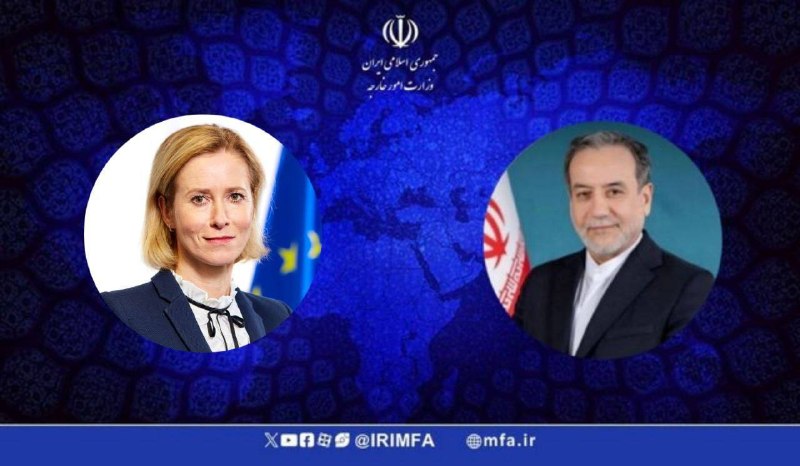
On 23 June 2026, Omani and Iranian officials began a working-level coordination track aimed at the Strait of Hormuz, the narrow seal between the Persian Gulf and the Gulf of Oman through which roughly a fifth of the world's traded crude passes each day. The move was framed by Iranian state-aligned outlets as the opening of a joint security architecture with the Omani coast as its anchor; in Muscat, the read-out was deliberately procedural. Both descriptions are accurate to their sources, and both understate the stakes. The Hormuz transit corridor is the single most consequential maritime chokepoint in the global energy system, and any bilateral mechanism that touches its rules of passage now exists in the same sentence as a renewed US-Iran negotiation, an active Houthi escalation track aimed at Saudi Arabia, and an Israeli defence ministry that has publicly named the "economic campaign" against Tehran as a critical security front.
The thesis the wire record supports is narrow but worth stating plainly: what began as a procedural opening between Muscat and Tehran is also a stress test for the post-2018 Gulf security architecture, the loose framework under which the United States, the GCC, and Iran have each managed the strait through overlapping but uncoordinated practices. That architecture is now being asked to absorb a coordination channel that excludes the formal guarantors of freedom of navigation.
What the two sides actually said
The Iranian framing, carried by state-aligned Telegram channels including Press TV and Tasnim, emphasised a sovereign right to set terms of passage and positioned Oman as a regional partner rather than a neutral broker. The Omani framing, consistent with Muscat's long-standing diplomatic posture, kept the language technical. Neither readout, in the public record available on 23 June, disclosed a third-party consultation mechanism, an enforcement protocol, or a dispute-resolution track. The procedure itself is what is on the table.
This matters because the last time the strait's rules of the road were unilaterally redrawn, in 2019 when Iran seized commercial tankers including the British-flagged Stena Impero, the disruption was contained only after the UK and the US deployed maritime forces to the area and European governments opened a separate de-escalation channel with Tehran. The lesson of that episode was not that the strait is safely defensible by a single Gulf partner. It was that any change to Hormuz transit, even one billed as administrative, pulls in extra-regional powers almost immediately.
The chokepoint, in numbers
The Strait of Hormuz is roughly 33 nautical miles wide at its narrowest, with shipping lanes in each direction confined to two-mile-wide corridors separated by a two-mile buffer. Theographic reality means that even modest disruptions, a detained vessel, a misrouted convoy, a maritime warning issued in the wrong register, translate quickly into insurance premium hikes. Lloyd's Joint War Committee listed the strait in the area of heightened risk for hull war coverage through the first half of 2026, and tanker rates on the Persian Gulf-to-Asia route had already moved upward on reports of coordinated Iranian naval activity.
A coordination mechanism that gives Tehran a recognised role in setting passage terms, even a consultative one, is therefore not a procedural footnote. It is a redistribution of authority over a corridor whose legal status under UNCLOS has always rested on unimpeded transit.
The counter-narrative: a managed lane, not a closed one
Tehran's public line has been that any new arrangement preserves free transit while bringing Iranian authorities formally into the routing process, a position that officials have framed as a contribution to regional stability rather than a challenge to it. There is a defensible version of this argument: Iranian naval commanders already patrol the northern approaches, Iranian pilots already board vessels for inspections in select cases, and a written bilateral framework would, in theory, replace ad-hoc encounters with predictable rules.
The counter-narrative, articulated from Washington, Tel Aviv, and the wider Gulf, is that predictability and legitimacy are not the same thing. A routing regime set bilaterally between Tehran and Muscat, without the GCC secretariat, the IMO, or the US Fifth Fleet at the table, formalises a precedent that any of Iran's regional rivals can later invoke. If a Muscat-Tehran channel can issue passage guidance today, an Ankara-Tehran or Damascus-Tehran channel can issue passage guidance tomorrow.
Where the rest of the region stands
The wider reaction, where it can be read in the open-source record, splits cleanly along security lines. Israeli Defence Minister Israel Katz has publicly framed the economic pressure track against Iran as a critical security front, a posture that survives any Hormuz arrangement because Israel's principal concern is sanctions enforcement, not tanker routing. The Houthi movement's leader, Abdul-Malik al-Houthi, used the Islamic New Year address window to issue what his supporters read as a final warning to Saudi Arabia and to Somaliland, signalling that the southern Red Bab el-Mandeb corridor is being run as a parallel pressure track to whatever is being negotiated in Hormuz.
The combined picture is of an escalation architecture that is no longer confined to a single chokepoint. Hormuz sits at one end, Bab el-Mandeb at the other, and the political space between them is being filled by parallel signals rather than a single agreed framework. Saudi Arabia and the UAE, both heavily invested in the GCC-coordinated maritime picture, have not been visible in the Muscat-Tehran readout. Their silence is itself a signal.
What to watch next
Three near-term dates will determine whether 23 June's procedural opening becomes a binding security instrument or remains a working-level channel that produces nothing. First, the published text of any Iran-Oman memorandum, if one is released, will reveal whether third-party transit rights have been preserved or contracted. Second, the next IMO Maritime Safety Committee bulletin on the strait will indicate whether the UN agency has been formally notified or has been kept outside the process. Third, the next scheduled US-Iran negotiation round will test whether Washington's negotiators treat the Muscat track as a complementary channel or as a competing centre of authority.
The strait will continue to carry oil regardless of which of these paths prevails. What is in question is whether the rules governing that traffic continue to be set by the post-2018 framework that has, for all its faults, kept the world's most important energy corridor open to commercial traffic through two oil shocks and a regional war. The Muscat-Tehran channel is being opened in the name of order. Whether it produces order, or whether it produces a parallel authority that the existing architecture cannot absorb, is the question that 23 June has put on the table.
Sources
- Press TV (Telegram): https://t.me/presstv
- Tasnim News (Telegram): https://t.me/tasnimplus
- FRANCE 24 (Telegram): https://t.me/france24_en, "US seeks Iran deal, but 'not at any price,' Rubio says," 25 June 2026
- Middle East Eye live coverage: https://www.middleeasteye.net/live/live-us-and-iran-confirm-peace-accord-signing-set-friday-geneva
- @sprinterpress (X), ship-tracking summary citing Bloomberg, 25 June 2026
- @middleeasteye (X), IRGC routing warning, 25 June 2026
- Al Alam (Telegram): https://t.me/alalamfa
- DD Geopolitics (Telegram): https://t.me/DDGeopolitics
Desk note: Monexus framed this as a procedural opening with structural implications, not as a binding security agreement. The wire reporting on 23 June supported the procedural read; the Iranian state-aligned framing, included here for completeness, leans aspirational. The piece deliberately does not assert that any third country has been consulted, because the available sources do not say so.