Lebanon caught between Washington and Tehran as Iran wields the Lebanon file
Tehran has tied any US-Iran peace deal to an end of the war on Lebanon, leaving Beirut squeezed between two patrons and counting the cost in frozen funds and stalled reconstruction.
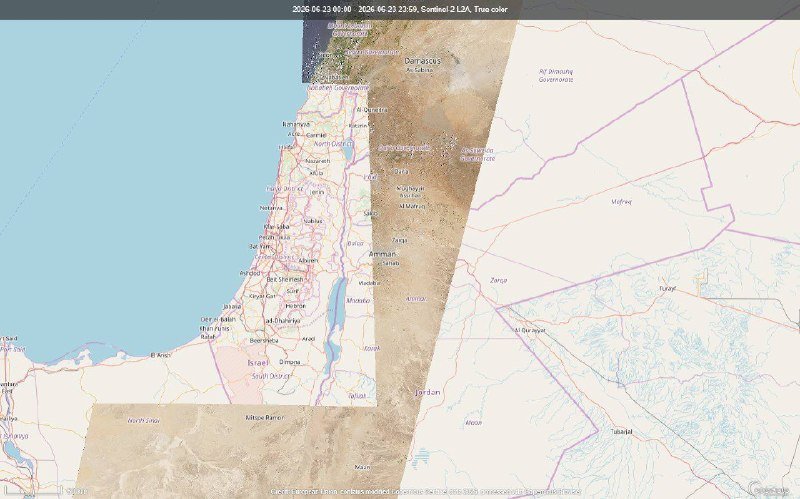
Beirut is being asked to make a choice it did not design. As the United States and Iran edge toward a framework deal in the third week of June 2026, Lebanon finds itself positioned as the file that could make the arrangement hold, or the lever that breaks it. Reporting on 23 June 2026 frames the country as a hinge: Iranian negotiators are linking any peace agreement to a full end of the war on Lebanon, and Gulf states led by the United Arab Emirates are, in parallel, holding up the release of billions of dollars in frozen Iranian funds in pursuit of damages claims linked to the regional fallout from the conflict.
The arithmetic is unsentimental. A country that wants neither Israeli tutelage nor Iranian command is being told, in effect, that its reconstruction is downstream of choices made in Washington and Tehran, with Gulf creditors setting the price of entry. The pattern is familiar from earlier Middle East files: the smaller state's recovery is treated as a sub-clause of a great-power bargain.
The kill switch
Iran has made an end to Israel's war on Lebanon a precondition for any broader peace agreement with the United States, according to coverage carried by The Cradle Media on 23 June 2026. The framing inside Iranian commentary is that Lebanon functions as a "kill switch" in the negotiations — a single file whose resolution either unlocks the rest of the package or detonates it. The move is the diplomatic equivalent of bundling: a separate theatre of conflict is converted into a deliverable that Tehran can offer, withhold, or trade.
For Beirut, the consequence is that the tempo of the war on its territory is now set not in the Lebanese cabinet or even in the borderlands where the fighting is happening, but in a negotiating room the country is not sitting at. The mechanism is not novel — Iran has, in past negotiating cycles, used allied files as leverage — but the explicit naming of Lebanon as the gatekeeper is unusually direct.
The Gulf bill
While Tehran links the deal to Lebanon, the Gulf is recalibrating on the financial plumbing. Israel Hayom reported on 23 June 2026 that the United Arab Emirates is holding up the release of billions of dollars in Iranian funds frozen in its jurisdiction, and is demanding what the paper described as multi-billion-dollar compensation for damages caused by Iran, alongside stricter compliance conditions. The headline matters: the bottleneck is no longer European-led sanctions architecture in the abstract, but a specific Gulf creditor attaching a national claim to the release valve.
For Lebanon, which has been working through Gulf-based channels to source reconstruction financing, the implication is that any normalisation dividend accruing to Tehran will be discounted, in advance, by a Gulf damages bill. Money that might have flowed to Lebanese infrastructure is, for the duration of the standoff, parked in escrow.
The Lebanese bind
Deutsche Welle's analysis on 23 June 2026 spells out the dilemma. A new US-Iran understanding, in DW's framing, appears to be forcing Lebanon to choose between an Israeli-aligned regional order and an Iranian-aligned one. Beirut wants neither as a complete package. The piece asks whether a third path is still possible — one in which reconstruction funding, security guarantees, and political reform arrive without either patron setting the terms.
The honest answer, on the evidence available, is that the third path is narrow. Lebanon's fiscal position, its fragmented political class, and the scale of post-war reconstruction costs all push it toward external sponsorship. The contest between Washington and Tehran is over which sponsorship arrives first, and at what price.
What the sources do not yet show
The reporting on 23 June 2026 establishes the structure of the bind but leaves several questions open. The precise dollar value of the frozen Iranian funds under discussion in the UAE is not specified in the available reporting; Israel Hayom uses the language of "billions" without a confirmed figure. The text of any draft US-Iran framework is not public. The Lebanese government's own negotiating position — whether it is making a counter-bid for reconstruction-linked relief independent of the US-Iran track — is not visible in the sourced material. The reporting also does not specify which Gulf state beyond the UAE is, or is not, aligned with the damages demand.
What the sources do show, taken together, is that Lebanon is being treated as a derivative of two larger trades. That is the structural problem. A peace deal on its own terms would put Lebanese reconstruction at the centre of the file; a deal engineered in Washington and Tehran with a Gulf creditor attaching conditions at the edge will treat Lebanese recovery as a residual. The next weeks will indicate which model prevails.
This publication framed Lebanon as the contested file inside a US-Iran framework, rather than as the principal negotiating party, on the strength of the 23 June 2026 reporting. The wire consensus in English-language coverage has leaned toward characterising the deal as a bilateral US-Iran matter; the inclusion of Gulf creditor behaviour and the explicit "kill switch" framing from regional outlets broadens that picture.
Wire provenance
This editorial synthesis draws on the following public wire/social posts:
- https://t.me/wfwitness
- https://t.me/thecradlemedia