Crimea under pressure: drone losses and a hardening land bridge
A Ukrainian long-range drone campaign on Crimea, paired with a Russian Geran-2 salvo at Kremenchuk, points to an industrial war of patience in which the peninsula's air-defence layer is being asked to absorb more than it was built for.
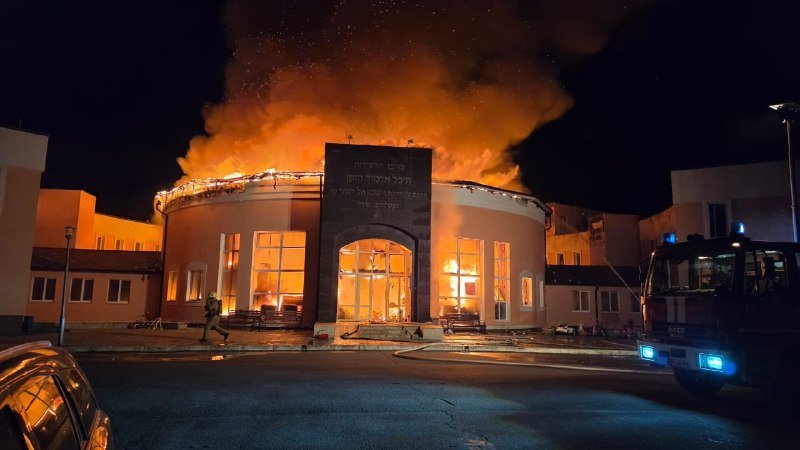
Sensors on the Crimean Peninsula were registering detonations across multiple districts late on the evening of 25 June 2026, the Ukrainian broadcaster TSN reported, after a sustained overnight campaign of long-range unmanned aerial vehicles that the channel framed as one of the most concentrated strikes of the war to date. The headline on the TSN wire, posted at 23:14 UTC, was categorical: "Crimea under massive attack by UAVs: explosions are heard in different areas of the peninsula." The framing is Kyiv's, the source is a Ukrainian outlet with editorial proximity to the security services, and the numbers attached to specific airframes are not independently confirmed by Western wires. What is harder to dismiss is the pattern the post sits inside.
Three things are happening at once on the southern axis. Ukrainian long-range drones are now reaching the Crimean Peninsula with a frequency that Russian air defence, the most layered in Europe, is visibly struggling to absorb. The Russian milblogger ecosystem, the noisy Telegram stratum that functions as an unofficial readout on how the war is actually going, has spent the spring in a slow panic about the loss of Geran-2 loitering munitions and the attrition of operator crews. And the Kremenchuk refinery, deep inside Ukraine but on the same air corridor that feeds southward toward the Black Sea, came under a salvo of more than a dozen Geran-2 drones on the same night, according to the open-source mapping channel AMK_Mapping. The fight is no longer concentrated at the line of contact. It has become a long, grinding duel over distance, airframes and industrial capacity.
The picture on the peninsula
What TSN is reporting is, in operational terms, the continuation of a campaign that has been gathering pace since the early summer. Crimea functions for Moscow as the logistical spine of the war: the rail head, the air base, the Kerch crossing that ties the peninsula to the mainland land bridge. Any sustained pressure on the peninsula, even at the level of nuisance rather than conquest, forces Russia to spend interceptors, generator hours and air-defence radar cycles it would rather keep in reserve for the front in Donetsk or Zaporizhzhia. The TSN dispatch treats the night's detonations as a Ukrainian message to that logistical spine. That is the framing Kyiv wants the reader to absorb, and it is the framing that has to be handled with care.
The thread does not include independent Western confirmation of the strike package, no count of intercepted drones, no telemetry from the Russian defence ministry. The headline is Ukrainian, the post is a Telegram channel with a long record of wartime amplification of Kyiv's narrative, and the airframe numbers that the same ecosystem has attached to similar nights in the past have frequently been revised downward by later reporting. The honest read on 25 June is that something serious is happening over Crimea, that the peninsula's air-defence layer is being asked to do more than it is comfortable with, and that the specific kill chains and airframe counts being circulated are, for now, claims rather than verified losses.
The milblogger anxiety
The other half of the picture lives in the Russian-language channels that the Western wires rarely cite. Translated summaries published on the @wartranslated feed have spent the spring cataloguing a quiet collapse in confidence: drone crews being hunted across Crimea, intercept rates falling, individual operators being named in the kind of detail that suggests real-time targeting rather than rumour. The tone of those posts is not the boilerplate triumphalism of the Russian defence ministry. It is closer to a stocktake from people who fly the missions, or who watch the screens, and who have noticed that the sortie-to-loss ratio is moving the wrong way.
Read across, the pattern on the Russian side is consistent with what the Ukrainians are claiming, even if the specific numbers are not. The longer-range drones that have come to define the southern fight, Ukrainian-designed and increasingly built inside Ukraine rather than imported, are designed to be cheap enough to absorb losses on. The Geran-2, the Russian response, is also a cheap airframe, but it is launched from a small set of fixed sites and its operators are not infinitely replaceable. Two industrial systems are grinding against each other; only one of them is also defending a peninsula, a fleet at Sevastopol, and a land bridge that Moscow cannot afford to lose without conceding the war's strategic premise.
What the Kremenchuk salvo tells you
The same night, AMK_Mapping reported a salvo of more than a dozen Geran-2 drones against the Kremenchuk refinery complex, an inland target that has been hit repeatedly since 2024 and that sits well within range of the launchers. The pairing matters. When the Russian side is expending cruise-munition equivalents against a Ukrainian refinery at the same moment the Ukrainian side is hitting Crimea, neither campaign is being read in isolation by the other's planners. Industrial depth is being measured in tons of feedstock and hours of uninterrupted refining, and the war on both sides is now, more than at any point since 2023, a war of patience against machines.
The political consequence is that the land bridge, the ribbon of occupied Ukrainian territory that ties Crimea to the Russian mainland, is hardening in the wrong direction for Moscow. The harder the peninsula comes under pressure, the more the land bridge has to function as a fortified corridor rather than a logistics tail. The harder the land bridge is fortified, the more Ukrainian planners are presented with a target whose loss would not just embarrass Moscow but unravel the operational logic of the southern front. The night of 25 June did not produce a verdict. It produced another data point in a campaign whose tempo is clearly accelerating, and whose centre of gravity is moving steadily toward the Crimean coast.
What to watch next
Three indicators will tell the reader whether the pattern is breaking. First, the Russian milblogger ecosystem's tone after 48 hours: confirmation bias on either side is a poor guide, but the speed and detail of the Russian-language posts after a big night are a real signal. Second, the appearance of independent commercial-satellite imagery, the kind of Planet or Maxar shots that usually follow a confirmed strike on a permanent installation. Third, the next Ukrainian air-force readout, which has become a more disciplined publication over the past year and which will give a sense of how much of the night's activity is being claimed inside the official kill chain. None of those three will resolve the underlying question of who is losing faster, but together they will let a reader decide whether the headline was a peak or a plateau.
What the night of 25 June does settle is the trajectory. The fight has moved, decisively, off the line of contact. Crimea, the symbolic prize of the 2014 annexation and the operational prize of 2022, is now a working target, and the air-defence layer that was supposed to make it untouchable is being asked to absorb more than it was built for. The land bridge that ties the peninsula to the mainland is hardening in response, and the war of industrial patience that Kyiv is choosing to wage is one that Moscow, on present form, is poorly placed to outlast.
Sources
- TSN (Ukrainian): Crimea under massive attack by UAVs, 25 June 2026, 23:14 UTC
- AMK_Mapping: Kremenchuk under Geran-2 attack, 25 June 2026, 21:56 UTC
- @wartranslated: Russian milblogger summaries on drone losses over Crimea, June 2026
- War Translated channel: Russian-language operational commentary on the southern axis, June 2026
- Osint Live aggregator: Cross-checked strike reporting on Crimea and the Black Sea, June 2026
- TSN wire: Earlier reporting on UAV campaign against occupied south, June 2026
Desk note: Monexus is reporting this as a contested picture, treating Ukrainian operational claims and Russian milblogger anxiety on their own terms and declining to fix the specific airframe count from TSN as established fact. The editorial weight goes to the pattern of pressure on the peninsula, not to the night's particular scoreboard.