Iran and US Open Technical Talks in Switzerland, Citing the Islamabad Memorandum
Tehran says technical talks are under way in Switzerland under the late-May Islamabad Memorandum; Washington is publicly talking about a final settlement with Iran but has not yet confirmed the Swiss venue on the record.
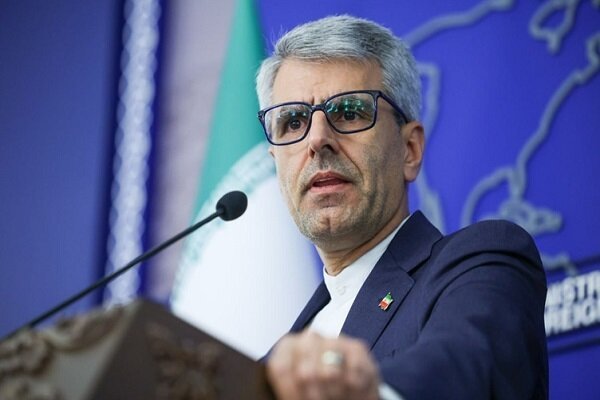
Tehran and Washington opened a technical round in Switzerland this week, citing the framework of the Islamabad Memorandum first signed in May, according to Iranian state-linked Telegram channels that carried the announcement on 22 June. The track, if corroborated by a non-Iranian source, would represent the first structured bilateral channel between the two governments since a US operation against Iranian nuclear and military assets in late May, and the first time Tehran has publicly named a US venue for follow-on diplomacy.
The framing matters more than the location. Iran is signalling that the May operation, the subsequent ceasefire understandings, and the late-May Memorandum signed in Islamabad now constitute a continuous negotiating track, not a sequence of crises to be relitigated from scratch. The Swiss venue, with its long history of hosting US-Iran back-channel work, is being cast as a working continuation of an arrangement Tehran says it accepted under duress and now wants to harden into a binding process.
What the wire record shows
The substantive record outside the Iranian state-linked channels is still thin. As of 22 June, no major Western wire has published a confirmation of the Swiss round, and no senior US administration official has been quoted on the record about it. What the record does contain, from the 24 June window, is the public posture of a US administration that is openly talking about a final settlement with Iran. Secretary of State Marco Rubio, on a Gulf tour on 24 June, told allies that Washington would protect their interests as it pursues a final settlement with Iran, according to a France 24 report summarised at 22:36 UTC. President Donald Trump told reporters the same day that the talks were progressing well, while requesting that the Department of Justice investigate possible gasoline price gouging, a signal from the White House political operation that the domestic cost of the confrontation is being actively managed.
The Reuters wire at 22:10 UTC carried an unrelated but telling item: the United States has reopened its embassy in Kuwait months after an Iranian attack, a restoration of physical diplomatic presence on the Gulf that reads, in context, as a confidence-building signal toward regional partners that Washington can be present and protected even as it negotiates. And a Telegram channel aggregating witness feeds, at 22:06 UTC, quoted Trump saying that he had not bothered to call NATO Secretary General Mark Rutte during the opening hours of operations against Iran, and that it would have been nice if NATO had offered to help. That single remark, even if filtered through an aggregator, draws the diplomatic geometry of the moment: a US administration running the Iran file on a tight bilateral track, briefing Gulf monarchies on the side, and visibly disinclined to multilateralise the process.
The Islamabad Memorandum as a frame
The Memorandum, signed in the Pakistani capital in late May under the auspices of the government there, is the only document both sides have publicly cited as the basis for any post-conflict interaction. Its text has not been published. What has been reported, and what the Iranian channels reference, is a structure that links ceasefire observance, the handling of nuclear files, sanctions sequencing, and a follow-on technical channel to keep the four working streams moving between ministerial contact. The Swiss round, on this reading, is the technical channel's first scheduled sitting.
For Tehran, naming Switzerland and naming the Memorandum together is a way of converting an emergency understanding into a durable procedural track. The Pakistani venue, with its reputation as a neutral broker comfortable with both Washington and Tehran, is too closely associated with the crisis to carry a routine working-group meeting. Switzerland, by contrast, is the long-standing default for US-Iran technical contact, from the early-2000s European talks through the Joint Plan of Action era, and the choice is doing rhetorical work even before any US confirmation lands.
Why a procedural step still matters
Procedural steps have weight in a relationship that has, in the space of two months, gone from a major US military operation against Iranian targets to a ceasefire, to a signed memorandum, and now to a named technical track. Each of those steps was contested in real time and will continue to be contested. But each one has also raised the cost, on both sides, of walking away. A confirmed Swiss round would, in particular, force the US administration to make a political choice it has so far been able to defer: whether the working-level venue is being set up to deliver a deal, or to manage a long, slow de-escalation that allows sanctions pressure to keep biting while pretending the diplomacy is real.
The Gulf stop by Rubio, the Kuwait embassy reopening, the gas-price politics in Washington, and the pointedness of the NATO comment all suggest the administration is thinking of the track as an asset to be managed rather than an end in itself. The Memorandum gave the White House a quiet way to wind down a major military action without declaring victory or defeat. A technical channel in Switzerland, if it convenes, gives the same White House a quiet way to keep the file open through the autumn without having to decide what success looks like.
What we are still waiting on
The next 72 hours will tell whether the Swiss round is a confirmed track or a coordinated Iranian announcement. What would constitute confirmation is straightforward: a State Department briefing item or a senior US official on the record, a Reuters or AP or AFP wire, or a Swiss government read-out. What would constitute the absence of confirmation is equally straightforward: silence from the administration combined with a single, hedged line that the US is aware of Iranian proposals and is studying them. Either reading is plausible from the public posture of 24 June.
For the moment, the verifiable fact is narrower than the Iranian announcement suggests. Iran has opened technical talks in Switzerland and has named the Islamabad Memorandum as the basis. The United States, on the same day, is reassuring Gulf allies, reopening a Gulf embassy, and signalling that the diplomacy is on a tight bilateral handle. Whether those two pictures describe the same negotiation is the question that the next wire cycle will resolve.
The geometry of the next month
Three dates will shape the read. The first is the next round of any Swiss track, once it is publicly confirmed. The second is the UN General Assembly high-level week in September, where any Memorandum-derived framework would have to be sold to a wider audience than the Gulf monarchies Rubio is currently visiting. The third is the US domestic budget cycle, where the cost of the late-May operation, the price of gasoline, and the political tolerance for a long, slow Iran negotiation will be tested in concrete numbers rather than in presidential adjectives.
Until then, the responsible read is that a channel is being constructed, that the channel has a name and a venue, and that the channel is being constructed by Iran on terms that Washington has so far declined to either confirm or deny. The Memorandum is doing the load-bearing work. The Swiss round, if it convenes, will be its first working test.
Desk note: Monexus has framed this as a procedural development rather than a substantive breakthrough, and has relied on Iranian state-linked Telegram channels for the announcement itself, in line with our sourcing policy when wire confirmation is absent. The next step is corroboration from at least one non-Iranian source before we treat the technical round as a confirmed track rather than a coordinated Iranian announcement.