Trump's Strait of Hormuz gambit meets an Iranian veto — and a question of capability
Donald Trump says the US military could take and run the Strait of Hormuz and charge transit fees. Iranian voices, from analysts to a parliamentary hardliner, are answering with a flat no — and a reminder that the chokepoint cuts both ways.
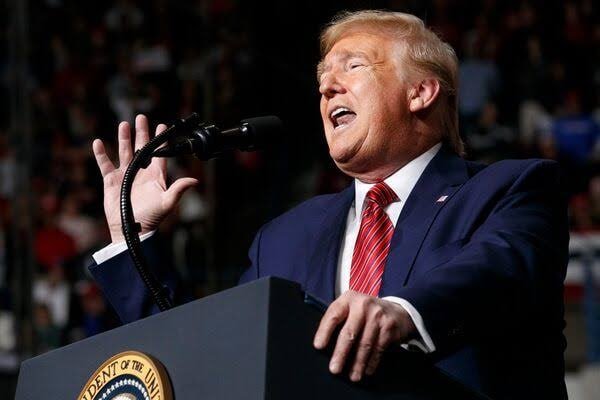
On the night of 20 June 2026, President Donald Trump returned to a familiar theme. The US military, he said, could take control of the Strait of Hormuz and impose transit fees on the roughly one-fifth of the world's oil that moves through the narrow waterway between Iran and the Arabian peninsula. By the middle of the following day, Iranian voices — from a Tehran-aligned international affairs analyst to a hardline member of parliament — were answering with a flat rejection, and with a pointed reminder that the chokepoint cuts both ways.
This is not a new argument. It is, however, the sharpest version of it in this cycle, and it lands at a moment when the question of who runs the sea lanes of the Persian Gulf is being reopened in the same breath as the question of who pays for keeping them open. Read closely, the exchange is less about whether the US Navy could physically close the strait — it is the dominant naval power in the Gulf — and more about whether Washington could do so, run a toll booth on it, and walk away with the bill.
The American claim, restated
Trump's framing, as relayed by the X account sprinterpress on 21 June 2026 at 14:14 UTC, was unambiguous: the US military could take control of the Strait of Hormuz and impose transit fees. The remark was framed as a response to recent Iranian actions in or near the waterway and, by implication, to Tehran's nuclear file. The implicit logic is that the United States, which has underwritten Gulf maritime security since the 1980s, has both the right and the leverage to monetise that role — to convert a public good into a billed service. The proposal rhymes with a wider American instinct, visible in chip export controls, in sanctions architecture, and in the rewriting of security partnerships: that the guarantor should be paid in something other than gratitude.
The political appeal of that line is obvious. The strategic case is harder. The strait is roughly 21 miles wide at its narrowest, with shipping lanes on each side and a buffer zone in the middle. Iran's coastline runs along its northern shore, dotted with fast-attack craft, anti-ship missile batteries, and the kind of layered air defence that has been hardened over two decades of sanctions and asymmetric investment. The US Fifth Fleet, headquartered in Bahrain, has run the strait as a protected corridor for the duration of the post-2003 era. That protection is a real service. It is also a service that the protected parties — Saudi Arabia, the UAE, Iraq, Kuwait, Qatar — have been told, for years, to pay more toward. The leap from "pay more for the patrol" to "pay a fee to transit" is a much larger one, and it is the one Iran is now publicly daring Washington to attempt.
The Iranian counter
The response, in tone and in content, has been shaped by two distinct Iranian voices since 21 June 2026. The first, carried by Al-Alam Arabic at 15:01 UTC the same day, is that of Ibrahim Rezaei, a member of the Iranian parliament and a hardline figure associated with the security establishment. His message, addressed directly to Trump, was simple: if the United States had the ability to impose control over the Strait of Hormuz during the recent war, it would already have done so. The implication is that Washington wanted to act and was deterred — not by diplomatic cost, but by capability and by the price of trying. The line reads as a taunt; it is meant to.
The second, carried by Tasnim News in English at 14:38 UTC, is more technocratic. An international affairs analyst identified in the dispatch as Marani frames the question as one of fee-setting: a transit fee, he says, will indeed be charged — by Iran, not by the United States. The phrasing maps neatly onto Trump's own. It also reframes the chokepoint as Iranian sovereign territory, with all the legal and political implications that follow. Tasnim's read is that Tehran has already decided the strait is a pricing surface, not a blockade target. The objective is revenue and leverage, not closure.
Taken together, the two responses are not contradictory. They are sequenced. Rezaei argues that the US cannot do it. Marani argues that Iran is already doing something like it, on its own terms. The first is a denial of American capability. The second is an assertion of Iranian agency. Both, in their way, treat the strait as a contested instrument rather than a settled fact.
The structural frame
What is unfolding in the Gulf is the maritime version of a pattern that has been visible on land for at least a decade. The hegemonic power is openly asking its allies and adversaries to pay for the security architecture it built. The response, from both sides, is to convert that demand into leverage. Saudi Arabia has spent fifteen years building its own defence-industrial base and diversifying its oil routes through pipelines and Red Sea terminals. The UAE has done likewise, more quietly. Iran, under sanctions, has built the fastest and densest anti-ship missile and fast-attack-craft network in the region — explicitly, according to its own doctrine, to ensure that any attempt to close the strait would carry a cost Washington has not shown it is willing to pay.
Seen from Tehran, the transit-fee idea is not a provocation. It is a recognition of a long-standing complaint, voiced in Iranian strategic literature for years, that the strait's oil is not American and the security blanket over it is not free. Seen from Washington, the same Iranian moves are an attempt to convert geography into veto power — to make the Gulf unsafe for everyone, and therefore unaffordable for Iran's rivals. Both readings are correct, which is what makes the standoff hard to break.
What remains uncertain
Three things are not yet clear, and the available reporting does not resolve them. First, the operational content of Trump's statement. The X dispatch and the Iranian responses are short, declarative, and pointed; they do not specify whether the US is signalling a doctrinal shift, a negotiating posture, or a campaign-trail line. Second, the current state of US–Iranian negotiations. The Iranian analysts frame the dispute as a fait accompli — a fee structure in motion — but the wire sources available here do not corroborate a specific negotiation track, a specific demand, or a specific counter-offer on the record. Third, the position of the Gulf monarchies, which are the parties that would either pay a US transit fee or be asked to enforce an Iranian one. They are conspicuously silent in the sourcing at hand, and their silence is itself a fact. A maritime pricing regime in the strait cannot be built without them, and their absence from the public conversation suggests they are doing what Gulf monarchies usually do in such moments: hedging in private, waiting to see who blinks first.
This piece treats the Iranian and Iranian-aligned commentary as primary counter-claim material, on equal evidentiary footing with the US political statement, rather than as the dominant frame. The dominant frame, for now, is the American claim; the counter-frame is the Iranian one; the structural question — who gets to price the sea lane — is what both are actually arguing about.
Wire provenance
This editorial synthesis draws on the following public wire/social posts:
- https://t.me/alalamarabic
- https://t.me/tasnimnews_en
- https://t.me/alalamarabic
- https://t.me/tasnimnews_en