Qatar steps into the middle of the US–Iran track, with the Lucerne meeting as backdrop
Doha's prime minister publicly welcomed the Lucerne meeting and the continuation of US–Iran talks, signalling Qatar's intent to remain a central mediator even as the track's substance remains opaque.
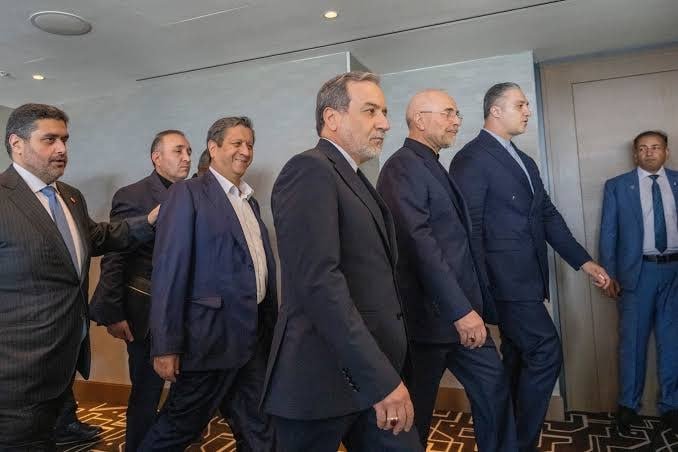
Doha put itself back at the centre of the Iran–United States file on 21 June 2026, when Qatari Prime Minister Mohammed bin Abdulrahman Al Thani publicly welcomed both the holding of the Lucerne meeting and the continuation of negotiations between Washington and Tehran. The endorsement, carried simultaneously by Iranian state-linked outlets Mehr News and Tasnim, marks the most visible Qatari intervention in the track since the early-2026 de-escalation round and arrives at a moment when the talks are visibly fragile: delegations meet, statements are issued, and the public ledger of what has actually been agreed remains thin.
The signal Doha is sending is narrower than it looks, and broader than it sounds. Narrower, because Al Thani did not announce new terms, new venues or new guarantors. Broader, because a Gulf state with direct lines to both the Iranian foreign ministry and the White House has chosen — in the same 24-hour news cycle — to publicly bless a process that has, until now, struggled to find a sponsor willing to defend it out loud.
What Doha actually endorsed
Three Telegram-distributed wires from 21 June — from Mehr News at 18:36 UTC, from Tasnim's "plus" channel at 17:44 UTC, and from Tasnim's Jahan channel at 17:41 UTC — carried near-identical accounts. In each, Al Thani is reported to have "welcomed the holding of the Lucerne meeting" and to have expressed appreciation for the continuation of US–Iran talks. None of the three wires quoted the prime minister directly. None specified what the Lucerne meeting was, when it took place, or which delegations attended. None disclosed whether the meeting was held in Switzerland, named a venue, or produced a joint statement.
That opacity is itself the story. The wires treat Lucerne as a known reference point — a fixed event the reader is expected to recognise — without supplying the date, the agenda, or the counterparties. For an audience that has been tracking the file, the gap is conspicuous: the most concrete piece of on-the-record news from Doha in this cycle is a confirmation that there is a track to confirm.
Why Qatar, and why now
Qatar's diplomatic role in the Iran file is not new. Doha hosted the 2023 back-channel exchanges that helped produce the September 2023 understanding on prisoner releases and the unfreezing of certain Iranian funds held in South Korea. It has retained a working relationship with the Iranian foreign ministry under successive governments in Tehran, including after the May 2024 presidential transition, and it has kept a channel open to the US negotiating team across both the Biden and the current administration.
What is new in 2026 is the public-ness of the endorsement. In earlier rounds, Qatari statements were typically issued by the foreign ministry's spokesperson, calibrated to avoid pre-empting either side. On 21 June, the endorsement came from the prime minister himself, in a format designed for distribution through Iranian state media. That choice of venue is the most read-worthy detail: Doha is signalling alignment to an Iranian audience, in an Iranian channel of record, in language that Iranian outlets have chosen to amplify at the top of the wire.
The timing also matters. The Lucerne meeting — whatever it was — sits inside a stretch in which the US side has been tightening secondary-sanctions enforcement on Iranian oil exports, and in which the Iranian side has responded by accelerating enrichment at declared sites and reactivating a public-facing negotiation track. A Gulf sponsor of the talks provides both sides with cover to continue talking while the pressure ratchets: the United States can argue that diplomatic engagement is producing movement, and Iran can argue that sanctions pressure is forcing the United States back to the table. Doha benefits either way, so long as the channel does not collapse.
What the framing leaves out
The Iranian wires framing this endorsement as a Qatari welcome of the talks obscures a structural fact that has shaped the file for a decade: the United States and Iran do not maintain full diplomatic relations, and every round of talks takes place in the shadow of that absence. The mediator is not a courtesy. The mediator is the only place the two governments formally meet. That gives Qatar — and previously Oman, and before that Iraq — a degree of influence disproportionate to their weight in the wider Middle East, but it also means the mediator's standing rises and falls with the credibility of the process they are sponsoring.
The wires also do not address the principal area of dispute that any deal would have to resolve: the scope of Iran's enrichment programme, the sequencing of sanctions relief, and the question of whether any agreement is for a fixed term or open-ended. These are the questions on which previous rounds have broken down. The Lucerne meeting, as described in the available reporting, does not appear to have produced a public position on any of them. The diplomatic subtext of Al Thani's statement is therefore that the track should continue even if the headlines from it remain procedural.
Stakes and trajectory
If the Lucerne track holds, the most immediate beneficiaries are the regional Gulf states that have absorbed the cost of the 2024–25 escalation cycle — and Qatar most of all, given its shared gas field with Iran and its exposure to any disruption in the Strait of Hormuz. If the track breaks, the most exposed party is the Qatari government itself, which will have associated its public standing with a process that produced no public deliverables.
The most likely next 30 days, on the evidence available, are more meetings of the same kind: short, narrowly attended, producing statements that confirm the talks took place without confirming what was said. Doha will continue to issue endorsements of that process. The Iranian state wire will continue to carry them. The harder questions — enrichment, sanctions, sequencing — will, as before, wait for a venue that is willing to host the answer.
How Monexus framed this: the wires gave us the endorsement but not the meeting. We treated the endorsement as a Qatari political act, weighted it accordingly, and declined to fill in the substance of Lucerne that the available reporting does not actually supply.
Wire provenance
This editorial synthesis draws on the following public wire/social posts:
- https://t.me/mehrnews
- https://t.me/tasnimplus
- https://t.me/JahanTasnim