US and Iranian delegations land in Zurich as Vance-Iran track opens in Switzerland
Iran's team touched down first, the US delegation shortly after, and JD Vance's Switzerland track is now the official venue for a file no Western capital wanted to hold alone.
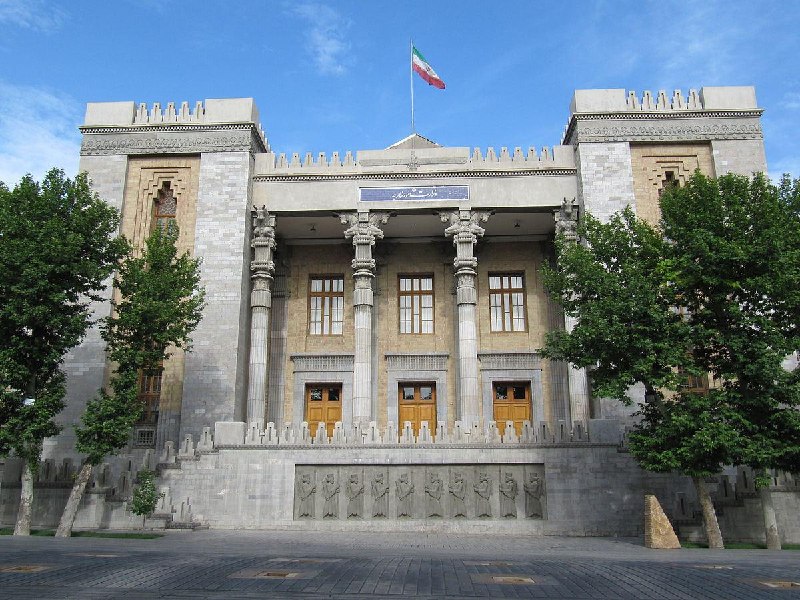
The Iranian negotiating delegation landed first. The American plane touched down shortly after. By the evening of 20 June 2026, both teams were inside Swiss hotels, and a US-Iran track hosted by Vice President JD Vance was, for the first time, an item on the public ledger rather than a back-channel rumour.
Switzerland has now inherited a diplomatic file that no Western capital was prepared to carry alone. Tehran dispatched Mohammad Bagher Ghalibaf, speaker of the Iranian parliament and head of the negotiating team, according to state media; the United States sent Vance, with Secretary of State Marco Rubio travelling separately to meet Gulf partners during the same window. The sequencing of the two arrivals matters because the alternative: a US team waiting publicly while Tehran decided whether to board, is exactly the optics every previous round has tried to avoid. Neither side got the picture it wanted, and both got enough to keep talking.
What Tehran is saying in public
The Iranian messaging after landing is a single, tightly rehearsed argument: the negotiating team is not a concession, it is a translation of military gains into legal ones. On state-linked channels, Ghalibaf framed the trip in those exact terms: military results, in his telling, "only bear fruit when translated into legal and political gain," and Switzerland is the venue where that translation is meant to happen. He made the same point in sharper form when he warned, paraphrased across Telegram channels carrying his remarks, that if the diplomatic track fails the negotiating team "can respond with missiles or solve through negotiation." That is a posture, not a concession: it sets a floor under the talks and a ceiling over them simultaneously.
The substantive Iranian asks, as transmitted via state-adjacent outlets, are clustered around three files. First, the release of frozen Iranian assets and the lifting of oil sanctions, which PressTV characterised as finalised during the Switzerland round. Second, sovereignty over the Strait of Hormuz, with Ghalibaf declaring on IRNA that the waterway "will be administered by Iran according to international law." Third, a wider regional package that, per Reuters as relayed by Euronews, would see the United States and Iran jointly guarantee the territorial integrity of Lebanon. None of those characterisations has been confirmed by the US side in the public record. They are the shape of the deal as Tehran would like it to be understood.
What the American side has actually put on the record
Washington's disclosure has been thinner and more procedural. Vance confirmed that the two negotiating teams remain in Switzerland, and announced a concrete, verifiable step: the United States is temporarily easing sanctions on Iranian oil, after Tehran agreed to allow UN nuclear inspectors back into the country, according to France 24's reporting on his remarks. That is the single most consequential operational change to land in the public record so far. The release of frozen funds, by contrast, is on the Iranian side's ledger only.
Rubio's parallel travel, billed as Gulf partner outreach, is the second American footprint of the day and a useful tell about how Washington wants the picture to read. The State Department is not presenting this as a Vance-only moment. A wider regional tour signals that whatever is being negotiated in Switzerland is meant to be sold to Riyadh, Abu Dhabi and Doha as already-consulted architecture rather than as a bilateral surprise. Whether that framing survives contact with the Gulf capitals is the next test.
The Lebanese fault line underneath the table
Quietly, the most politically combustible piece of the package, on the evidence currently available, is Lebanon. According to Iranian state-linked channels, both the United States and Iran have agreed to act as guarantors of Lebanese territorial integrity, a formulation that, if accurate, would bind Washington into a file it has historically tried to keep at arm's length. Lebanese factions have read the signals already. Open-source channels monitoring Beirut report that the anti-Hezbollah camp is "deeply disappointed" with the Trump administration over the Switzerland track, on the grounds that the US-Iran memorandum has, in their reading, tied Lebanon into a deal without Lebanese sign-off. Hezbollah-aligned voices, by the same account, are treating the agreement as a vindication. The two readings cannot both be right, but both are real, and the asymmetry in how each side claims ownership will be one of the harder edges of the next phase.
What the record does not yet support
A few specific claims circulating in the immediate aftermath of the landing should be marked as unverified. PressTV's assertion that the release of frozen funds and the lifting of oil sanctions were "finalised" during Switzerland talks is, on the US side's public statements, premature: only the temporary suspension of sanctions on Iranian oil and the return of UN inspectors have been confirmed by American officials in the available record. The Strait of Hormuz "administration" claim, similarly, is an Iranian characterisation of an Iranian ask; there is no US confirmation of any transfer of administrative authority. The Lebanon-guarantor formulation is sourced to Iranian statements via Reuters relay, not to any American on-the-record confirmation. These distinctions are not pedantic. They are the difference between a deal and a description of a deal.
What to watch next
Two dates are doing the work in the background. The first is Friday, which Middle East Eye's live coverage identifies as the target for a US-Iran accord signing in Geneva, a venue that has not previously been the headline site of this track. The second is the question of whether Rubio's Gulf tour produces a joint statement that brackets the Switzerland package inside a wider regional architecture, or whether Riyadh and Doha read it as a fait accompli and push back. The third is whether the Iranian parliament, where members have been demanding that the chamber be opened so they can exercise their duties, becomes a domestic ratification problem for Ghalibaf's team on landing. None of those tests resolves today. The plane has landed. The harder arithmetic starts in the morning.