Heavy bombardment of south Lebanon persists into third week of declared ceasefire
Israeli strikes on Nabatieh and Tyre governorates continue through the third week of a declared Lebanon ceasefire, exposing a gap between the political announcement and the ground reality that the Trump framework has no mechanism to enforce.
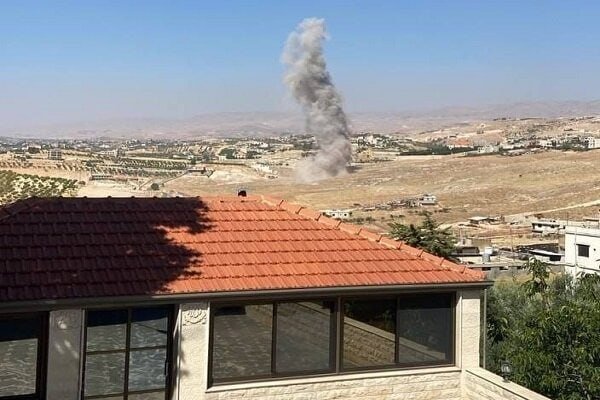
Israeli airstrikes and shelling hit villages across south Lebanon through the night of 19 June and into 20 June, with local outlets documenting fresh strikes on the Nabatieh and Tyre governorates even as Beirut and Washington insist a ceasefire is in force. The pattern, more than two weeks after the cessation of hostilities was declared, is the story: residents describe a low-grade bombardment that has not stopped, just slowed enough for politicians to claim victory.
The official record says one thing. The record on the ground in the villages south of the Litani says another. That gap is now the central political fact of the file, and it is widening into a confrontation between the Israeli cabinet, the Lebanese state, Hezbollah's residual political machine, and the Trump administration, all of whom have an interest in declaring the war over even as the ordnance keeps falling.
What the strikes actually look like
Reporting compiled through the Lebanese outlet cluster and Iranian state-aligned wires over the 19th and 20th of June describes a grinding, dispersed campaign rather than a single decisive operation. Strikes have concentrated on the built-up southern edge of Nabatieh governorate and on the southern outskirts of Tyre, both of which sit well inside the area where a ceasefire was nominally supposed to freeze Israeli fire. Local correspondents tracking each overnight raid list multiple strikes per night since the deal was announced, with the cadence undiminished into the third week. The geography is not incidental: these are the same corridors Hezbollah used to fire north into Israel, and they are the corridors any monitoring mechanism would have to police.
The casualty toll across the war's main phase runs into the thousands of Lebanese civilians, with entire quarters of villages like those surrounding Nabatieh and the southern Tyre countryside flattened in the autumn campaign. By June, with residents attempting to return under the ceasefire framework, the same infrastructure is being hit again, on a smaller scale and at lower tempo, but with the same weapons. Aid agencies have documented families moving back into damaged housing only to be displaced a second time.
The political contest over the word "ceasefire"
Inside the Israeli cabinet, the dispute is now open. Itamar Ben Gvir, the Otzma Yehudit leader who sits as a kingmaker in Benjamin Netanyahu's coalition, told his faction meeting in the Knesset this week that "all of Lebanon should be our playground" and urged the prime minister to communicate to US President Donald Trump that Israel should reject any peace deal with Lebanon. Ben Gvir's framing is not a slip. It is the working position of a coalition faction whose leverage has grown as the war has dragged on and whose base regards any cessation as a surrender.
That position sits in direct tension with the track the Trump administration is running. Reporting this week indicates Washington is pursuing a Lebanon file alongside the broader US-Iran memorandum negotiated in Switzerland, which tied Lebanese arrangements to the wider regional package. Lebanese anti-Hezbollah figures have publicly expressed disappointment with the Switzerland track, arguing that the deal as written ties Beirut to arrangements made over its head. Hezbollah supporters, by contrast, have claimed the same framework as a victory, on the grounds that it produced a declared halt to major operations.
Qatar has entered the public argument from a different angle. Prime Minister and Foreign Minister Sheikh Mohammed bin Abdulrahman Al Thani called publicly for an end to what he termed Israel's occupation of areas in south Lebanon and condemned ongoing attacks. The Qatari intervention is a reminder that the Gulf states are not passive onlookers in this file: any framework that leaves Israeli forces in Lebanese territory without a defined timeline will draw sustained diplomatic pushback from Doha, and Doha carries weight in Washington that smaller mediators do not.
Why the strikes have not stopped
There are three plausible explanations for the continued bombardment, and the evidence on the page does not let us pick cleanly between them.
The first is operational. Israel has framed the post-ceasefire strikes as targeted actions against Hezbollah assets that were supposed to be dismantled under the deal, including infrastructure south of the Litani and weapons storage in the villages that returning residents are now approaching. If that framing holds, the strikes are the predictable friction of an enforcement mechanism operating without an agreed third-party monitor.
The second is political. Ben Gvir's intervention suggests that at least one faction inside the cabinet is content to see the ceasefire fail on the ground while claiming it on paper. A continuation of low-intensity fire preserves the option of re-escalation, denies Hezbollah the unambiguous win of a clean return to the border, and gives the far-right coalition partner a continual veto over any deal Trump tries to lock in.
The third is informational. Iranian state-aligned outlets, including the Fars and Tasnim networks, have been prominent in cataloguing each overnight raid, in some cases ahead of Lebanese domestic reporting. The point of that coverage is not neutral documentation. It is to demonstrate, to an Arabic-speaking audience, that the declared ceasefire is a Western and Israeli fiction imposed over a continuing war. Al-Mayadeen's coverage has run in the same register, treating the strikes as evidence that the Lebanese state has been sold out by negotiators in Switzerland.
The structural problem nobody is naming
A ceasefire is a contract. Contracts require an arbiter, a monitoring mechanism, and a defined withdrawal. The Lebanon arrangement, as it has been described in the public reporting, has none of those in robust form. The United States is the guarantor; UNIFIL is the residual presence; the Lebanese Armed Forces are the local implementer. None of the three has the authority to compel either side to halt a particular raid, and the Israeli political system has a built-in faction that benefits from continued ambiguity about what the deal actually covers.
The Hezbollah political class has internal reasons of its own to permit the ambiguity. Parliamentary speaker Mohammad Bagher Qalibaf, speaking on the Iranian-aligned track, claimed credit for the Switzerland track, describing it as the outcome of patient diplomacy that "ended the war and lifted" the pressure on the Lebanese population. Whether or not that boast survives contact with the next overnight strike is now the operative question. If the strikes continue through the summer, the Iranian-aligned claim that the deal is a victory collapses, and the political pressure inside Lebanon pivots toward harder-line Hezbollah factions that have always argued the only guarantee is more rockets, not more communiqués.
What to watch before the next round
Three dates will decide whether the file holds or snaps. The first is the next Israeli cabinet meeting, where Netanyahu will be asked by Ben Gvir's faction to formally reject any extension of the arrangement. The second is the next round of US-Iran follow-on talks tied to the Switzerland memorandum, in which the Lebanon provisions will either be tightened into a monitored mechanism or quietly allowed to drift. The third is the southern Lebanese village in Nabatieh or Tyre governorate that gets hit next. Each overnight raid is, in effect, a small default on a deal that nobody has built the machinery to enforce. The arithmetic of those defaults is now the only honest measure of whether the war has ended.