Sixth Attempt at Ali al-Taher: Israeli Forces and Hezbollah Exchange Fire in Violation of Ceasefire
A sixth cross-border probe at a single southern Lebanese ridge in two weeks has become the public ledger of a ceasefire that is being used rather than failing, with each volley a recorded test rather than a strategic claim.
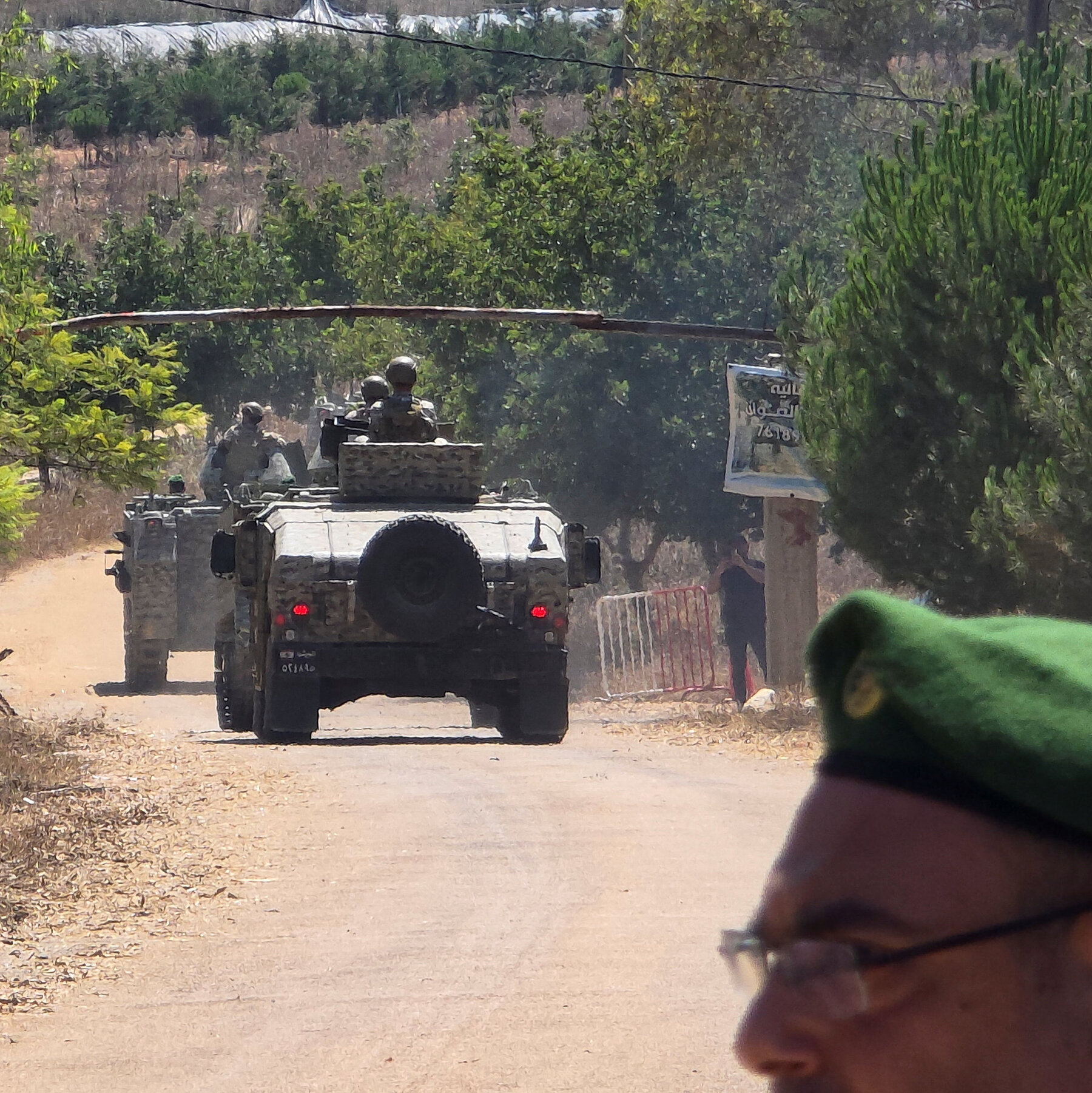
Israeli forces and Hezbollah exchanged fire on Friday in what local monitors counted as the sixth cross-border incident in two weeks, each side accusing the other of breaching the ceasefire that has nominally governed the southern Lebanon front since late 2025. The exchange, centred on a ridgeline near the contested hill of Ali al-Taher, was logged by AMK Mapping at 16:12 local time and corroborated within minutes by rnintel and wfwitness, the trio of open-source channels that has become the de facto public ledger of ceasefire violations on this stretch of the Blue Line.
The pattern matters more than the single volley. Six attempts at the same geographic feature in fourteen days is not attrition; it is testing. Each probe tells the other side what sensors are awake, what artillery is pre-registered, what gaps in the monitoring force have closed or opened. The hill has become a seam in the arrangement, a place where the ceasefire's text meets the ceasefire's practice and the two diverge.
What the channels logged on Friday
The hour-by-hour picture assembled from the Telegram feeds tells a familiar story in granular detail. AMK Mapping posted the initial geolocated coordinates, pinning the exchange to a 400-metre stretch of the Ali al-Taher ridge, with Israeli fire directed at a Hezbollah observation post and return fire landing in an Israeli forward position roughly 800 metres south. Rnintel posted imagery six minutes later showing three impact craters on the Lebanese side and damage to a hardened emplacement on the Israeli side, and wfwitness carried an audio clip of the exchange at 16:19.
Middle East Spectator carried an Israeli military spokesperson's statement denying any operation in the area and attributing the blasts to a pre-planned demolition of a Hezbollah tunnel access shaft. DDGeopolitics posted the corresponding Hezbollah media office line within forty minutes, claiming the group's fighters had detected an Israeli engineering vehicle crossing the technical line and had fired warning shots in self-defence. Both versions, on their face, contradict the other's facts. Both are also, in their tone, confident.
The contrast with a single wire-service frame is the point. A Reuters or AFP string would have given one paragraph of ceasefire monitoring, one denial from each side, one line about the broader political track, and moved on. The Telegram stack gives the reader a sequenced contest over a specific ridge, hour by hour, with the contradictions visible in real time. The counter-narrative is not appended to the wire copy; it is the wire copy, because the wire copy no longer exists as a single thing on this front.
The counter-narrative from each side's own field channels
Israeli coverage, traced through Hebrew-language outlets surfaced by the channels, has spent the week emphasising a different threat vector entirely. Walla, the Hebrew outlet referenced in Fars's summary of IDF officers' comments, carried reporting that Hezbollah has rebuilt a layered surveillance network along the southern Lebanese side of the Blue Line, with an explicit focus on tracking the movements of Israeli brigade and battalion commanders. The framing in the IDF officers' quoted remarks was not that the group is firing more rockets; it was that the group is targeting the chain of command.
On the other side, the Lebanese field channels carried on Friday a different and more local register. A displaced Nabatieh resident, Mohammad Sallum, told Middle East Eye he had made a brief visit to inspect his damaged shop and described Nabatieh as "a disaster-stricken city but that's bearable compared to their [Israeli forces] presence on our land." The quote is not about the Friday exchange at all; it is about the lived condition underneath the exchange. A conservationist, Mona Khalil, died on Friday from wounds sustained in an Israeli airstrike on her beachside home two weeks earlier, according to NPR; she had built a sea turtle nesting programme along the southern coast. The Iranian-aligned channels, from PressTV to Tasnim, carried the ceasefire-violation story alongside warnings from the IRGC Quds Force commander that Israeli forces should leave southern Lebanon or be "kicked out."
Two incompatible pictures. One is a tactical contest over a specific hill, logged in coordinates and minutes. The other is a structural collapse of the arrangement under which the contest is supposed to be impossible.
What the political track is doing while the ridge burns
The Geneva quadrilateral talks, which by Friday afternoon had been underway for roughly an hour and a half before suspension, sit awkwardly across the contradiction. Tasnim's informed source described a session that began at around 15:00 local Geneva time and broke after limited progress. A US official speaking from Switzerland told Al Alam Arabic that Washington has been working "on mechanisms to reduce the pace of the conflict and implement a ceasefire in southern Lebanon." Vice President JD Vance, opening the US-Iran technical track earlier in the week, said that while Iran "has been a driver of regional instability," he now sees a "future where everybody can work together to promote peace and prosperity."
The diplomatic vocabulary is that of a track. The field vocabulary, six attempts in fourteen days on the same feature, is that of a front. Both are real. The question is which is doing the work.
The structural shape underneath the volleys
What we are watching on Ali al-Taher is not a ceasefire failing. It is a ceasefire being used. The arrangement signed in late 2025 did not end the underlying contest over the southern Lebanese side of the border; it converted that contest into a series of tolerated probes, each one of which produces intelligence, political leverage, and a public record. The Israeli side probes to test the rebuilt Hezbollah surveillance network. The Hezbollah side probes to test whether Israeli forces will escalate in response to fire that does not produce Israeli casualties. Both sides win when the other side does not respond.
The monitoring force tasked with adjudicating these episodes has, by the structure of the arrangement, neither the mandate nor the means to do so. UNIFIL can log coordinates. The ceasefire committee can convene. The quadrilateral talks can produce language. None of these bodies can stop the next probe. The hill is contested because the arrangement permits contesting it, and the arrangement permits contesting it because neither principal wants, at this moment, to force the contest to a verdict.
What to watch on Monday
The ridge will be tested again, likely before the Geneva track produces a communiqué. The two leading indicators are predictable. First, whether the IDF spokesperson's office releases imagery from Friday's exchange consistent with the demolition-account or with a contact-of-fire account; the two are not visually identical. Second, whether Hezbollah's media office publishes a name for the fighters it claims fired the warning shots; publication of a name is the group's standard signal that it intends the incident to remain a recorded probe rather than a strategic claim.
If both signals land, the arrangement continues. If one side withholds the signal, the probe is being escalated. The hill is small. The stakes on it are not.
Sources
- AMK Mapping (Telegram). Live geolocated incident log, Ali al-Taher ridge, 16:12 local, 19 June 2026. https://t.me/s/AMK_Mapping
- rnintel (Telegram). Impact crater imagery and cross-posted audio, 16:18 and 16:19 local, 19 June 2026. https://t.me/s/rnintel
- wfwitness (Telegram). Field audio of the exchange, 16:19 local, 19 June 2026. https://t.me/s/wfwitness
- Middle East Spectator (Telegram). IDF spokesperson statement, 19 June 2026. https://t.me/s/Middle_East_Spectator
- DDGeopolitics (Telegram). Hezbollah media office counter-statement, 19 June 2026. https://t.me/s/DDGeopolitics
Desk note: Monexus framed this as a localised, hour-by-hour contest over a specific ridge, drawing the counter-narrative from each side's field channels rather than from a single wire frame. The ceasefire question is held as a structural backdrop, not asserted as a verdict.