Ukrainian drones hit Moscow Oil Refinery for the second time in a week, opening a sustained strike campaign against Russian downstream capacity
Ukrainian long-range drones struck a Moscow oil refinery for the second time in five days on 18 June 2026, confirming a sustained campaign against Russian downstream capacity. Independent open-source video and Russian-aligned daily summaries now document the same pattern from opposite ends of the fr
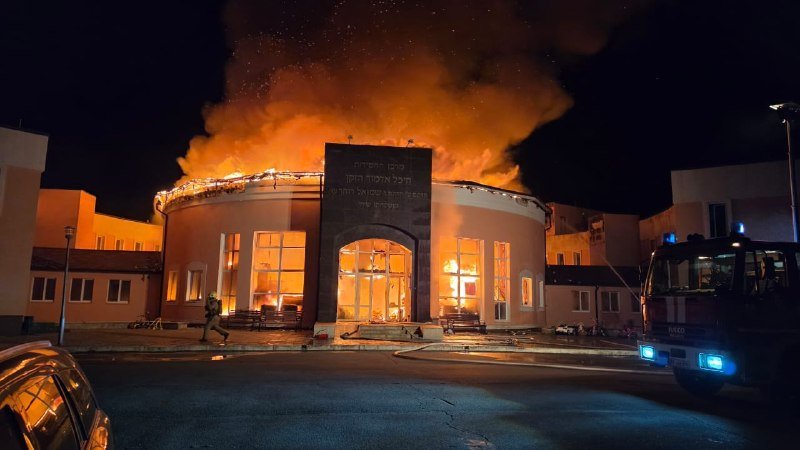
Smoke rose over Moscow's southern suburbs in the small hours of 18 June 2026, the second time in five days that Ukrainian long-range drones reached the Russian capital's downstream energy infrastructure. Open-source monitors posted geolocated footage of fire and a damaged column at a refinery inside the city limits, and Moscow's mayor confirmed a wave of incoming drones had been intercepted across the metropolitan area. The strike capped a week in which Ukraine's unmanned-aircraft campaign has begun to land regular hits on Russian refineries and fuel depots hundreds, sometimes more than a thousand, kilometres from the front line.
The pattern is now legible enough to call by its name. Kyiv has opened a sustained strike campaign against Russian downstream capacity: not the occasional reprisal, but a methodical effort to degrade the refining, storage and logistics network that feeds Russia's army and its domestic fuel market. The 18 June hit on a Moscow refinery followed strikes earlier in the week on facilities in the Krasnodar region and elsewhere, according to Russian-aligned Telegram channels that document the attacks in detail while decrying them. That is the contradiction at the heart of the new phase: the campaign's existence is confirmed in the adversary's own daily record-keeping.
The Russian picture of the week, published in the 20 June summary by the Rybar milblogger channel, lists Ukrainian gas stations, Novaya Pochta logistics centres and oil refineries among the targets struck by Russian forces in retaliation, with facilities hit in Dnipropetrovsk and other Ukrainian regions. Read alongside the open-source video record, the two lists describe the same shift: each side is now reaching past the other's battlefield into its fuel and freight grid. Ukraine's general-staff briefings have been characteristically terse, but the cadence of the strikes speaks for itself.
Independent open-source accounts help pin down the basic event. Noel Reports, an OSINT channel widely cited by Western outlets, has logged successive waves over the week with timestamps, geolocation data and, where possible, fragments of intercepted communications. The footage from the early hours of 18 June shows a column of thick black smoke rising over an industrial site and damage consistent with a successful strike on a distillation unit. Moscow mayor Sergei Sobyanin reported via Telegram that several drones had been intercepted on the city's approach, a formulation that does not preclude a hit at the refinery itself; independent analysts have noted that interception rates of 90 per cent and above still leave a residual that can do serious damage to a single facility.
The strategic logic is straightforward. Russian crude exports to Europe have collapsed under sanctions and the price cap, but domestic refining margins have cushioned the budget. Knock out a few percentage points of capacity at the right plants, and the effect cascades through the fuel market: diesel queues at agricultural depots in southern Russia, rationing for freight operators, pressure on the railways. Ukrainian officials have been explicit in private briefings that the goal is not symbolic damage but the steady erosion of Russia's fuel buffer through the campaigning season.
Moscow's response has been predictable, and was telegraphed in advance. Former president and security council deputy chairman Dmitry Medvedev, writing on 20 June, declared that there should be no rules regarding strikes against the Kyiv regime after terrorist attacks on Russian cities. "There should be only one thing beyond the acceptable for us: the deliberate destruction of the enemy," the post read, in language designed for the escalator's sake. Ukrainian officials, meanwhile, pressed Belarus to remove telecommunications repeaters from the border that, Kyiv alleges, are being used to help guide Russian weapons. The two threads sit side by side: a Russian escalatory rhetoric and an effort to harden Ukrainian air-defence geometry against glide-bomb threats.
The downstream campaign also has an air-defence dimension that has begun to draw expert attention. A 20 June analysis from a Ukrainian outlet laid out the range of attacks now within reach and the principal vulnerability of the Russian system: long-range Ukrainian drones, fired in salvos from multiple vectors, can saturate point-defence around high-value targets. The Moscow strike is the obvious case. Inside Russia, the response has been to ring critical infrastructure with short-range systems and electronic-warfare rigs, a fix that costs money and crews and is still not airtight. The harder structural problem for Moscow is that Ukrainian drone production is now measured in the millions of units per year, a fact that has reshaped the economics of deep strike.
For Kyiv, the calculus turns on three variables: how fast the drone stockpile can be replenished, how the refineries respond to repeated hits, and whether Western partners maintain the permissive political space for the campaign. The first is a Ukrainian industrial-policy success story; the second is a slow-motion test of how resilient Russian refining really is at the plant level; the third depends on framing. Strikes on Moscow are reported by international outlets because they happen in Moscow; strikes on Kremniy, Salavat or Angarsk are reported because open-source monitors catalogue them. The political weight of the campaign, in Western capitals, will track that visibility.
The week closes with the campaign's logic intact and its tempo steady. Ukraine has shown it can hit the Moscow refineries; it has hit one twice. The next data points are whether other plants in the Moscow ring come under sustained pressure, and whether Russian air defence begins to thin around the highest-value targets to protect the broader grid. Either development would mark the next phase of a war that has now moved, decisively, into its opponents' fuel supply.