Trump's Versailles surprise: a US-Iran memorandum signed between the wine glasses
A state dinner at the Château de Versailles became the unlikely venue for a US-Iran memorandum of understanding, with Macron publicly counselling against the bombing logic that produced it.
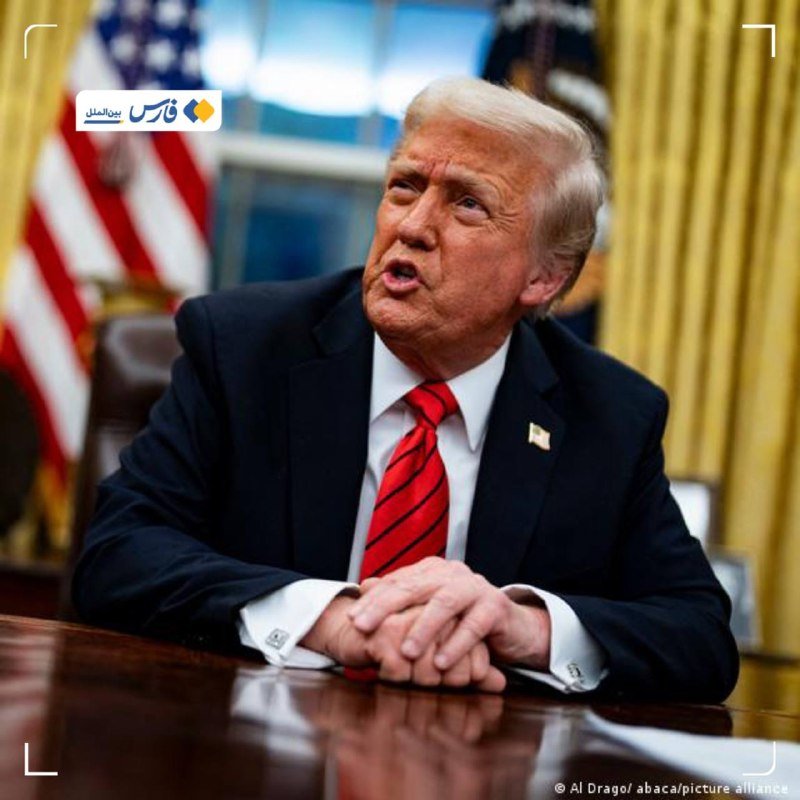
A memorandum of understanding between the United States and Iran was signed on the evening of 18 June 2026 inside the Château de Versailles, between the dessert plates of a state dinner hosted by French President Emmanuel Macron for US President Donald Trump. The signing, confirmed by France 24 at 20:56 UTC, was not on the published programme and surprised ministers in the room. France 24 quoted a Trump remark — "we cleared the plates" — made as the table was rearranged and the documents went out, a scene that captured the improvised character of a deal which had, by all prior reporting, been expected to require a separate diplomatic track.
The deal is now the central artefact of an evening that was supposed to be about Franco-American pageantry. It is also a test of how far a presidential signature, delivered between courses, can carry the weight of a nuclear dispute that has eluded structured negotiation for two decades.
A deal, but a memorandum of what, exactly?
The text signed in the Hall of Mirrors — or in the room set aside for the signing — is described in wire reporting as a memorandum of understanding rather than a binding accord. That distinction matters. Memoranda of understanding are political commitments; they signal intent, lay out frameworks, and identify working groups. They do not, on their own, constrain enrichment, freeze plutonium stockpiles, or roll back centrifuge cascades. A reader in Berlin, Riyadh or Tehran who hears "deal" in the headline should hear "framework" in the body.
The surprise is the second-order story. The Versailles programme was a bilateral state dinner. Iran was not a listed co-host. France 24's dispatch records that the development was unexpected to ministers in the room, and the Telegram channel Clash Report, citing Macron's own remarks on the evening, frames the French position in unusually explicit terms. Macron, the channel reported at 20:44 UTC, told counterparts that "you do not achieve regime change through bombing," and that "what I observe is that there were people around President Trump, both in the political sphere and in the region, who we…" — a sentence that, even in truncated form, is a public argument against a military route to the same destination Trump's signature now gestures at.
In other words, the venue's host and the document's principal signer were, in the same hour, operating on different theories of how the Iranian file ends.
The bombing logic Macron named — and didn't endorse
Macron's intervention is the most newsworthy French contribution to a US-Iran story in several years. The phrase "you do not achieve regime change through bombing" is a direct repudiation of a long-standing Israeli and a minority American view: that a sufficiently intense strike campaign can collapse the Islamic Republic's grip on power, or at minimum produce a successor leadership willing to renounce enrichment. The French position, expressed at presidential level and on the record, is that the empirical record of the past two decades does not support that theory. The cost of testing it again, Macron's framing implies, is borne mostly by populations who did not choose the test.
That is not the same as a peace position. It is, instead, a position that separates the political objective — a non-nuclear Iran, or at least a verifiable one — from the military instrument that hawks in Washington and Tel Aviv have, at various moments, been willing to reach for. The Versailles signature can be read as Trump accepting the Macron framing for the duration of this administration: deal over doctrine, framework over ultimatum. Or it can be read more cynically, as a memorandum that delays an air campaign by buying time the hardliners were already running out of patience for. The text itself, which the wire reporting does not excerpt, will determine which reading survives contact with reality.
Why France, why now
There is a long French tradition of being the indispensable-but-not-indispensable third party in US-Iran diplomacy. The 2015 Joint Plan of Action, the precursor to the JCPOA, was negotiated in part through backchannels in Paris and Geneva. The 2019-2020 efforts to keep the JCPOA alive after the US withdrawal ran, at moments, through the Élysée. Versailles in 2026 sits inside that pattern, with a Trump who is structurally sceptical of the 2015 framework but politically comfortable with the imagery of a deal.
France is also the EU member with the largest commercial exposure to a reopened Iran file. The 2015 deal produced real French contracts — Airbus, Total, Peugeot, Renault all lined up. The reimposed US sanctions after 2018 collapsed most of that. A US-Iran memorandum that survives into something more durable means European companies will once again begin running the maths. Versailles is, among other things, a signal to a French industrial base that the government has not stopped working on the Iran file, even when the American president appeared to have moved on to other theatres.
There is also a personal register. Macron has staked a visible amount of political capital on remaining a useful interlocutor between Washington and Tehran, and the public disagreement — Trump signing, Macron lecturing — is the kind of staged friction that both leaders find useful. It demonstrates to constituencies in each country that the deal is not capitulation: Trump can say he did not sell out, Macron can say he did not let the Americans off the hook on the bombing question.
What the memorandum does not solve
The 18 June text does not, on the evidence available at the time of writing, resolve the central disputes. It does not specify an enrichment cap. It does not name the fate of Iran's stockpile of 60%-enriched uranium, which the IAEA has, in recent reporting, said is the most proliferation-sensitive material in the country. It does not address the question of missile development, regional proxy support, or the IRGC's financial architecture — all of which have been, at various points, on the US or European demand list.
The counter-narrative to be heard in Washington in the coming days is also legible. Hardliners will read the memorandum as the kind of document that gives Iran sanctions relief without extracting the concessions that would justify it. The argument will be that Trump, in the gilded setting of a European palace and in front of the cameras that travel with state dinners, has been persuaded to settle for a photograph when the underlying dispute still needs a verdict. That reading is not implausible. Memoranda of understanding can become treaties, but they can also become the cover for the diplomatic equivalent of kicking the can down a road that ends at a runway.
A second uncertainty is whether the Iranian side will treat the text as binding in the way the American side does. Tehran's practice, across decades, has been to read American signatures against the administration's own electoral calendar. A 2026 Trump signature is one thing; a January 2029 Trump signature, or its successor's, is another. The Iranian side will want verification architecture that survives a change of tenant in the White House — and that is exactly the kind of constraint a memorandum is least equipped to deliver.
The stakes, in plain terms
If the memorandum holds and matures into a fuller accord, the winners are legible: European companies with Iran books to rebuild, Gulf states with a less escalation-prone neighbourhood, oil markets with one fewer tail risk in the premium, and a diplomatic class that has argued for years that the JCPOA template was worth saving. The losers are the sanctions-industrial complex that grew up around maximum pressure, and the faction in Washington that had concluded the only good Iran policy was the one that ended the regime. Israel, which has not commented on the Versailles text in the wire reporting available, will need to decide whether a US-brokered framework is preferable to a unilateral strike track it has been preparing to operate on its own initiative.
If the memorandum breaks, the trajectory runs through the logic Macron named at the podium — the logic of bombing — and the 18 June evening at Versailles will be remembered, instead, as the dinner at which a war was postponed by a few months.
The Monexus desk framed this as a story about the politics of venue and the gap between a signature and a settlement. The wire led with the surprise; we note that the surprise is not the substance, and that the substance is not yet a treaty.
Wire provenance
This editorial synthesis draws on the following public wire/social posts:
- https://t.me/france24_en
- https://t.me/ClashReport