Tehran's draft with Washington goes public, and the gap between the two readings is the story
Senior US officials briefed reporters on a draft bilateral memorandum with Tehran on Wednesday, but Iranian state media have refused to authenticate the text. The gap between Washington's public description and Tehran's guarded silence is where the real politics lives.
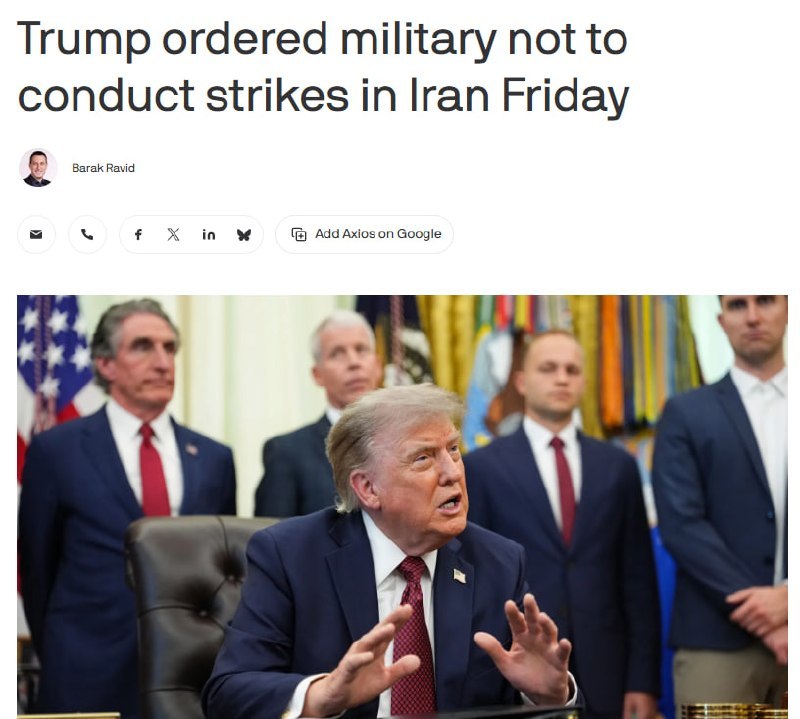
Senior officials in Washington briefed reporters on Wednesday that a draft memorandum of understanding with Tehran has been circulating among intermediaries, and that the text, described as an interim arrangement rather than a successor to the 2015 Joint Comprehensive Plan of Action, was made public for the first time in summary form. The framing from the US side, as carried by France 24's English and French channels and corroborated by independent analysts drawing on the original JCPOA text, is that the document freezes parts of Iran's nuclear programme in exchange for limited sanctions relief and a sequenced inspection regime. The framing from Tehran, as carried the same day by Fars News International, is more guarded: Iranian officials have not confirmed the authenticity of the draft, and Iranian state-aligned commentary has stressed that any document circulating in Western media remains a Western artefact until the Islamic Republic signs it. The gap between those two readings is where the politics actually lives.
This is not 2015. The original JCPOA was a multi-party treaty signed by Iran, the United States, the United Kingdom, France, Germany, Russia, China, and the European Union, with a defined architecture of inspections run by the International Atomic Energy Agency and a snap-back mechanism tied to UN Security Council resolutions. The document under discussion this week is none of those things, at least on the evidence available. It is described by US briefers as a bilateral memorandum, narrower in scope, with verification arrangements that have not been disclosed in detail and a sequencing logic that, on the American telling, rewards Iranian concessions with phased sanctions measures rather than the day-one relief that Tehran historically demanded. Whether that description survives contact with the actual text is the first open question.
The Western reading
From the US side, as reported through France 24's English-language wire on the day of the briefing, the draft is being sold as a confidence-building measure. The argument runs like this: full treaty negotiations would take years, the regional environment will not wait, and a partial deal that constrains the most proliferation-sensitive activities, enrichment at high levels, stockpile growth, centrifuge deployment, can be enforced more cheaply than the original agreement and adjusted faster if Iran cheats. The briefers pointedly invoked the JCPOA's snap-back provision as a precedent, the mechanism that allowed any original participant to trigger a return of UN sanctions within thirty days without a new vote in the Security Council. Snap-back was the original deal's teeth, and the American framing this week leans on that memory hard.
The verification story is more delicate. The 2015 deal rested on the Additional Protocol, an IAEA arrangement that gave inspectors broader access and shorter notification timelines than Iran's standard safeguards agreement. The current draft, on the limited public description, does not appear to restore the Additional Protocol in full. That matters because the Additional Protocol is what allowed inspectors to investigate undeclared sites and to sample environmental swipes at locations Iran had not pre-declared. A deal without it is a deal that constrains what Iran does openly while leaving the harder question of undisclosed activity to political negotiation rather than technical inspection.
The Tehran reading
Fars News International's coverage on the same Wednesday framed the draft with conspicuous caution. Iranian officials quoted through the channel did not deny that talks are happening, an implicit acknowledgement that some form of contact is underway, but they refused to authenticate the document circulating in Western press accounts. The argument from Tehran, as conveyed through Fars and through sympathetic commentary, is that a draft released before signature is a draft that Washington can revise, reinterpret, or disavow at will. Publishing it, in this reading, is not transparency. It is leverage.
The sequencing dispute is the second fault line. Iranian negotiators have historically insisted on sanctions relief at the moment of signature, not as a phased reward for compliance, because Iran's experience under the original deal was that sanctions relief proved slower and more conditional in practice than the text promised. The Western draft, on the reporting available, reverses that logic: Tehran acts first, Washington calibrates later. For a government that watched the United States withdraw from the JCPOA in 2018 and reimpose measures through secondary sanctions, the request to perform before being paid is not a technical detail. It is the whole question of whether the deal is real.
A third point sits underneath both readings. Iran's domestic politics have hardened since the original deal was signed. The 2015 agreement was negotiated by a government that survived long enough to see it implemented, briefly, before the United States walked away. The current political environment inside Iran is less forgiving of any administration that signs a document Western hardliners can later repudiate, and more forgiving of an administration that holds out for terms it can defend domestically. A draft that looks reasonable in Washington briefings can look like a trap in Tehran.
What the JCPOA record actually shows
The comparison to 2015 is unavoidable, and the differences are instructive. The Joint Comprehensive Plan of Action, as the public record on the original agreement makes clear, was structured around five binding UN Security Council resolutions and the multilateral inspection architecture of the IAEA. Iran accepted constraints on enrichment capacity, research and development, centrifuge types, and stockpile size. In exchange, the United States, the European Union, and the United Nations lifted nuclear-related sanctions in stages, with the IAEA providing continuous verification under the Additional Protocol. The deal held, on the IAEA's repeated certification, until the United States withdrew. Snap-back was never triggered because the original deal was abandoned from the outside, not violated from within.
The current draft, by contrast, is described as a bilateral memorandum. That word choice is doing real work. A memorandum of understanding is not a treaty, does not go through Senate confirmation in the United States, and does not automatically engage the Security Council architecture that gave the JCPOA its enforcement backbone. It can be signed, suspended, or abandoned by executive action alone. For Iran's negotiators, that flexibility cuts both ways: easier to sign, easier to lose.
The regional stakes
The geography around the negotiating table has not stood still since 2015. The same week the draft was discussed publicly, the broader Middle Eastern security picture continued to evolve, with Israeli security concerns, Gulf state positioning, and Turkish mediation efforts all pressing on the diplomatic environment in ways that no bilateral document can fully absorb. Tehran's relationship with Beijing has deepened; its relationship with Moscow has been reshaped by the war in Ukraine and the sanctions architecture that followed. A deal signed in 2026 with a sitting US administration is a deal signed into a different world than the one that produced the original.
For the Gulf states, the calculus is straightforward. A constrained Iranian nuclear programme is preferable to an unconstrained one. A deal that holds is preferable to a deal that collapses. But a deal that holds on paper while the underlying architecture of inspections withers is not, in the Gulf's reading, a deal that holds. The UAE and Saudi Arabia watched the original JCPOA lift sanctions on Iran and concluded that the regional balance had shifted against them. Their position on any successor is shaped by that memory.
What to watch next
Three dates will tell us whether the gap between the two readings narrows. First, whether Tehran confirms the document's existence in any form. Iranian silence, as of the briefings on Wednesday, is being read in two opposite ways in two different capitals: as a negotiating tactic in Washington, and as evidence that the document is not yet real in Tehran. Second, whether the IAEA is given any role in the verification architecture described. The Agency's involvement would convert a bilateral memorandum into something closer to the inspection regime that gave the original deal its credibility. Its absence would confirm that this is a different kind of document. Third, whether any sanctions relief is announced in advance of Iranian action, or only after. The sequencing question is the sequencing question, and it has not been answered.
The draft's publication, whatever its authenticity, has already done one thing: it has set the terms of the next round of argument before the next round of talks has begun. Tehran will negotiate against a text Washington has already explained to its own press. Washington will negotiate against a text Tehran has not yet endorsed. The deal, if there is a deal, will be signed into that asymmetry.
Sources
- https://t.me/france24_en, France 24 English (Telegram channel). Carries the US-side briefing on the draft MOU, 17 June 2026.
- https://t.me/france24_fr, France 24 French (Telegram channel). Parallel French-language coverage of the same briefing.
- https://t.me/FarsNewsInt, Fars News International (Telegram channel). Iranian state-aligned reporting on the draft, with explicit non-confirmation of authenticity, 17 June 2026.
- https://en.wikipedia.org/wiki/Joint_Comprehensive_Plan_of_Action, Background on the 2015 JCPOA architecture, including the Additional Protocol, snap-back mechanism, and UN Security Council resolution structure.
Desk note: Monexus reported the draft as disclosed by US officials on 17 June 2026 while keeping Iranian state-aligned caveats fully visible, declining to collapse the two readings into a single narrative.